The ruling Liberal Democratic Party and its coalition partner, the Japan Innovation Party, have agreed with the opposition Democratic Party for the People on a bill to reduce the number of proportional representation seats in the House of Representatives by 31. The bill for the largest postwar reduction of parliamentary seats is now certain to pass the Diet during its current extraordinary session. Opinion polls by various media outlets indicate strong public support for the parliamentary seat reduction as lawmakers’ “self-sacrificing reform.” The reduction should be regarded as their first step in responding to public demands.
But achieving the parliamentary seat reduction is no reason for complacency. A key point is that the agreement has eliminated the need to significantly extend the Diet session, which is scheduled to end on December 12, paving the way for the government to focus fully on the most important challenge: the revision of three key national security documents, including the National Security Strategy, at the end of this year.
The national security environment surrounding Japan can be described as the worst since the end of World War II. China’s rapid military expansion and attempts to change the status quo through force, the deepening of coercive military cooperation between China and Russia, and North Korea’s repeated ballistic missile launches show that East Asia is on the verge of a contingency.
In response to threats to Japan’s existence as a sovereign nation, the government and ruling parties have a historic responsibility to fundamentally enhance deterrence through the revision of the three national security documents.
Modify the Three Non-Nuclear Principles
The revision unavoidably entails a fundamental review of the Three Non-Nuclear Principles, an idea long advocated by Prime Minister Sanae Takaichi. Although the government and ruling parties have regarded the principles of “not possessing, not producing, and not permitting the introduction of nuclear weapons” as a golden rule, the time has come to begin by modifying the third principle.
The folly of continuing to place self-imposed restrictions on the U.S. extended deterrence posture, both in peacetime and in contingencies, could foster a fatal miscalculation by neighboring countries that are accelerating their nuclear buildup. Japan should now shift to a more realistic approach, including allowing port calls by nuclear-armed vessels.
Given Japan’s vast maritime domain, the acquisition of nuclear-powered submarines is also an urgent matter. At a time when China and Russia continue to advance into the Pacific, nuclear-powered submarines, with long submergence capability and overwhelming cruising speed are indispensable for Japan to develop a defense system that combines sustained combat capability with difficulty in detection.
A significant increase in defense spending to achieve these objectives must be carried out steadily, without allowing debates over funding sources to serve as an excuse for delay.
The greatest responsibility is to amend the constitution
Building a strong defense system to protect the lives of the people as well as territory, territorial waters, and airspace is fundamental to the nation. Prime Minister Takaichi is required to make decisions with firm conviction and strong determination to dramatically change Japan’s national security policy, without flinching from internal and external criticism.
And the greatest mission for politics to accomplish is to amend the constitution. The constraints of Article 9 of the constitution, which has remained untouched since its enactment and has long shackled the Self-Defense Forces, should be broken. No further delay should be tolerated in establishing a system to defend our country on our own and in deleting Paragraph 2 of Article 9, which stipulates the non-possession of war potential.
Rather than treating the parliamentary seat reduction as a mere quick fix, the Diet should break away from sterile political infighting and move immediately to realize the century-long national agenda of fundamentally strengthening defense capabilities and amending the constitution.
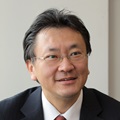
Takashi Arimoto is a Planning Committee member at the Japan Institute for National Fundamentals and a columnist at the Sankei Shimbun newspaper.
 Tsutomu Nishioka
 Tadae Takubo
 Fumio Ota
 Yoshiko Sakurai
 Yasushi Tomiyama
 Masahiko Hosokawa
 Yoichi Shimada
 Hiroshi Yuasa
 Tadashi Narabayashi
 Hideo Tamura
 Kiyofumi Iwata
 Kunio Orita
 Maki Nakagawa
 Etsuro Honda
 Yujiro Oiwa
 Shiro Takahashi
 Hironobu Ishikawa
 Katsuhiko Takaike
 Michio Ezaki
 Akira Momochi
 Akio Yaita
 Yoshihiko Yamada
 Seiji Kurosawa
 Koichi Endo
 Brahma Chellaney
 Nobuko Araki
 James Auer
 Yang Haiying
 Hiroshi Kimura
 Sumihiko Kawamura
 Takeshi Kudo
 Arvind Gupta
 Shohei Umezawa
 Jason Morgan
 Kenro Nagoshi
 Koko Kato
 Osamu Nishi
 Tadashi Saito
 Koji Okamoto
 Yumiko Nishimoto
 Tsutomu Toichi
 Kichinosuke Ihara
 Nobuyuki Sato
 Tadashi Ito
 Rikiwo Shikama
 Satoshi Hirano
 Sukehiro Hirakawa
 Lee Woo Young
 Toshu Noguchi
 Eriko Yamatani
 Koh Sekai
 Hideaki Karaki
 Yasuyuki Takai
 Koichi Furusho
 Taro Yayama
 Hisashi Matsumoto
 Katsuya Tsukamoto
 Seiichi Okutomi
 Tomoko Seo
 Akinaka Senzaki
 Hiroshi Ito
 Yen-Hung Lin
 Ryoichi Hamamoto
 Andrii Gurenko
 Saburo Tsukamoto
 Katsutoshi Kawano
 Kazuto Suzuki
 Kevin Maher
 Tomohisa Takei
 Sanae Takaichi
 Yang Yi
 Haruhisa Nakagawa
 Norihide Miyoshi
 Koichi Mera
 Satoshi Tomisaka
 Kazuhiko Inoue
 Akihisa Nagashima
 Mio Sugita
 Hong Hyung
 Keiichi Nakagawa
 Miki Kase
 Ronald Morse
 Yasuo Naito
 Toshio Watanabe
 Eitaro Ogawa
 Nobukatsu Fujioka
 Rupakjyoti Borah
 Satoshi Sakakibara
 Syunichi Akasofu
 Masamori Sase
 Chung Dae Kyun
 Hirotaka Watanabe
 Masanori Kondo
 Hidetake Sawa