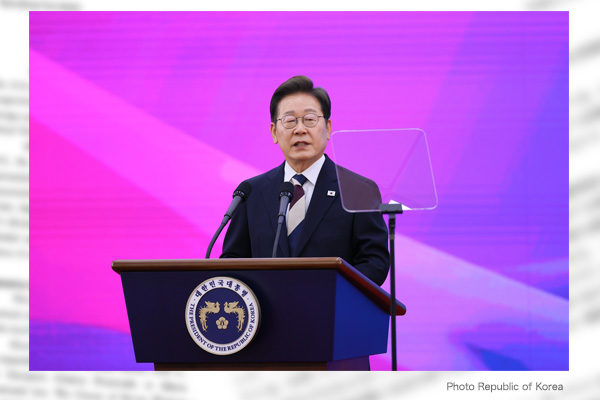
The deterioration of relations between South Korea’s Lee Jae Myung administration and the United States has become public. While U.S. intelligence agencies have repeatedly sent messages of no confidence to a pro-Pyongyang group within the South Korean administration, President Lee has continued to defend the group and faced fierce criticism from conservatives in South Korea.
Trigger was disclosure of confidential information
The deterioration began when South Korean Unification Minister Chung Dong Yong told the National Assembly on March 6 that North Korea had a uranium enrichment facility in Kusong in addition to the two earlier-identified locations of Yongbyon and Kangson. The existence of the Kusong facility was top-secret information uncovered through U.S. satellites and South Korean human intelligence. While Washington expressed displeasure with the disclosure, the unification minister and President Lee defiantly insisted that the information had already been made public outside the government. A senior government official’s reference to the information in the National Assembly would effectively make it official. Washington refused to accept the South Korean excuse and partially suspended the provision of classified information on North Korea to Seoul.
Later in March, National Intelligence Service (NIS) Director Lee Jong Seok was denied a visit to the U.S. National Geospatial-Intelligence Agency (NGA). This was only recently revealed. In June, NIS officials were not allowed to participate in a trilateral Japan-U.S.-South Korea working-level meeting on North Korean cyberattacks held in the U.S. In October, among the seven lawmakers scheduled to visit the U.S. as part of the National Assembly’s activities, only Jung Chung Rae, a former leader of the ruling Democratic Party of Korea, was not granted a visa.
On October 8, Chairman of the Joint Chiefs of Staff Jin Yong Sung, South Korea’s top military officer, acknowledged before the National Assembly that the sharing of key U.S. intelligence, including intelligence related to North Korean nuclear activities, was subject to some restrictions, when asked whether such intelligence sharing was being limited. On October 12, Ambassador to the U.S. Kang Kyung Wha stated that intelligence cooperation was the most challenging issue in U.S.-South Korea relations and acknowledged the difficulties she faced in securing access to key White House officials.
Amidst such circumstances, Unification Minister Chung refused to acknowledge as a North Korean attack a September incident in which three South Korean military officers were seriously injured by a landmine planted by North Korea in the South Korean part of the demilitarized zone. Furthermore, when Foreign Minister Cho Hyun called for tougher sanctions on North Korea such as an expansion of asset freezes to retaliate for the landmine attack, Chung vehemently opposed and instead sought to press ahead with large-scale medical aid to the North.
President Lee conciliatory to the North
In response to the above situation that shakes the U.S.-South Korea alliance, not only opposition parties and conservative opinion leaders but also some ruling party lawmakers proposed to replace Minister Chung and NIS Director Lee. But President Lee rejected the proposal. He described the landmine attack as an “unforeseen accident” in his speech and did not retaliate. He also reacted against U.S. messages at a cabinet meeting, arguing that “submissive and subservient attitudes should be avoided in relations between states.”
President Lee, while harshly criticizing the leaders of Israel and Ukraine, remains conciliatory to North Korean leader Kim Jong Un. Regarding this attitude, there are suspicions that North Korea may hold compromising information on Lee stemming from a case in which his close aide allegedly transferred money illegally to North Korea during Lee’s tenure as governor of Gyeonggi Province. The trial has been suspended following Lee’s election as president.
Tsutomu Nishioka is a senior fellow and a Planning Committee member at the Japan Institute for National Fundamentals and a specially-appointed professor at Reitaku University. He covers South and North Koreas.
 Takashi Arimoto
 Tadae Takubo
 Fumio Ota
 Yoshiko Sakurai
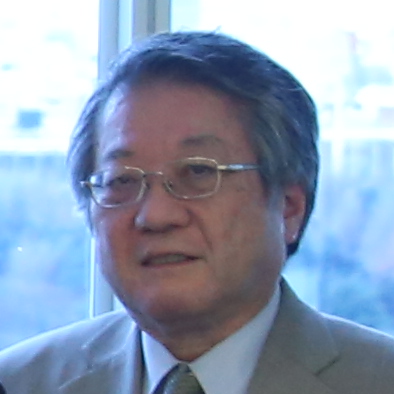 Yasushi Tomiyama
 Masahiko Hosokawa
 Yoichi Shimada
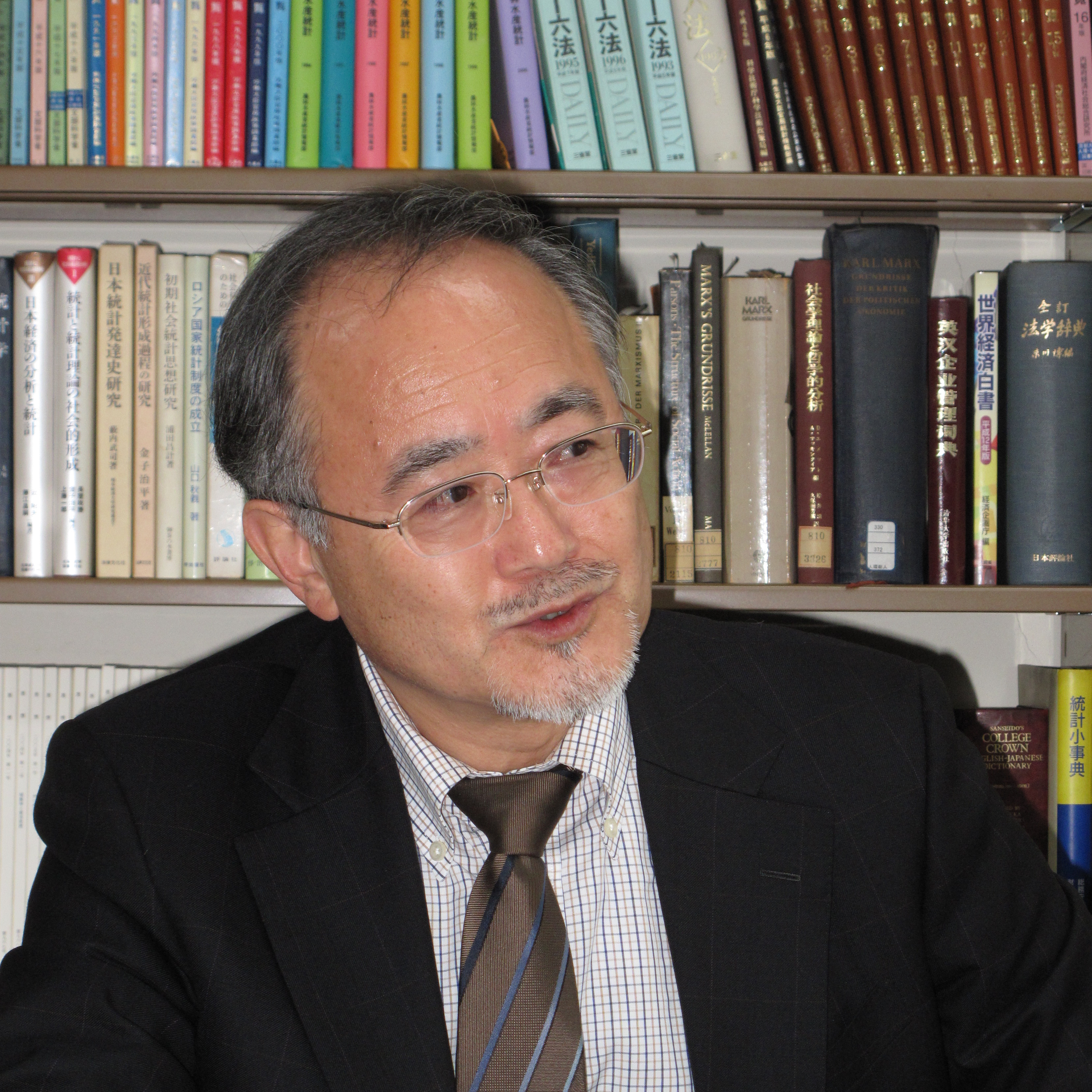 Hiroshi Yuasa
 Tadashi Narabayashi
 Hideo Tamura
 Kiyofumi Iwata
 Kunio Orita
 Maki Nakagawa
 Etsuro Honda
 Yujiro Oiwa
 Shiro Takahashi
 Hironobu Ishikawa
 Katsuhiko Takaike
 Michio Ezaki
 Akira Momochi
 Yoshihiko Yamada
 Akio Yaita
 Seiji Kurosawa
 Brahma Chellaney
 Koichi Endo
 Nobuko Araki
 James Auer
 Yang Haiying
 Hiroshi Kimura
 Sumihiko Kawamura
 Arvind Gupta
 Shohei Umezawa
 Koko Kato
 Takeshi Kudo
 Jason Morgan
 Kenro Nagoshi
 Tadashi Saito
 Osamu Nishi
 Hisashi Matsumoto
 Tsutomu Toichi
 Kichinosuke Ihara
 Nobuyuki Sato
 Yumiko Nishimoto
 Toshu Noguchi
 Satoshi Hirano
 Hideaki Karaki
 Koji Okamoto
 Tadashi Ito
 Eriko Yamatani
 Lee Woo Young
 Rikiwo Shikama
 Sukehiro Hirakawa
 Taro Yayama
 Yasuyuki Takai
 Koh Sekai
 Koichi Furusho
 Sanae Takaichi
 Satoshi Tomisaka
 Yen-Hung Lin
 Ryoichi Hamamoto
 Andrii Gurenko
 Katsutoshi Kawano
 Kazuto Suzuki
 Kevin Maher
 Miki Kase
 Akihisa Nagashima
 Ronald Morse
 Hidetake Sawa
 Yang Yi
 Keiichi Nakagawa
 Seiichi Okutomi
 Haruhisa Nakagawa
 Hong Hyung
 Mio Sugita
 Tomohisa Takei
 Rupakjyoti Borah
 Masamori Sase
 Chung Dae Kyun
 Hirotaka Watanabe
 Masanori Kondo
 Koichi Mera
 Syunichi Akasofu
 Satoshi Sakakibara
 Hiroshi Ito
 Toshio Watanabe
 Nobukatsu Fujioka
 Eitaro Ogawa
 Saburo Tsukamoto
 Kazuhiko Inoue
 Norihide Miyoshi
 Yasuo Naito
 Katsuya Tsukamoto
 Akinaka Senzaki