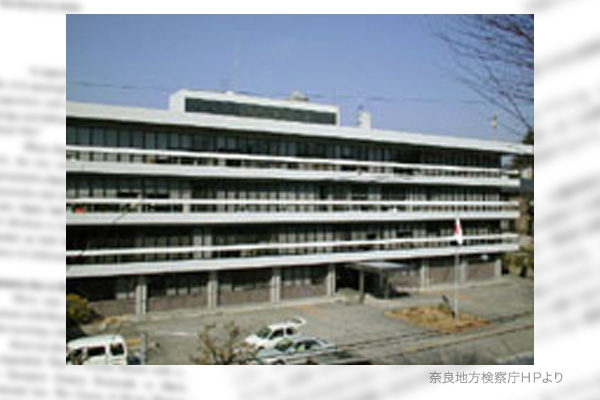
The prosecution has demanded life imprisonment instead of death penalty for Tetsuya Yamagami charged with murder for fatally shooting former Prime Minister Shinzo Abe in 2022. The punishment demand may be extremely unreasonable. It is easy to assume that the punishment demand would be criticized for failing to be balanced with the prosecution’s demand for death penalty for the fatal shooting of a Nagasaki mayor or to deter similar incidents. However, more problematic is the content of the prosecutors’ closing argument.
Prosecutors failing to understand Abe’s regrets
The closing argument said prosecutors had more than enough to understand that it might have been extremely regrettable for Abe to lose his lifelong political activities and the days for spending time with his family and others without understanding why he was shot or who shot him or talking to his family and friends, at a time when he began to spend more time with his family after dealing with busy schedules as prime minister and recovering from ulcerative colitis. The argument reveals a petit-bourgeois mindset on the part of the prosecutors. Such prosecutors would not be able to understand the thoughts of Abe. It leaves me with a deep sense of gloom.
To put it bluntly, the argument amounts to as an insult to Abe. Did Abe really want to live a peaceful life as a family man following his recovery from ulcerative colitis? Did he regret his failure to talk to his family and friends in the face of his death?
No. Abe had a keen foresight that a future contingency in Taiwan could lead to a Japan emergency. He must have been fully aware that, should such a national crisis arise, it was his mission and responsibility to assume the premiership for the third time and rescue Japan from the crisis.
What Abe regretted was not his loss of an opportunity to spend time with his family after his recovery from ulcerative colitis. When dying, Abe might have been worrying about whether Japan would be okay in the event of a Taiwan contingency.
The bullet changed the fate of Japan
Prosecutors said that they had more than enough to understand Abe’s regrets. This exactly is a case of “How can swallows and sparrows understand the ambition of a swan and a stork?”—a classic expression that captures the gulf between small minds and great aspirations. The prosecution’s concluding argument portrayed Abe as a former influential politician who had effectively ended his political role and was looking forward to the rest of his life as a peaceful family man. However, Abe was not such politician.
The bullet fired by Yamagami did not merely change the fate of Abe. It changed the fate of Japan. It must be said that the prosecution misunderstood the important facts in deciding on the punishment demand. The prosecution’s wisdom should be doubted. Once again, I think of the regrets of Abe now in another world.
Yasuyuki Takai is an attorney. Earlier, he had been a prosecutor.
 Tsutomu Nishioka
 Takashi Arimoto
 Tadae Takubo
 Fumio Ota
 Yoshiko Sakurai
 Yasushi Tomiyama
 Masahiko Hosokawa
 Yoichi Shimada
 Hiroshi Yuasa
 Tadashi Narabayashi
 Hideo Tamura
 Kiyofumi Iwata
 Kunio Orita
 Maki Nakagawa
 Etsuro Honda
 Yujiro Oiwa
 Hironobu Ishikawa
 Shiro Takahashi
 Katsuhiko Takaike
 Michio Ezaki
 Akira Momochi
 Akio Yaita
 Yoshihiko Yamada
 Seiji Kurosawa
 Koichi Endo
 Brahma Chellaney
 Nobuko Araki
 Yang Haiying
 James Auer
 Sumihiko Kawamura
 Hiroshi Kimura
 Osamu Nishi
 Koko Kato
 Tadashi Saito
 Shohei Umezawa
 Jason Morgan
 Arvind Gupta
 Kenro Nagoshi
 Takeshi Kudo
 Sukehiro Hirakawa
 Yumiko Nishimoto
 Rikiwo Shikama
 Eriko Yamatani
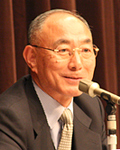 Koichi Furusho
 Tadashi Ito
 Satoshi Hirano
 Lee Woo Young
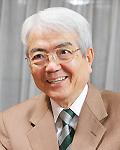 Taro Yayama
 Koh Sekai
 Koji Okamoto
 Tsutomu Toichi
 Hideaki Karaki
 Toshu Noguchi
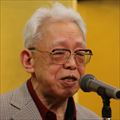 Kichinosuke Ihara
 Hisashi Matsumoto
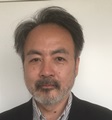 Nobuyuki Sato
 Chung Dae Kyun
 Toshio Watanabe
 Katsuya Tsukamoto
 Kazuto Suzuki
 Koichi Mera
 Akihisa Nagashima
 Miki Kase
 Eitaro Ogawa
 Hirotaka Watanabe
 Akinaka Senzaki
 Kevin Maher
 Yang Yi
 Hidetake Sawa
 Satoshi Tomisaka
 Nobukatsu Fujioka
 Masanori Kondo
 Hiroshi Ito
 Mio Sugita
 Rupakjyoti Borah
 Seiichi Okutomi
 Saburo Tsukamoto
 Yasuo Naito
 Satoshi Sakakibara
 Yen-Hung Lin
 Sanae Takaichi
 Haruhisa Nakagawa
 Norihide Miyoshi
 Syunichi Akasofu
 Ryoichi Hamamoto
 Hong Hyung
 Andrii Gurenko
 Ronald Morse
 Kazuhiko Inoue
 Keiichi Nakagawa
 Masamori Sase
 Katsutoshi Kawano
 Tomohisa Takei