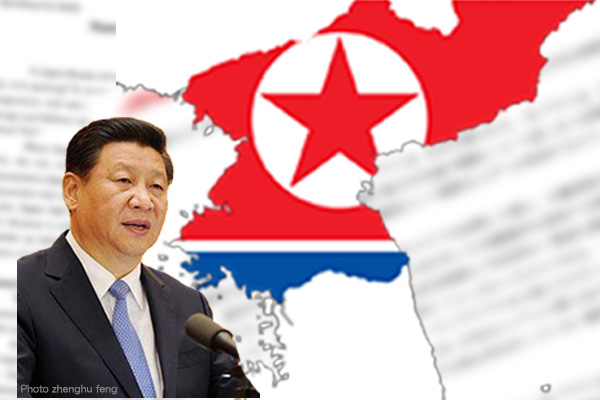
On June 8-9, Chinese President Xi Jinping visited Pyongyang to meet North Korean leader Kim Jong Un. The visit came as their interests aligned to some extent. Kim wanted a Chinese military intervention in the event of an attack from the United States, while Xi sought North Korea’s military cooperation in preparation for an invasion of Taiwan.
The two countries’ defense ministers made an unusual appearance at the Xi-Kim summit. Attention should be paid to the Chinese readout on the summit that quoted Xi as saying the two countries should “enhance exchanges in military affairs” and “firmly safeguard their respective security.”
North Korea may allow Chinese use of naval bases
Behind Xi’s visit to North Korea was Kim’s fear of U.S. President Donald Trump.
When Chinese Foreign Minister Wang Yi visited Pyongyang in April, according to informed sources, North Korea strongly asked China to intervene militarily in the event of a U.S. attack on North Korea similar to that on Iran, while China urged North Korea to (1) halt nuclear weapons development, (2) adopt reform and opening-up policies, and (3) accept the Chinese Navy’s potential use of North Korean military bases on the Sea of Japan.
In May, Trump visited China. North Korea obtained information that Trump at his talks with Xi mentioned a plan to resolve the North Korean nuclear issue under the same approach as that on the Iranian nuclear issue, and that Xi did not oppose the plan.
It cannot be confirmed whether Trump actually made the remark at his meeting with Xi. It cannot be ruled out that China deliberately leaked such information as a means of signaling that Kim could be killed by the U.S. unless North Korea accepts a U.S. request for its denuclearization. Neither Trump nor hardliners like his former National Security Adviser John Bolton have ever mentioned the idea of resolving the North Korean nuclear issue through military attacks, according to Yoichi Shimada, a professor emeritus at Fukui Prefectural University, who is well-versed in U.S. politics.
According to the sources, Kim was furious and deeply fearful upon being informed that the Iran-style approach had been cited at the Trump-Xi summit. Accordingly, Kim considered whether he could accept Wang’s three requests in order to avoid any U.S. attack. The sources said Xi’s visit to North Korea was made possible after Kim accepted in principle the Chinese Navy’s potential use of North Korean military bases on the Sea of Japan in defiance of an opinion that Chinese forces’ entry into North Korea would be dangerous as it would embolden pro-China factions in North Korea.
However, behind-the-scenes negotiations between Beijing and Pyongyang failed to progress smoothly, leading to the postponement of Xi’s visit to Pyongyang scheduled for late May until June. During the visit, North Korea asked China to conduct an immediate military intervention in response to a U.S. attack, ease United Nations sanctions against North Korea, issue visas to North Korean workers, and lift a ban on remittances from Chinese banks to North Korea. China asked North Korea to accept not only China’s potential use of North Korean bases on the Sea of Japan but also China-North Korea joint military exercises in the Sea of Japan and make preparations for a localized conflict to prevent U.S. forces stationed in South Korea from moving in the event of a Chinese attack on Taiwan. It remains uncertain to what extent agreement was reached regarding these requests.
Kim may be seeking to approach Japan
Close military cooperation between China and North Korea poses a significant threat to Japan, which considers a Taiwan contingency as its own contingency. Meanwhile, Kim is also considering using Japan to prevent any U.S. attack on North Korea. Given that U.S. military bases in Japan are indispensable for a U.S. decapitation operation against North Korea, Kim is considering approaching Japan by making progress toward resolving North Korea’s abduction of Japanese citizens in a bid to obtain U.S. military information from Japan and urge Japan to restrain the U.S.
Amid the rapidly changing situation in East Asia, Japan’s Sanae Takaichi administration should seize the opportunity and act swiftly to recover all Japanese abductees from North Korea.
Tsutomu Nishioka is a senior fellow and a Planning Committee member at the Japan Institute for National Fundamentals and a specially-appointed professor at Reitaku University. He covers South and North Koreas.
 Takashi Arimoto
 Tadae Takubo
 Fumio Ota
 Yoshiko Sakurai
 Yasushi Tomiyama
 Masahiko Hosokawa
 Yoichi Shimada
 Hiroshi Yuasa
 Tadashi Narabayashi
 Hideo Tamura
 Kiyofumi Iwata
 Kunio Orita
 Maki Nakagawa
 Etsuro Honda
 Yujiro Oiwa
 Hironobu Ishikawa
 Shiro Takahashi
 Katsuhiko Takaike
 Michio Ezaki
 Akira Momochi
 Akio Yaita
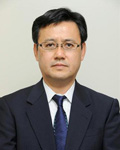 Yoshihiko Yamada
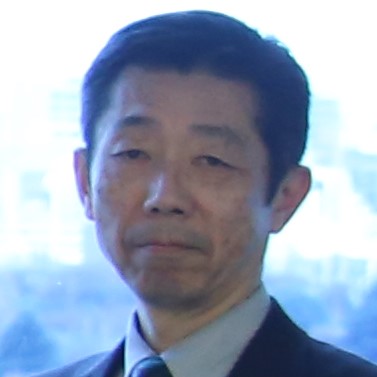 Seiji Kurosawa
 Koichi Endo
 Brahma Chellaney
 Nobuko Araki
 Yang Haiying
 James Auer
 Sumihiko Kawamura
 Hiroshi Kimura
 Osamu Nishi
 Koko Kato
 Tadashi Saito
 Shohei Umezawa
 Jason Morgan
 Arvind Gupta
 Kenro Nagoshi
 Takeshi Kudo
 Sukehiro Hirakawa
 Yumiko Nishimoto
 Rikiwo Shikama
 Eriko Yamatani
 Koichi Furusho
 Tadashi Ito
 Satoshi Hirano
 Lee Woo Young
 Taro Yayama
 Koh Sekai
 Koji Okamoto
 Tsutomu Toichi
 Hideaki Karaki
 Toshu Noguchi
 Kichinosuke Ihara
 Hisashi Matsumoto
 Yasuyuki Takai
 Nobuyuki Sato
 Chung Dae Kyun
 Toshio Watanabe
 Katsuya Tsukamoto
 Kazuto Suzuki
 Koichi Mera
 Akihisa Nagashima
 Miki Kase
 Eitaro Ogawa
 Hirotaka Watanabe
 Akinaka Senzaki
 Kevin Maher
 Yang Yi
 Hidetake Sawa
 Satoshi Tomisaka
 Nobukatsu Fujioka
 Masanori Kondo
 Hiroshi Ito
 Mio Sugita
 Rupakjyoti Borah
 Seiichi Okutomi
 Saburo Tsukamoto
 Yasuo Naito
 Satoshi Sakakibara
 Yen-Hung Lin
 Sanae Takaichi
 Haruhisa Nakagawa
 Norihide Miyoshi
 Syunichi Akasofu
 Ryoichi Hamamoto
 Hong Hyung
 Andrii Gurenko
 Ronald Morse
 Kazuhiko Inoue
 Keiichi Nakagawa
 Masamori Sase
 Katsutoshi Kawano
 Tomohisa Takei