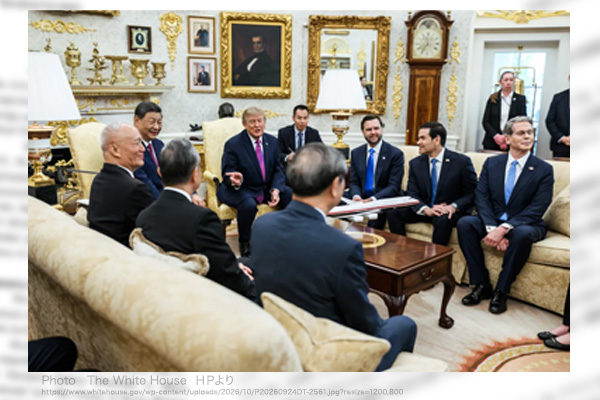
On October 8, Hong Kong’s English-language newspaper South China Morning Post reported that U.S. President Donald Trump asked Chinese President Xi Jinping at their meeting in Washington last month to lift export restrictions on rare earths and other items against Japan. Trump reportedly claimed that the restrictions negatively affect U.S. industries dependent on parts and materials supplies from Japan, indirectly violating the U.S.-China trade truce. Xi refused to accept the request and expressed alarm at Japan’s militarization, according to the newspaper.
Successfully instilling Japan’s position in Trump
What should be noted is that Japanese Prime Minister Sanae Takaichi held a meeting with Trump just before the U.S.-China summit to instill Japan’s position in advance. The focus of U.S.-China and Japan-China relations is on China’s weaponization of rare earths as well as on Taiwan. The report by the Hong Kong newspaper suggests that Takaichi’s explanation of China’s export restrictions on Japan resonated with Trump. It is significant that Trump recognized the Japan-China issue as a matter related to U.S. industrial interests and raised it directly with the Chinese leader.
China exploits export restrictions on rare earths as if turning on and off a water tap. While easing supply restrictions to the United States in line with bilateral trade negotiations, China continues strict curbs on Japan under an apparent strategy to isolate Japan and apply pressure. Xi reportedly argued during the meeting that Japan-China relations should be kept separate from U.S.-China relations.
Similar moves can be seen on the diplomatic front. China has even brought up the “enemy state” clauses in the U.N. Charter, warning of a resurgence of Japanese militarism. Invoking a distorted historical narrative that the U.S. and China jointly fought Japan in World War II can also be interpreted as an attempt to drive a wedge between the allies. It is a strategy to isolate Japan by dividing Japan and the U.S. on both the economic and diplomatic fronts.
In response, it is crucial for Japan to emphasize that China’s economic coercion damages supply chains shared by Japan and the U.S. and to prevent the issue from being contained within the Japan-China bilateral framework. The latest U.S.-China and Japan-U.S. summits demonstrate the importance of such diplomatic efforts.
While it is unclear why the details of the Trump-Xi meeting were reported at this specific timing, if it was a deliberate leak from the Chinese side, the intent may be to demonstrate a stance of not yielding to U.S. demands, emphasize warnings against Japan’s militarization, and justify export restrictions on Japan.
Japan should expose contradictions in China’s claims
Here lies an important point that Japan should make to the international community. China has cited the prevention of military diversion as the reason for restricting rare earth exports to Japan and explained that the restrictions would not affect civilian use. In fact, however, the restrictions have had a serious impact on trade in rare earths for civilian use.
The prevention of military diversion as the reason for export controls cannot be denied. However, this cannot be a rational reason to block civilian trade unrelated to military use. Japan should call into question the contradiction between China’s explanations and the actual state of its restrictions.
The Japanese government has repeatedly criticized China’s targeting of Japan as being contrary to international practice. However, that alone is not enough. Japan should demonstrate the serious impact on civilian uses and appeal more to the international community that this is in fact “economic coercion in the name of preventing military diversion,” and poses a threat that shakes international supply chains.
Going forward, the key to Japanese diplomacy will be how to bring about “joint responses” that involve not only the U.S. and Japan, but Europe as well.
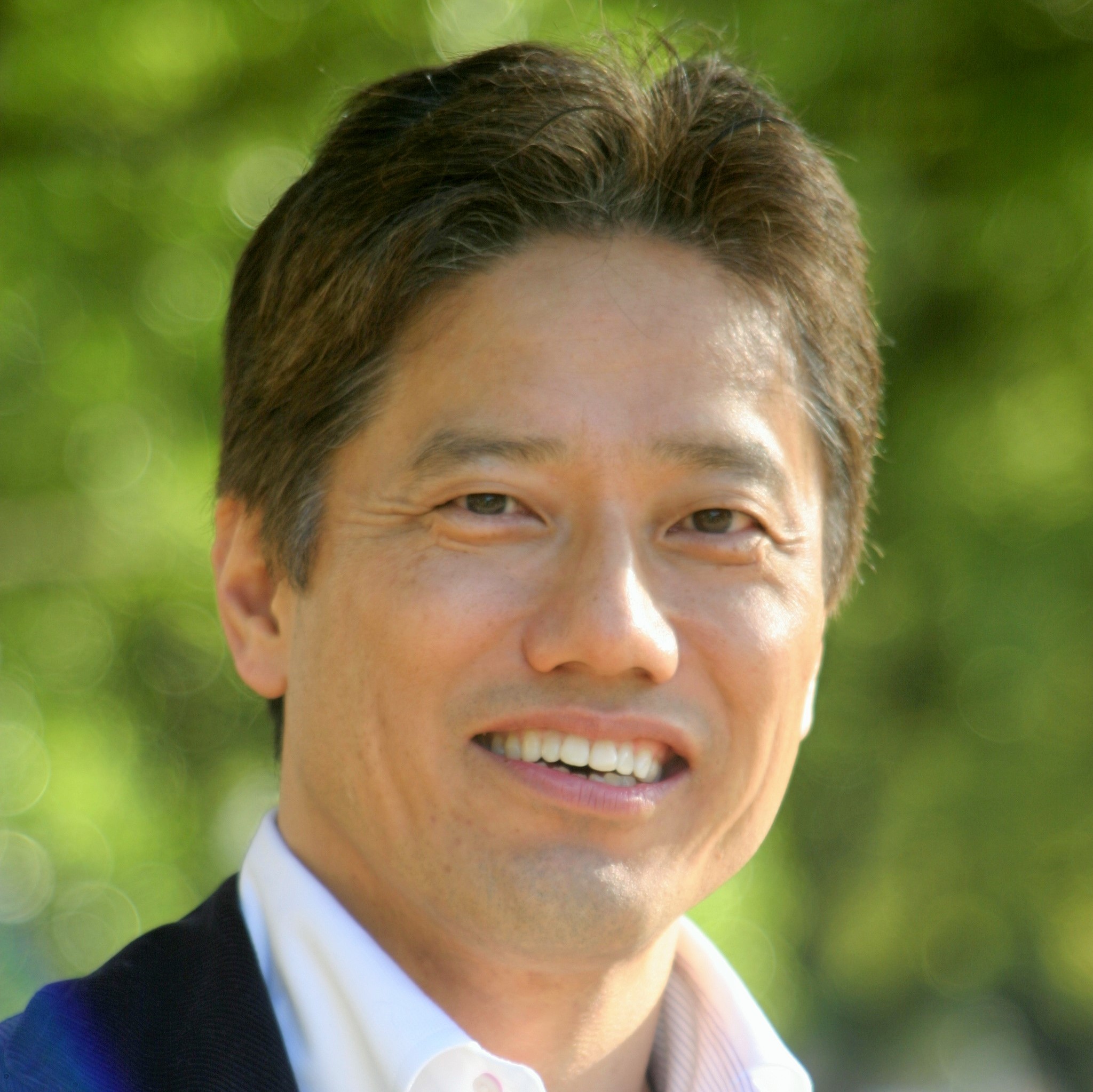
Masahiko Hosokawa is a professor at Meisei University, a special adviser to the Cabinet Secretariat, and a Planning Committee member at the Japan Institute for National Fundamentals. Formerly, he served as director-general of the Trade Control Department at Japan’s Ministry of Economy, Trade and Industry.
 Tsutomu Nishioka
 Takashi Arimoto
 Tadae Takubo
 Fumio Ota
 Yoshiko Sakurai
 Yasushi Tomiyama
 Yoichi Shimada
 Hiroshi Yuasa
 Tadashi Narabayashi
 Hideo Tamura
 Kiyofumi Iwata
 Kunio Orita
 Maki Nakagawa
 Etsuro Honda
 Yujiro Oiwa
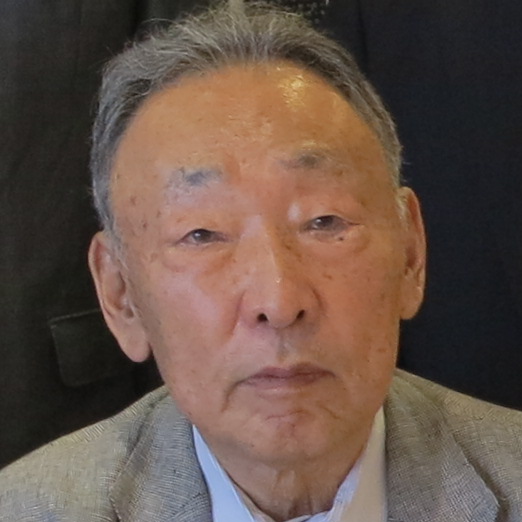 Hironobu Ishikawa
 Shiro Takahashi
 Katsuhiko Takaike
 Michio Ezaki
 Akira Momochi
 Akio Yaita
 Yoshihiko Yamada
 Seiji Kurosawa
 Koichi Endo
 Brahma Chellaney
 Nobuko Araki
 Yang Haiying
 James Auer
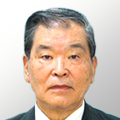 Sumihiko Kawamura
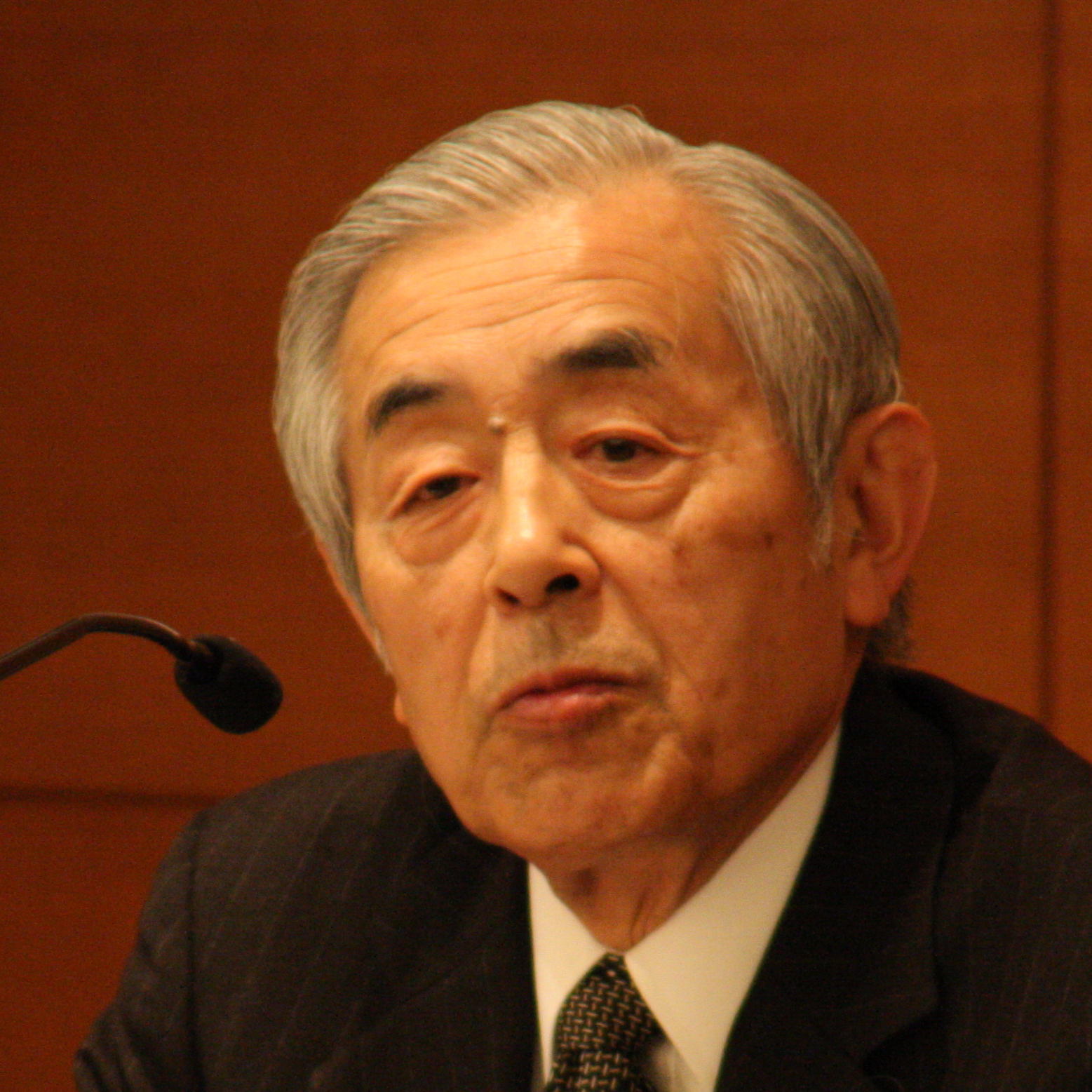 Hiroshi Kimura
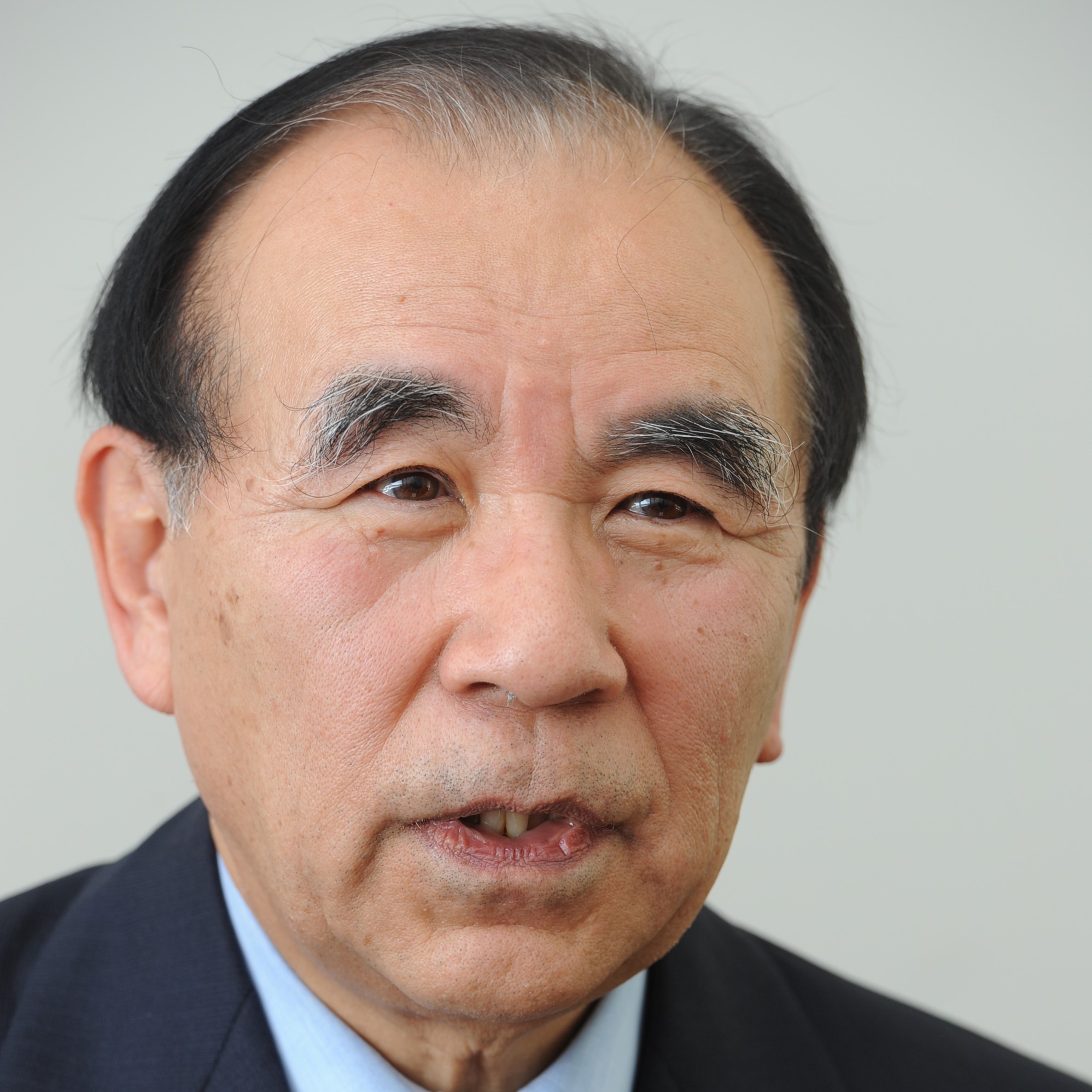 Osamu Nishi
 Koko Kato
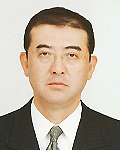 Tadashi Saito
 Shohei Umezawa
 Jason Morgan
 Arvind Gupta
 Kenro Nagoshi
 Takeshi Kudo
 Sukehiro Hirakawa
 Yumiko Nishimoto
 Rikiwo Shikama
 Eriko Yamatani
 Koichi Furusho
 Tadashi Ito
 Satoshi Hirano
 Lee Woo Young
 Taro Yayama
 Koh Sekai
 Koji Okamoto
 Tsutomu Toichi
 Hideaki Karaki
 Toshu Noguchi
 Kichinosuke Ihara
 Hisashi Matsumoto
 Yasuyuki Takai
 Nobuyuki Sato
 Chung Dae Kyun
 Toshio Watanabe
 Katsuya Tsukamoto
 Kazuto Suzuki
 Koichi Mera
 Akihisa Nagashima
 Miki Kase
 Eitaro Ogawa
 Hirotaka Watanabe
 Akinaka Senzaki
 Kevin Maher
 Yang Yi
 Hidetake Sawa
 Satoshi Tomisaka
 Nobukatsu Fujioka
 Masanori Kondo
 Hiroshi Ito
 Mio Sugita
 Rupakjyoti Borah
 Seiichi Okutomi
 Saburo Tsukamoto
 Yasuo Naito
 Satoshi Sakakibara
 Yen-Hung Lin
 Sanae Takaichi
 Haruhisa Nakagawa
 Norihide Miyoshi
 Syunichi Akasofu
 Ryoichi Hamamoto
 Hong Hyung
 Andrii Gurenko
 Ronald Morse
 Kazuhiko Inoue
 Keiichi Nakagawa
 Masamori Sase
 Katsutoshi Kawano
 Tomohisa Takei