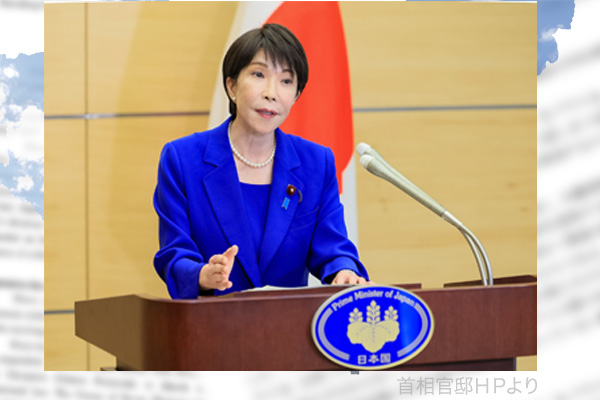
Prime Minister Sanae Takaichi has made the creation of an emergency powers clause the top priority of her constitutional amendment agenda. Takaichi, who once criticized former Prime Minister Shinzo Abe’s proposal to explicitly endorse the Self-Defense Forces in the constitution as failing to provide a fundamental solution, has clearly toned down her stance. Now that a Taiwan contingency is growing more realistic, what should be called into question is Article 9 itself.
Article 9 amendment put on the back burner
In the November 2017 issue of the monthly magazine “Seiron” nine years ago, Takaichi stated unequivocally that she opposed Abe’s proposal to explicitly endorse the SDF in the constitution, saying that “Japan’s security challenges would not be fundamentally resolved.” She went so far as to criticize the proposal by declaring, “To limit ourselves from the outset to a proposal that would be easier for other political parties to support is, I believe, an insult to the sovereign people of Japan.” In the December 2026 issue of the magazine, however, Takaichi said although there was no order of priority among the four LDP-backed constitutional amendment proposals (the explicit endorsement of the SDF, the creation of an emergency powers clause, the restoration of single-prefecture constituencies for the Senate, and free education), what needed to be addressed urgently as a practical matter was an emergency powers clause, thereby putting the Article 9 amendment on the back burner.
It is understandable that the Abe administration shifted toward the pragmatic choice of explicitly endorsing the Self-Defense Forces in the constitution, taking into account both the coalition with the Komeito party and domestic public opinion. But in the roughly ten years since then, China’s military power has expanded quantitatively and qualitatively. The People’s Liberation Army is focusing its efforts on building the capability to launch a military invasion of Taiwan by 2027 as reportedly ordered by President Xi Jinping.
To begin with, merely writing the SDF into the constitution would clarify their status domestically, but it would not enable Japan to break free from the restriction that permits only a limited exercise of the right of collective self-defense. In light of the realities of the wars in Ukraine and Iran, in which China, Russia, North Korea, and Iran are closely supporting each other, the time has come for Japan to delete Article 9’s paragraph 2 that stipulates a ban on the maintenance of war potential and to develop a collective defense system recognized under international law with the United States, Australia, and other partners. While the Komeito party has already left the coalition, the LDP’s new coalition partner, the Japan Innovation Party, has pushed for the deletion of the paragraph. The hurdle remains that the ruling coalition lacks a majority in the Senate, making the initiation of constitutional amendment difficult. Precisely for that reason, the coalition should place Article 9 squarely at the center of the process from the drafting stage onward and lead a national debate.
Takaichi’s unwavering national vision is tested
Takaichi says that the creation of an emergency powers clause should be expedited because no one knows when a major natural disaster or terrorist attack may occur. However, the same is true of a Taiwan contingency, whose timing is equally unpredictable. It is the most critical scenario affecting Japan’s national survival and prosperity. The emergency powers clause, though supporting the governing system in an emergency, does not provide the constitutional basis for the SDF to protect the country. Prioritizing preparations for disaster response while failing to show the same urgency toward contingency planning can only be described as lacking a sense of national security crisis.
Voters supporting Takaichi presumably expect her to inherit Abe’s legacy and press ahead with a decisive break from the postwar regime, guided by an unwavering vision of the nation. By putting Article 9 on the back burner, is she not engaging in the very compromise she once warned against, namely, settling for proposals that are easier for other political parties to support?
Kiyofumi Iwata is Vice President of the Japan Institute for National Fundamentals. Formerly, he served as Chief of Staff of the Japan Ground Self-Defense Force.
 Tsutomu Nishioka
 Takashi Arimoto
 Tadae Takubo
 Fumio Ota
 Yoshiko Sakurai
 Yasushi Tomiyama
 Masahiko Hosokawa
 Yoichi Shimada
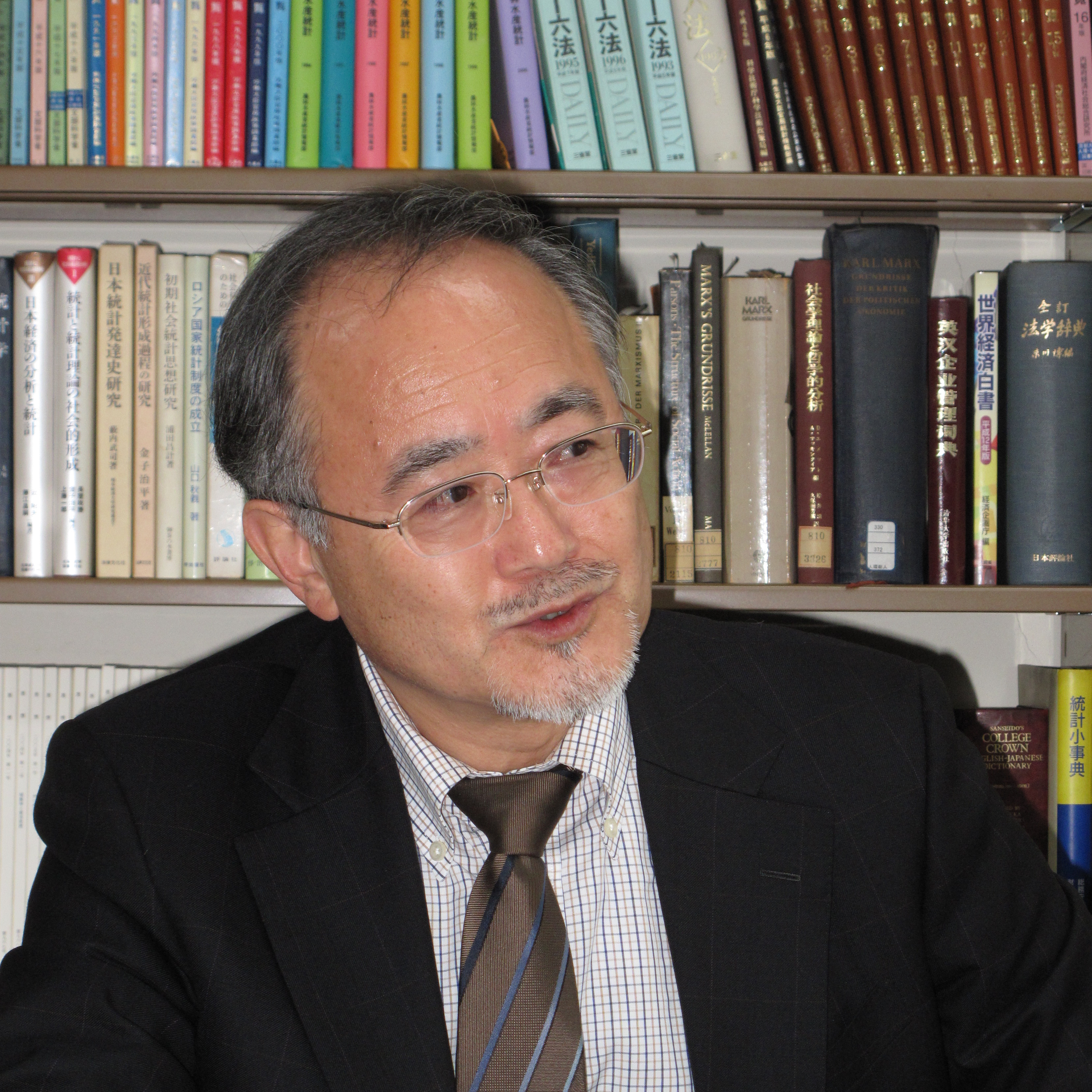 Hiroshi Yuasa
 Tadashi Narabayashi
 Hideo Tamura
 Kunio Orita
 Maki Nakagawa
 Etsuro Honda
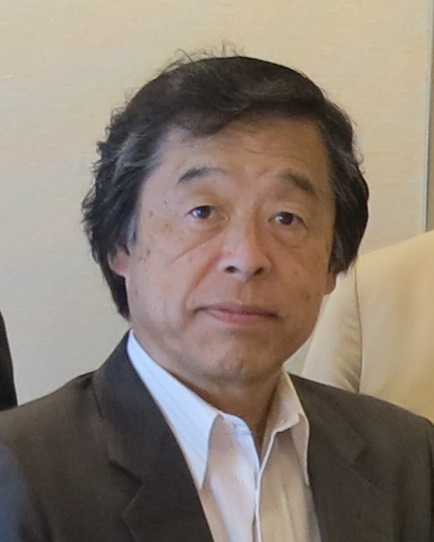 Yujiro Oiwa
 Shiro Takahashi
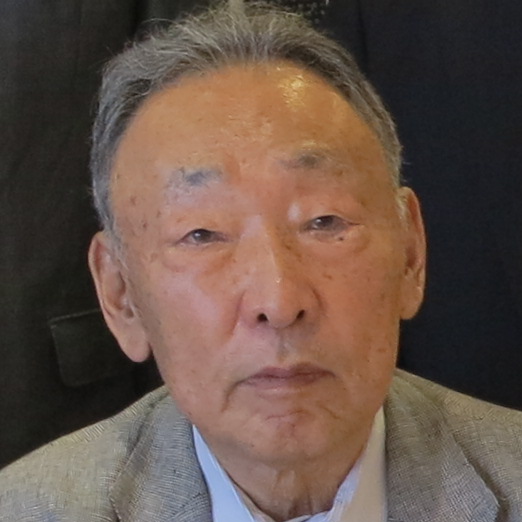 Hironobu Ishikawa
 Katsuhiko Takaike
 Michio Ezaki
 Akira Momochi
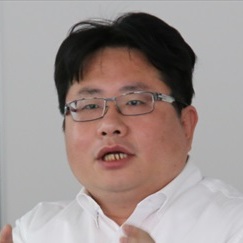 Akio Yaita
 Yoshihiko Yamada
 Seiji Kurosawa
 Koichi Endo
 Brahma Chellaney
 Nobuko Araki
 James Auer
 Yang Haiying
 Hiroshi Kimura
 Sumihiko Kawamura
 Takeshi Kudo
 Arvind Gupta
 Shohei Umezawa
 Jason Morgan
 Kenro Nagoshi
 Koko Kato
 Osamu Nishi
 Tadashi Saito
 Koji Okamoto
 Yumiko Nishimoto
 Tsutomu Toichi
 Kichinosuke Ihara
 Nobuyuki Sato
 Tadashi Ito
 Rikiwo Shikama
 Satoshi Hirano
 Sukehiro Hirakawa
 Lee Woo Young
 Toshu Noguchi
 Eriko Yamatani
 Koh Sekai
 Hideaki Karaki
 Yasuyuki Takai
 Koichi Furusho
 Taro Yayama
 Hisashi Matsumoto
 Katsuya Tsukamoto
 Seiichi Okutomi
 Tomoko Seo
 Akinaka Senzaki
 Hiroshi Ito
 Yen-Hung Lin
 Ryoichi Hamamoto
 Andrii Gurenko
 Saburo Tsukamoto
 Katsutoshi Kawano
 Kazuto Suzuki
 Kevin Maher
 Tomohisa Takei
 Sanae Takaichi
 Yang Yi
 Haruhisa Nakagawa
 Norihide Miyoshi
 Koichi Mera
 Satoshi Tomisaka
 Kazuhiko Inoue
 Akihisa Nagashima
 Mio Sugita
 Hong Hyung
 Keiichi Nakagawa
 Miki Kase
 Ronald Morse
 Yasuo Naito
 Toshio Watanabe
 Eitaro Ogawa
 Nobukatsu Fujioka
 Rupakjyoti Borah
 Satoshi Sakakibara
 Syunichi Akasofu
 Masamori Sase
 Chung Dae Kyun
 Hirotaka Watanabe
 Masanori Kondo
 Hidetake Sawa