At a press conference on September 1 following a meeting of Group of 20 finance ministers and central bank governors in the United States, U.S. Treasury Secretary Scott Bessent said Japan should stop its reflationary policy. The Bank of Japan is scheduled to hold its monetary policy meeting on September 17 and 18. The government of Prime Minister Sanae Takaichi plans to submit a food consumption tax cut bill to the Diet during its extraordinary session this autumn. The government has begun to formulate its budget for the next fiscal year from April 2027. The senior U.S. official’s remark at such timing has caused significant ripples in Japan.
Policies influenced by other countries bring disasters
The Takaichi government and the BOJ should first take note of the principle that Japan’s fiscal and monetary policies should be based on its independent decisions. If such policies are influenced by other countries, it could lead to major disasters. Japan’s economic vacuum that lasted for three decades following the collapse of asset bubbles in the early 1990s was triggered by the U.S.-led Plaza Accord in September 1985 to drive down the dollar.
Next, the media must not plunge into worship of the powerful. Exaggerative reports that claim the Bessent remark as reflecting the wishes of the U.S. can cause confusion in public opinion and hinder rational policy formation.
The morning edition of the Nikkei Shimbun newspaper on September 3 carried a story headlined “U.S. asks Japan to raise interest rates to end its reflationary policy,” claiming that the U.S. government was encouraging Japan to implement disciplined fiscal management and raise interest rates. It concluded that the U.S. government was not only pressing the BOJ to raise interest rates but also reluctant to accept the Takaichi’s tax cut and proactive fiscal policy. After a close checkup on the original English version of Bessent’s remarks, however, I suspect that the story was based on an overinterpretation of his statements.
It is a fact that Bessent said Japan should “stop the reflation.” But “reflation” means reinflation of the currency. In this regard, the BOJ has long since halted quantitative monetary expansion measures and accumulated interest rate hikes. The central bank only needs to carefully assess domestic economic conditions and price trends to decide whether to raise rates.
Takaichinomics emphasizes fiscal discipline
Regarding Japan’s fiscal policy, Bessent said: “I think it’s now time… for ‘Takaichinomics.’ …If inflation is 2%, [the Japanese] have succeeded in reflating, and now they have to think about the consequences of their success.” There is no indication that Bessent regards Takaichi’s fiscal policy as a continuation of reflationary Abenomics.
While increasing government bond issuance is a factor behind the reinflation of the currency, Takaichi plans to limit the issuance of new financial resource bonds and cover the food consumption tax cut with a tax revenue increase and non-tax revenue. Budget requests for the next fiscal year indicate that the general account budget will have a primary balance surplus of around 10 trillion yen. Takaichi’s fiscal policy is so focused on fiscal discipline that the budget risks becoming austere rather than expansionary. In order to sweep misunderstandings and noise, the prime minister should declare that the Takaichi growth strategy is not a reflationary policy.
Hideo Tamura is a Planning Committee member at the Japan Institute for National Fundamentals and a columnist for the Sankei Shimbun newspaper.

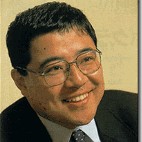 Tsutomu Nishioka
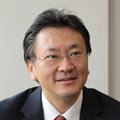 Takashi Arimoto
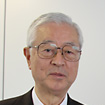 Tadae Takubo
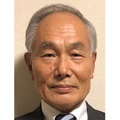 Fumio Ota
 Yoshiko Sakurai
 Yasushi Tomiyama
 Masahiko Hosokawa
 Yoichi Shimada
 Hiroshi Yuasa
 Tadashi Narabayashi
 Kiyofumi Iwata
 Kunio Orita
 Maki Nakagawa
 Etsuro Honda
 Yujiro Oiwa
 Shiro Takahashi
 Hironobu Ishikawa
 Katsuhiko Takaike
 Michio Ezaki
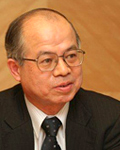 Akira Momochi
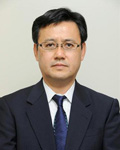 Yoshihiko Yamada
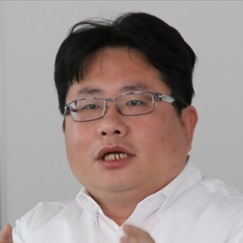 Akio Yaita
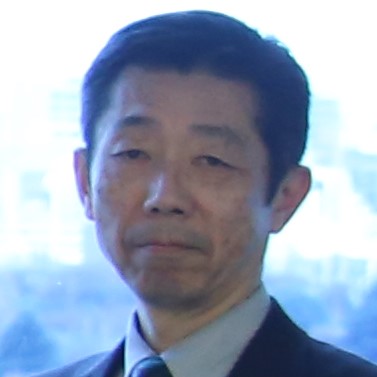 Seiji Kurosawa
 Brahma Chellaney
 Koichi Endo
 Nobuko Araki
 James Auer
 Yang Haiying
 Hiroshi Kimura
 Sumihiko Kawamura
 Arvind Gupta
 Shohei Umezawa
 Koko Kato
 Takeshi Kudo
 Jason Morgan
 Kenro Nagoshi
 Tadashi Saito
 Osamu Nishi
 Hisashi Matsumoto
 Tsutomu Toichi
 Kichinosuke Ihara
 Nobuyuki Sato
 Yumiko Nishimoto
 Toshu Noguchi
 Satoshi Hirano
 Hideaki Karaki
 Koji Okamoto
 Tadashi Ito
 Eriko Yamatani
 Lee Woo Young
 Rikiwo Shikama
 Sukehiro Hirakawa
 Taro Yayama
 Yasuyuki Takai
 Koh Sekai
 Koichi Furusho
 Sanae Takaichi
 Satoshi Tomisaka
 Yen-Hung Lin
 Ryoichi Hamamoto
 Andrii Gurenko
 Katsutoshi Kawano
 Kazuto Suzuki
 Kevin Maher
 Miki Kase
 Akihisa Nagashima
 Ronald Morse
 Hidetake Sawa
 Yang Yi
 Keiichi Nakagawa
 Seiichi Okutomi
 Haruhisa Nakagawa
 Hong Hyung
 Mio Sugita
 Tomohisa Takei
 Rupakjyoti Borah
 Masamori Sase
 Chung Dae Kyun
 Hirotaka Watanabe
 Masanori Kondo
 Koichi Mera
 Syunichi Akasofu
 Satoshi Sakakibara
 Hiroshi Ito
 Toshio Watanabe
 Nobukatsu Fujioka
 Eitaro Ogawa
 Saburo Tsukamoto
 Kazuhiko Inoue
 Norihide Miyoshi
 Yasuo Naito
 Katsuya Tsukamoto
 Akinaka Senzaki