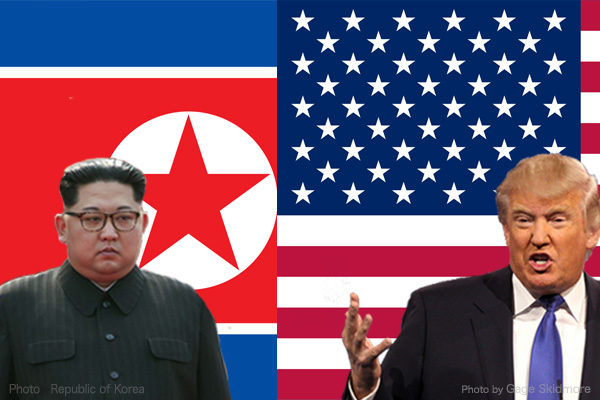
The possibility of a U.S.-North Korea summit has emerged. If an agreement is reached on the North Korean nuclear issue, a Japan-North Korea summit may be held, providing a chance to recover Japanese abductees from North Korea.
Kim seeks meeting with Trump in Autumn
On August 16, U.S. President Donald Trump ordered a significant reduction of U.S.-South Korea joint military exercises set to begin the following day, stating that the exercises were sending a “totally inappropriate and hostile” signal to the North.
The reduction at this timing may have been requested by Pyongyang at U.S.-North Korea talks underway behind the scenes. There were bilateral contacts in Singapore in June and in Thailand in July. On August 17, Trump admitted that he had a positive response to his overtures from North Korean leader Kim Jong Un.
In early August, North Korean sources told this author that Kim was intensifying preparations for a U.S.-North Korea summit, considering the timing of the meeting after Chinese President Xi Jinping’s U.S. visit in September.
Witnessing U.S. and Israeli bombing raids that killed Iran’s supreme leadership, Kim has feared that he might be the next target. Trump is well aware of this.
On August 19, Trump said: “I cannot let Iran have a nuclear weapon. And I know Kim very well, and he is going to be fine.” This remark can be interpreted as a message that what was done in Iran would not be repeated in North Korea.
Pyongyang may accept ICBM dismantlement
Trump also stated that North Korea possessed 57 nuclear weapons. If the specific number is accurate, Kim would become suspicious about who leaked the top North Korean secret to the U.S.
During the first Trump administration, U.S.-North Korea nuclear negotiations broke down because North Korea underestimated U.S. intelligence capabilities and attempted to conceal enriched uranium production facilities in Kangson, south of Pyongyang. Trump may have mentioned the top-secret number of nuclear weapons to signal that any similar deception would be futile as he is aware of detailed information about the nuclear weapons North Korea possesses.
It has recently come to light that Kim at his second meeting with Trump in Hanoi in 2019 rejected Trump’s proposal to lift some of U.N. sanctions on North Korea in return for Pyongyang’s dismantlement of intercontinental ballistic missiles. This time, Pyongyang is said to be considering the ICBM dismantlement. If that happens, Trump would be able to declare that he secured the safety of the U.S. mainland that the previous Biden administration failed achieve. Regarding Japan’s and South Korea’s concerns about North Korean medium- and short-range nuclear missiles, Washington would likely persuade Tokyo and Seoul that once the safety of the U.S. mainland is secured, the United States would have a free hand to strike North Korea, thereby strengthening extended deterrence for Japan and South Korea.
Japan’s economic assistance as a negotiating chip
At the Hanoi meeting, Trump told Kim to meet with then-Japanese Prime Minister Shinzo Abe to resolve the abduction issue, and Kim responded positively. Trump had made it clear that if North Korea abandoned its nuclear weapons, he would lift sanctions but would not provide economic assistance. Trump told Kim that North Korea would receive economic assistance from Japan on condition that the abduction issue be resolved. At a possible upcoming U.S.-North Korea summit, Trump would again likely use Japan’s economic assistance as a negotiating chip.
A chance to resolve the abduction issue may be emerging. It is hoped that the Sanae Takaichi administration will work closely with Trump, collect and fully consolidate information on the survival and whereabouts of Japanese abductees, and achieve the return of all victims.
Tsutomu Nishioka is a senior fellow and a Planning Committee member at the Japan Institute for National Fundamentals and a specially-appointed professor at Reitaku University. He covers South and North Koreas.
 Takashi Arimoto
 Tadae Takubo
 Fumio Ota
 Yoshiko Sakurai
 Yasushi Tomiyama
 Masahiko Hosokawa
 Yoichi Shimada
 Hiroshi Yuasa
 Tadashi Narabayashi
 Hideo Tamura
 Kiyofumi Iwata
 Kunio Orita
 Maki Nakagawa
 Etsuro Honda
 Yujiro Oiwa
 Hironobu Ishikawa
 Shiro Takahashi
 Katsuhiko Takaike
 Michio Ezaki
 Akira Momochi
 Akio Yaita
 Yoshihiko Yamada
 Seiji Kurosawa
 Koichi Endo
 Brahma Chellaney
 Nobuko Araki
 Yang Haiying
 James Auer
 Sumihiko Kawamura
 Hiroshi Kimura
 Osamu Nishi
 Koko Kato
 Tadashi Saito
 Shohei Umezawa
 Jason Morgan
 Arvind Gupta
 Kenro Nagoshi
 Takeshi Kudo
 Sukehiro Hirakawa
 Yumiko Nishimoto
 Rikiwo Shikama
 Eriko Yamatani
 Koichi Furusho
 Tadashi Ito
 Satoshi Hirano
 Lee Woo Young
 Taro Yayama
 Koh Sekai
 Koji Okamoto
 Tsutomu Toichi
 Hideaki Karaki
 Toshu Noguchi
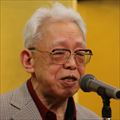 Kichinosuke Ihara
 Hisashi Matsumoto
 Yasuyuki Takai
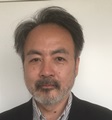 Nobuyuki Sato
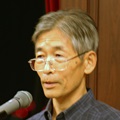 Chung Dae Kyun
 Toshio Watanabe
 Katsuya Tsukamoto
 Kazuto Suzuki
 Koichi Mera
 Akihisa Nagashima
 Miki Kase
 Eitaro Ogawa
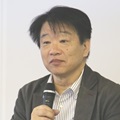 Hirotaka Watanabe
 Akinaka Senzaki
 Kevin Maher
 Yang Yi
 Hidetake Sawa
 Satoshi Tomisaka
 Nobukatsu Fujioka
 Masanori Kondo
 Hiroshi Ito
 Mio Sugita
 Rupakjyoti Borah
 Seiichi Okutomi
 Saburo Tsukamoto
 Yasuo Naito
 Satoshi Sakakibara
 Yen-Hung Lin
 Sanae Takaichi
 Haruhisa Nakagawa
 Norihide Miyoshi
 Syunichi Akasofu
 Ryoichi Hamamoto
 Hong Hyung
 Andrii Gurenko
 Ronald Morse
 Kazuhiko Inoue
 Keiichi Nakagawa
 Masamori Sase
 Katsutoshi Kawano
 Tomohisa Takei