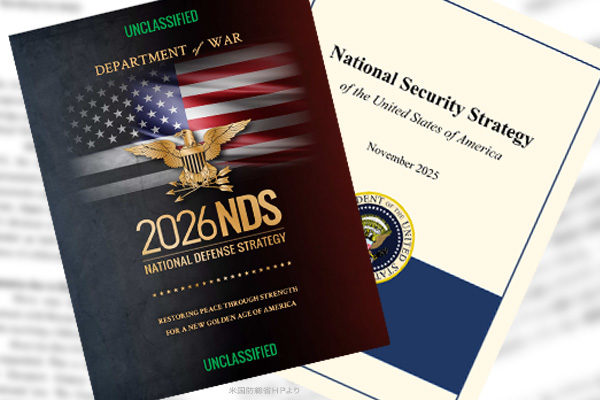
The planned Japan-U.S. summit between Prime Minister Sanae Takaichi and President Donald Trump in Washington on March 19 will provide an important opportunity to redefine Japan's postwar security posture. The National Security Strategy (NSS) released by the Trump administration in December and the National Defense Strategy (NDS) in January demonstrated a historic turning point that marked the end of the U.S.-led international order that lasted for 80 years after World War II. Now that the United States can no longer support the world alone like Atlas in Greek mythology, the question is whether Japan can break away from an alliance defined by lopsided dependence on the U.S. and pursue a mutually supportive partnership.
Persuade Trump of a “win-win” relationship
The NSS and the NDS, though giving top priority to U.S. homeland defense, identified China as the most powerful state relative to the U.S. since the 19th century and designated the deterrence of China in the Indo‑Pacific, along with strengthened burden‑sharing with allies, as key objectives. Specifically, the strategies emphasized the need to strengthen defense posture along the first island chain (from the Japanese archipelago to the Philippines) and called on U.S. allies to spend 5% of gross domestic product (GDP) on defense to move beyond their past one-sided dependence on the U.S. While North Atlantic Treaty Organization (NATO) members have already agreed to raise their respective defense spending to 5% of GDP by 2035, South Korea has vowed to increase the percentage to 3.5%, with Taiwan setting a 5% target for 2030. The U.S. expects Japan to follow suit.
However, what Japan should demonstrate is not a mere acceptance of numbers. At a time when Japan-U.S. cooperation is indispensable for Japan’s defense in the midst of China's rapid military buildup and naval and air force expansion into the Pacific, Japan should propose a theory that Japan’s own defense buildup can be linked to the U.S. strategy of enhancing defense posture along the first island chain and should persuade the Trump administration of the value of a Japan-U.S. win-win alliance. If Japan further strengthens its defense posture in the Western Pacific, which includes Japan’s territories, territorial waters, and airspace from the Japanese archipelago to the Ogasawara Islands, Japan will in turn support the U.S. military’s greater access to ports and other facilities that Washington seeks from its allies and partners along the first island chain.
In other words, aligning the U.S. military’s access routes from the U.S. mainland, Hawaii, and Guam to ports and airports in Japan with Japan's strengthened defense posture will dramatically enhance the credibility of the Japan-U.S. alliance. This strategy will demonstrate the determination of both Japan and the U.S. to prevent China from gaining dominance in the Western Pacific, thereby contributing directly to strengthening deterrence.
Toward genuine partnership
What Takaichi should do during her visit to the U.S. is not simply to respond to demands for a greater defense burden, but to enhance the quality of the Japan-U.S. alliance by proposing, on Japan’s own initiative, a strategy for the fundamental strengthening of the alliance. At a historic turning point in alliance building, Japan's strategic resolve is now being tested.
Kiyofumi Iwata is a member of the Planning Committee at the Japan Institute for National Fundamentals. Formerly, he served as Chief of Staff of the Japan Ground Self-Defense Force.
 Tsutomu Nishioka
 Takashi Arimoto
 Tadae Takubo
 Fumio Ota
 Yoshiko Sakurai
 Yasushi Tomiyama
 Masahiko Hosokawa
 Yoichi Shimada
 Hiroshi Yuasa
 Tadashi Narabayashi
 Hideo Tamura
 Kunio Orita
 Maki Nakagawa
 Etsuro Honda
 Yujiro Oiwa
 Hironobu Ishikawa
 Shiro Takahashi
 Katsuhiko Takaike
 Michio Ezaki
 Akira Momochi
 Akio Yaita
 Yoshihiko Yamada
 Seiji Kurosawa
 Koichi Endo
 Brahma Chellaney
 Nobuko Araki
 Yang Haiying
 James Auer
 Sumihiko Kawamura
 Hiroshi Kimura
 Osamu Nishi
 Koko Kato
 Tadashi Saito
 Shohei Umezawa
 Jason Morgan
 Arvind Gupta
 Kenro Nagoshi
 Takeshi Kudo
 Sukehiro Hirakawa
 Yumiko Nishimoto
 Rikiwo Shikama
 Eriko Yamatani
 Koichi Furusho
 Tadashi Ito
 Satoshi Hirano
 Lee Woo Young
 Taro Yayama
 Koh Sekai
 Koji Okamoto
 Tsutomu Toichi
 Hideaki Karaki
 Toshu Noguchi
 Kichinosuke Ihara
 Hisashi Matsumoto
 Yasuyuki Takai
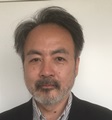 Nobuyuki Sato
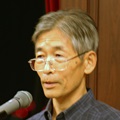 Chung Dae Kyun
 Toshio Watanabe
 Katsuya Tsukamoto
 Kazuto Suzuki
 Koichi Mera
 Akihisa Nagashima
 Miki Kase
 Eitaro Ogawa
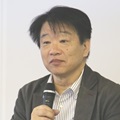 Hirotaka Watanabe
 Akinaka Senzaki
 Kevin Maher
 Yang Yi
 Hidetake Sawa
 Satoshi Tomisaka
 Nobukatsu Fujioka
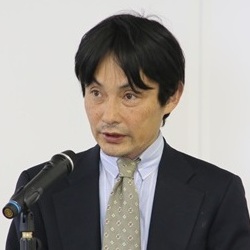 Masanori Kondo
 Hiroshi Ito
 Mio Sugita
 Rupakjyoti Borah
 Seiichi Okutomi
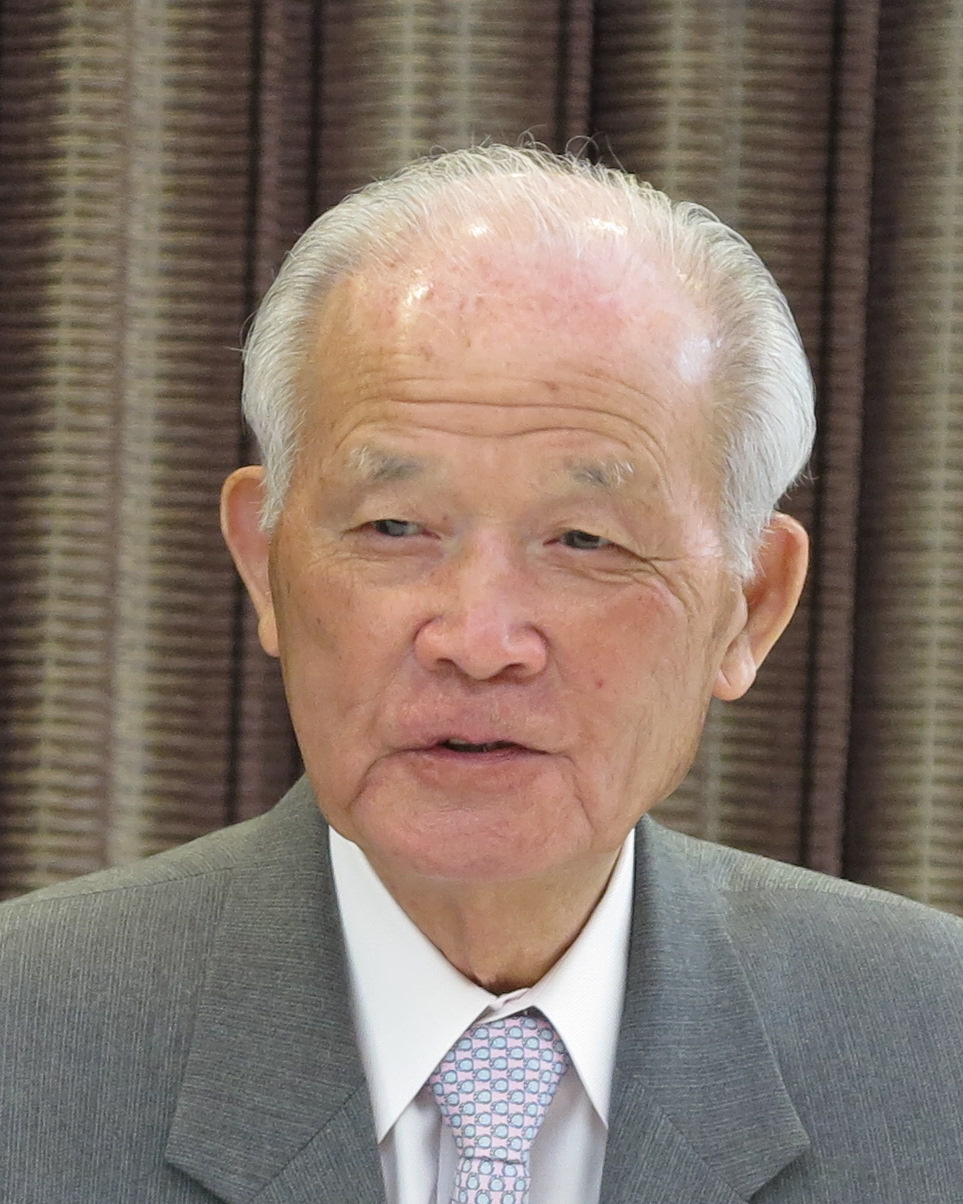 Saburo Tsukamoto
 Yasuo Naito
 Satoshi Sakakibara
 Yen-Hung Lin
 Sanae Takaichi
 Haruhisa Nakagawa
 Norihide Miyoshi
 Syunichi Akasofu
 Ryoichi Hamamoto
 Hong Hyung
 Andrii Gurenko
 Ronald Morse
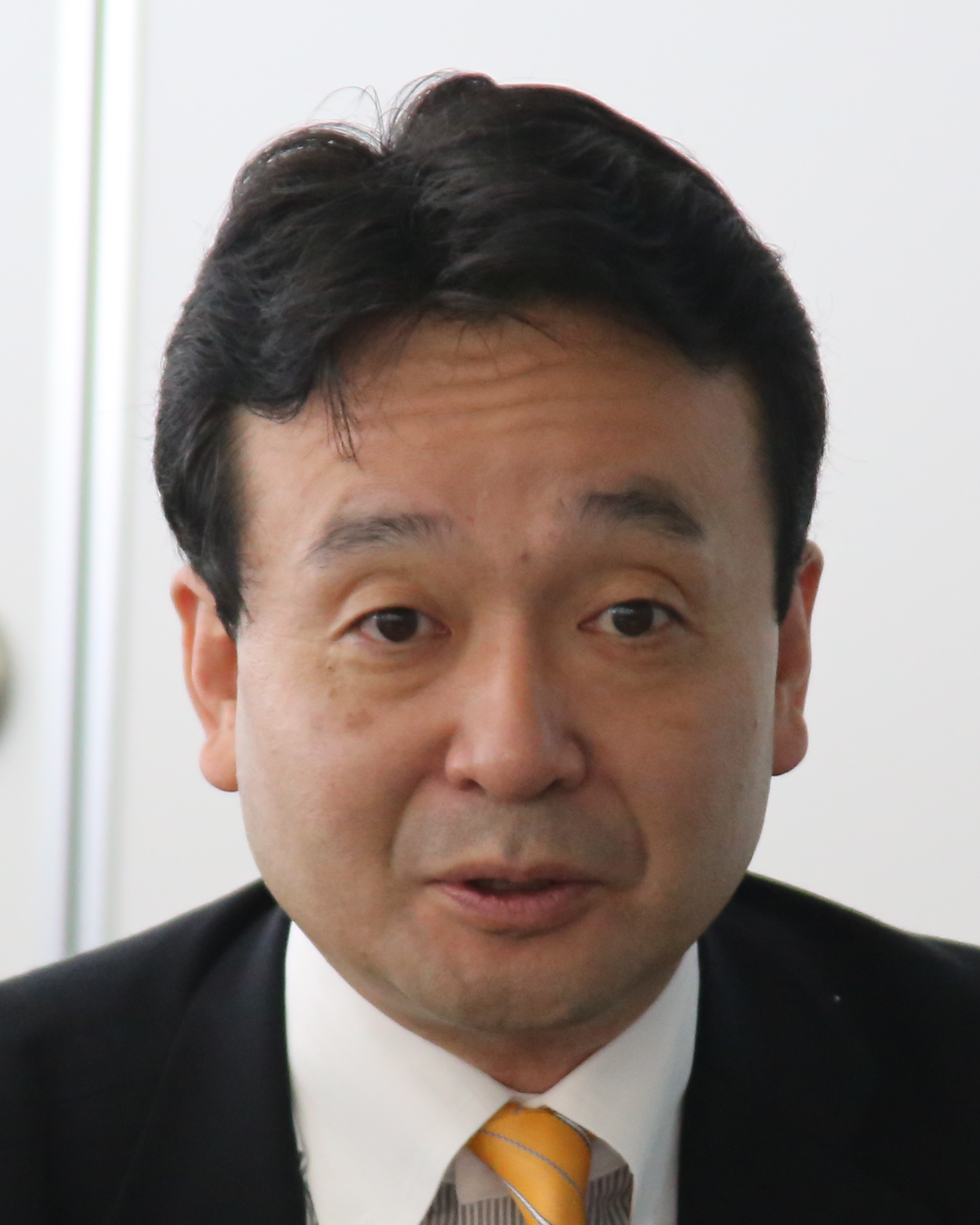 Kazuhiko Inoue
 Keiichi Nakagawa
 Masamori Sase
 Katsutoshi Kawano
 Tomohisa Takei