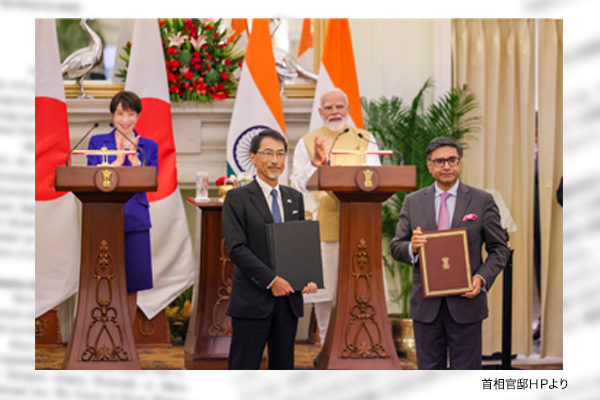
Japanese Prime Minister Sanae Takaichi’s visit to India from July 1 to 3 may be regarded as having clearly succeeded in elevating Japan-India relations to a new stage. Takaichi and her Indian counterpart Narendra Modi shared basic policies on the three pillars of national security, economic security, and economic exchange, and launched specific projects. The visit represented Takaichi’s first public-private mission in which more than 150 Japanese companies participated and signed cooperation agreements with their Indian counterparts. The Japanese industrial sector’s enthusiasm for business in India is clearly increasing. More important than such business benefits is the strategic significance of the visit.
Developing a regional order
The visit paved the way for Japan and India to deepen their coordination as strategic partners and lead the establishment of a regional order.
India is the birthplace of the “Free and Open Indo-Pacific (FOIP),” where then Prime Minister Shinzo Abe delivered a speech that became the source of the FOIP concept. The Takaichi administration has launched an “evolved version” of FOIP. India, for its part, has advocated what can be called an “Indian FOIP,” a cooperation framework connecting Asia and Africa with the Indian Ocean as its axis. The two visions can be linked to develop a mutually complementary regional order with synergistic effects.
Coordination to counter China
A major strategically significant aspect of the Takaichi-Modi talks is the coordination undertaken with an eye toward countering China.
First, Takaichi achieved tangible results in defense cooperation that could serve as a check against China. The basic agreement on Japan’s export of the UNICORN ship communication antenna system installed on Japan Maritime Self-Defense Force ships is a major step forward. This marks the first export since Japan and India signed a defense equipment transfer agreement in 2015.
Second, the Japanese and Indian leaders issued a joint declaration focused specifically on economic security. With China’s export restrictions on rare earths in mind, they expressed “grave concerns over the use of economic coercion.” As specific areas for cooperation, they identified energy, semiconductors, critical minerals, information and communications, and pharmaceuticals.
India is not only a populous country with strong potential as a growing market. It is also an important strategic partner in economic security with which Japan should coordinate in enhancing supply chain resilience. India is mutually complementary to Japan and a highly valuable cooperation partner in semiconductor design, artificial intelligence, and quantum technology.
Third, regarding energy security, the two leaders highlighted Modi’s flagship biogas project for bilateral cooperation. This contributes to improving India’s energy self-sufficiency and reducing its dependence on China.
China reacted sharply, saying that none should be allowed to take advantage of cooperation for inciting confrontation. The Chinese reaction is evidence that diplomacy conducted with an eye toward countering China has produced results.
Bridging U.S.-India relations
What must not be overlooked is the strategic significance of Japan’s contribution to bridging U.S.-India relations.
India’s relations with the U.S. Trump administration have become strained. Under the Trump administration, it has also become difficult to arrange a Quad leaders’ meeting among Japan, the United States, Australia and India. Connecting the U.S. and India is Japan’s important role in making FOIP effective. At their talks, the Japanese and Indian prime ministers agreed to advance practical cooperation within the Quad framework, recognizing the importance of encouraging the U.S. to remain engaged in Asia.
Viewed in this light, Japan and India can be assessed as having entered, through the latest summit, a new stage in which the two countries become mutually indispensable partners.
Masahiko Hosokawa is a professor at Meisei University, a special adviser to the Cabinet Secretariat, and a Planning Committee member at the Japan Institute for National Fundamentals. Formerly, he served as director-general of the Trade Control Department at Japan’s Ministry of Economy, Trade and Industry.
 Tsutomu Nishioka
 Takashi Arimoto
 Tadae Takubo
 Fumio Ota
 Yoshiko Sakurai
 Yasushi Tomiyama
 Yoichi Shimada
 Hiroshi Yuasa
 Tadashi Narabayashi
 Hideo Tamura
 Kiyofumi Iwata
 Kunio Orita
 Maki Nakagawa
 Etsuro Honda
 Yujiro Oiwa
 Hironobu Ishikawa
 Shiro Takahashi
 Katsuhiko Takaike
 Michio Ezaki
 Akira Momochi
 Akio Yaita
 Yoshihiko Yamada
 Seiji Kurosawa
 Koichi Endo
 Brahma Chellaney
 Nobuko Araki
 Yang Haiying
 James Auer
 Sumihiko Kawamura
 Hiroshi Kimura
 Osamu Nishi
 Koko Kato
 Tadashi Saito
 Shohei Umezawa
 Jason Morgan
 Arvind Gupta
 Kenro Nagoshi
 Takeshi Kudo
 Sukehiro Hirakawa
 Yumiko Nishimoto
 Rikiwo Shikama
 Eriko Yamatani
 Koichi Furusho
 Tadashi Ito
 Satoshi Hirano
 Lee Woo Young
 Taro Yayama
 Koh Sekai
 Koji Okamoto
 Tsutomu Toichi
 Hideaki Karaki
 Toshu Noguchi
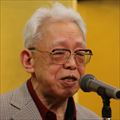 Kichinosuke Ihara
 Hisashi Matsumoto
 Yasuyuki Takai
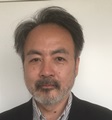 Nobuyuki Sato
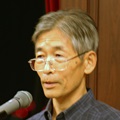 Chung Dae Kyun
 Toshio Watanabe
 Katsuya Tsukamoto
 Kazuto Suzuki
 Koichi Mera
 Akihisa Nagashima
 Miki Kase
 Eitaro Ogawa
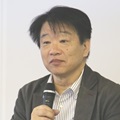 Hirotaka Watanabe
 Akinaka Senzaki
 Kevin Maher
 Yang Yi
 Hidetake Sawa
 Satoshi Tomisaka
 Nobukatsu Fujioka
 Masanori Kondo
 Hiroshi Ito
 Mio Sugita
 Rupakjyoti Borah
 Seiichi Okutomi
 Saburo Tsukamoto
 Yasuo Naito
 Satoshi Sakakibara
 Yen-Hung Lin
 Sanae Takaichi
 Haruhisa Nakagawa
 Norihide Miyoshi
 Syunichi Akasofu
 Ryoichi Hamamoto
 Hong Hyung
 Andrii Gurenko
 Ronald Morse
 Kazuhiko Inoue
 Keiichi Nakagawa
 Masamori Sase
 Katsutoshi Kawano
 Tomohisa Takei