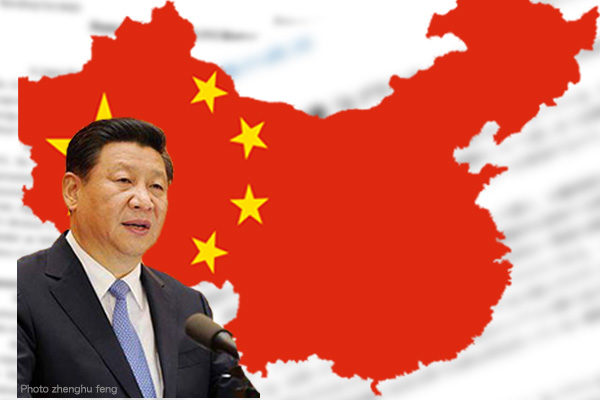
On July 6, China announced that its Navy’s strategic nuclear submarine (SSBN) fired a submarine-launched ballistic missile (SLBM) that accurately hit the target waters in the Pacific high seas. This was a launch of a strategic nuclear missile on a minimum energy trajectory—the most efficient flight pattern—following the Rocket Force’s 2024 live firing of an intercontinental ballistic missile (ICBM) for silo loading into the Pacific high seas. The latest launch formed part of China’s efforts to build up its nuclear forces toward establishing a triad, the three‑pillar structure of land‑, sea‑, and air‑based nuclear capabilities.
China planned flight over Japan
Before this launch, China issued NOTAMs (notice to airmen) in two patterns, A and B. The flight paths inferred from these notices indicate that Pattern A would run from Bohai Bay in eastern China and pass over Japan, while Pattern B would run from off the northeast coast of Hainan Island in southern China and pass over the Philippines. In both cases, the designated impact point lies in the Pacific Ocean, approximately 7,200 kilometers away.
In Pattern A, the launch would serve as a show of force toward Japan, while also allowing Japan a longer window to collect the missile’s telemetry flight data. In Pattern B, because the Yalong Naval Base on Hainan Island hosts the Jin‑class SSBN force, the launch could be conducted in a manner closely resembling actual operations—from missile loading at the base, to departure, to movement toward the launch point.
The Japanese government announced that the missile did not pass over Japan, indicating that it was likely launched along the Pattern B trajectory. In addition to the possibility that China designated Pattern A as a means of intimidation toward Japan, it is also conceivable that China actually deployed SSBNs to both the A and B launch areas and trained launch procedures so that, in wartime, simultaneous launches could be carried out from both the South China Sea and Bohai.
Demonstrating the effectiveness of SSBN patrols
China currently possesses two types of SLBMs: the JL-2 with a range of 7,200 kilometers and the JL-3 with a range of more than 10,000 kilometers. A U.S. Department of Defense report in 2023 said that the JL-3 as well as the JL-2 was being fielded on Jin-class SSBNs.
Regarding the missile used in the latest launch, Taiwan’s Defense Minister Gu Lixiong indicated that it was likely a JL‑2. If so, the operational unit actually conducted a launch using a minimum‑energy trajectory, meaning a launch closely aligned with real combat conditions, and this would demonstrate the practical effectiveness of strategic patrols conducted by SSBNs equipped with the JL‑2.
If the JL-3 was not used, one possible reason is that China may have wanted to prevent the newest SLBM’s telemetry data from being obtained by other countries. Another possibility is that the JL‑2 was chosen because the Jin-class SSBN was originally designed for the JL-2 and the JL-2 offers a higher probability of a successful launch based on past performance.
Even if the JL-3 was not launched this time, however, it should not be taken to mean that the JL-3 has not been deployed on the Jin-class SSBNs. An SSBN equipped with the JL-3 can put the U.S. mainland within the range of the SLBM from the South China Sea without crossing the First Island Chain (linking Japan, Taiwan, and the Philippines) into the Pacific, posing a great threat to the United States.
Revision of Japan’s three non-nuclear principles required urgently
Through the latest SLBM launch, China conducted a technical check on its nuclear force and demonstrated the effectiveness of its strategic patrols, thereby signaling its nuclear deterrence against the United States. While China criticizes Japan for what it claims as a “new militarism,” it is time for Japan to consider a wide range of responses to China’s nuclear triad development, including the revision of its Three Non-Nuclear Principles of not possessing, producing, or permitting the introduction of nuclear weapons into Japanese territory.
Maki Nakagawa is a researcher at the Japan Institute for National Fundamentals and a former commander of the Basic Intelligence Unit, Japan Ground Self-Defense Force.
 Tsutomu Nishioka
 Takashi Arimoto
 Tadae Takubo
 Fumio Ota
 Yoshiko Sakurai
 Yasushi Tomiyama
 Masahiko Hosokawa
 Yoichi Shimada
 Hiroshi Yuasa
 Tadashi Narabayashi
 Hideo Tamura
 Kiyofumi Iwata
 Kunio Orita
 Etsuro Honda
 Yujiro Oiwa
 Hironobu Ishikawa
 Shiro Takahashi
 Katsuhiko Takaike
 Michio Ezaki
 Akira Momochi
 Akio Yaita
 Yoshihiko Yamada
 Seiji Kurosawa
 Koichi Endo
 Brahma Chellaney
 Nobuko Araki
 Yang Haiying
 James Auer
 Sumihiko Kawamura
 Hiroshi Kimura
 Osamu Nishi
 Koko Kato
 Tadashi Saito
 Shohei Umezawa
 Jason Morgan
 Arvind Gupta
 Kenro Nagoshi
 Takeshi Kudo
 Sukehiro Hirakawa
 Yumiko Nishimoto
 Rikiwo Shikama
 Eriko Yamatani
 Koichi Furusho
 Tadashi Ito
 Satoshi Hirano
 Lee Woo Young
 Taro Yayama
 Koh Sekai
 Koji Okamoto
 Tsutomu Toichi
 Hideaki Karaki
 Toshu Noguchi
 Kichinosuke Ihara
 Hisashi Matsumoto
 Yasuyuki Takai
 Nobuyuki Sato
 Chung Dae Kyun
 Toshio Watanabe
 Katsuya Tsukamoto
 Kazuto Suzuki
 Koichi Mera
 Akihisa Nagashima
 Miki Kase
 Eitaro Ogawa
 Hirotaka Watanabe
 Akinaka Senzaki
 Kevin Maher
 Yang Yi
 Hidetake Sawa
 Satoshi Tomisaka
 Nobukatsu Fujioka
 Masanori Kondo
 Hiroshi Ito
 Mio Sugita
 Rupakjyoti Borah
 Seiichi Okutomi
 Saburo Tsukamoto
 Yasuo Naito
 Satoshi Sakakibara
 Yen-Hung Lin
 Sanae Takaichi
 Haruhisa Nakagawa
 Norihide Miyoshi
 Syunichi Akasofu
 Ryoichi Hamamoto
 Hong Hyung
 Andrii Gurenko
 Ronald Morse
 Kazuhiko Inoue
 Keiichi Nakagawa
 Masamori Sase
 Katsutoshi Kawano
 Tomohisa Takei