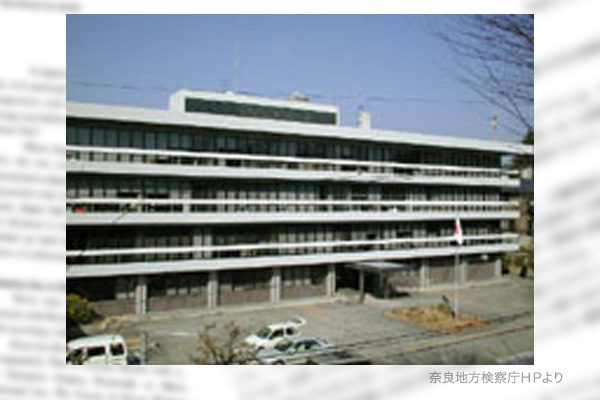
The Nara District Court sentenced Tetsuya Yamagami to life imprisonment for shooting former Japanese Prime Minister Shinzo Abe to death. I believe the sentence should have been the maximum penalty, but given that prosecutors had sought life imprisonment, the ruling can only be regarded as appropriate.
Some media outlets and commentators have criticized the ruling, arguing that Yamagami should have received a fixed-term prison sentence with a reduced degree of culpability because he was forced into an unhappy life by the Unification Church. However, no matter what hardships a perpetrator may have experienced, such circumstances can never serve as an excuse for taking another person’s life.
Court rejects sympathy for defendant
Yamagami had initially targeted senior figures of the Unification Church but later changed the target to Abe, who, as admitted by the defendant, was not central to the issue. As his reason, Yamagami said he could not afford to wait for the visit to Japan by South Korean Unification Church executives due to his financial constraints. If so, why did he not target senior members of the Unification Church in Japan? If the motive for the attack was a grudge against the Unification Church, it would have been natural for him to target Japanese Unification Church executives rather than Abe.
Given that, Yamagami had no reason to attack Abe on the grounds that the Unification Church drove him into a miserable situation. It is natural and appropriate for the court to have dismissed the defense’s arguments and the emotionally sympathetic public sentiment toward the defendant, and sentenced him to life imprisonment as sought by the prosecution.
From another perspective, however, there is a significant problem with the ruling. The verdict found that the background to this incident was Yamagami’s belief that Abe was an influential figure within the church and in society. This means that Abe, even if he had had some connection with the church, would not have been Yamagami’s attack target unless he had been a former prime minister or a powerful politician.
In other words, it follows that there was a causal relationship between Abe’s attributes of being a former prime minister and a powerful politician with great influence and the shooting incident. However, in the section of the ruling that evaluates the circumstances of the crime and the gravity of the outcome, there is no mention whatsoever of the societal impact of the fact that the victim was a former prime minister and a powerful politician, or that the attack occurred during a campaign speech in a national election, which forms the foundation of democratic politics. The court merely states that “the victim’s life was lost, and public peace and safety were also severely harmed,” as if the case involved a private individual attacked in an ordinary crowd.
Protect politicians from attacks
Politicians often find themselves in situations where they must engage at close range with crowds that include people who hold opposing political views. In that sense, their lives and physical safety should be regarded as being at greater risk than those of ordinary citizens, and stronger legal deterrence is required to protect them. Given that this ruling treats politicians as if they were ordinary individuals, it is difficult to expect it to provide such deterrence. There is a concern that it could lower the threshold for attacks on politicians.
Coincidentally, the campaign for the House of Representatives election has begun. The police and each political party should ensure the highest level of security and protection so that Prime Minister Sanae Takaichi and other politicians are not harmed during the campaign period.
Yasuyuki Takai is an attorney. Earlier, he had been a prosecutor.
 Tsutomu Nishioka
 Tadae Takubo
 Takashi Arimoto
 Fumio Ota
 Yoshiko Sakurai
 Yasushi Tomiyama
 Masahiko Hosokawa
 Yoichi Shimada
 Hiroshi Yuasa
 Tadashi Narabayashi
 Hideo Tamura
 Kiyofumi Iwata
 Kunio Orita
 Maki Nakagawa
 Etsuro Honda
 Yujiro Oiwa
 Hironobu Ishikawa
 Shiro Takahashi
 Katsuhiko Takaike
 Michio Ezaki
 Akira Momochi
 Akio Yaita
 Yoshihiko Yamada
 Seiji Kurosawa
 Koichi Endo
 Brahma Chellaney
 Nobuko Araki
 Yang Haiying
 James Auer
 Sumihiko Kawamura
 Hiroshi Kimura
 Osamu Nishi
 Koko Kato
 Tadashi Saito
 Shohei Umezawa
 Jason Morgan
 Arvind Gupta
 Kenro Nagoshi
 Takeshi Kudo
 Sukehiro Hirakawa
 Yumiko Nishimoto
 Rikiwo Shikama
 Eriko Yamatani
 Koichi Furusho
 Tadashi Ito
 Satoshi Hirano
 Lee Woo Young
 Taro Yayama
 Koh Sekai
 Koji Okamoto
 Tsutomu Toichi
 Hideaki Karaki
 Toshu Noguchi
 Kichinosuke Ihara
 Hisashi Matsumoto
 Nobuyuki Sato
 Chung Dae Kyun
 Toshio Watanabe
 Katsuya Tsukamoto
 Kazuto Suzuki
 Koichi Mera
 Akihisa Nagashima
 Miki Kase
 Eitaro Ogawa
 Hirotaka Watanabe
 Akinaka Senzaki
 Kevin Maher
 Yang Yi
 Hidetake Sawa
 Satoshi Tomisaka
 Nobukatsu Fujioka
 Masanori Kondo
 Hiroshi Ito
 Mio Sugita
 Rupakjyoti Borah
 Seiichi Okutomi
 Saburo Tsukamoto
 Yasuo Naito
 Satoshi Sakakibara
 Yen-Hung Lin
 Sanae Takaichi
 Haruhisa Nakagawa
 Norihide Miyoshi
 Syunichi Akasofu
 Ryoichi Hamamoto
 Hong Hyung
 Andrii Gurenko
 Ronald Morse
 Kazuhiko Inoue
 Keiichi Nakagawa
 Masamori Sase
 Katsutoshi Kawano
 Tomohisa Takei