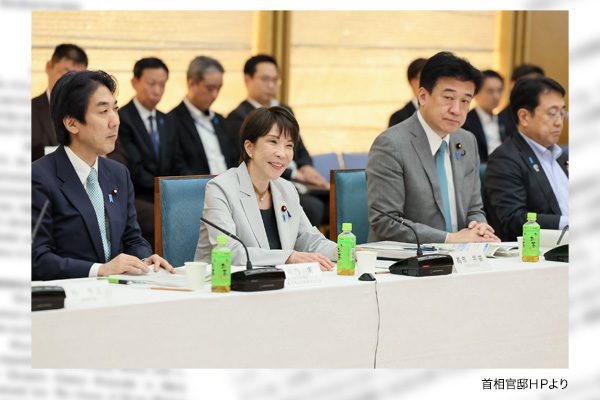
Japan’s annual Basic Policies for Economic and Fiscal Management and Reform (the “Basic Policy”) was approved by the Cabinet on July 21. The document set forth the fundamental guidelines for economic and fiscal management, while also presenting the government’s approach to the Medium‑ to Long‑Term Economic and Fiscal Plan covering fiscal years 2027 through 2040, as well as its approach to formulating the fiscal 2027 budget.
It is the first Basic Policy issued under Prime Minister Sanae Takaichi’s administration, which aims to build a “strong economy.” As expected, it is a groundbreaking document that introduces significant changes to Japan’s conventional fiscal management from the standpoint of promoting growth. Close attention will be paid to how these policies are implemented and what economic effects they produce.
Primary budget surplus to be achieved over multiple years
The most fundamental framework of the Basic Policy 2026 is the concept of “responsible and proactive fiscal policy,” which seeks to achieve fiscal spending that is sustainable and the most effective for economic growth. In this sense, fiscal 2027 was designated as “the first year of responsible and proactive fiscal policy.”
The latest Basic Policy, though excluding the term “fiscal discipline,” does not ignore fiscal discipline. The earlier fiscal discipline pursued an annual primary budget surplus, which means that central and local government policy spending is mainly financed by tax revenue even without government bond issuance. The primary budget balance concerns only revenue and spending. Even if the primary budget balance is in deficit with government debt increasing, fiscal management can be sustained as long as the economy, or nominal GDP (gross domestic product), grows faster than government debt.
Accordingly, the latest Basic Policy adopts the view that fiscal sustainability can be ensured as long as the debt‑to‑nominal‑GDP ratio (the debt ratio) is on a stable downward path. However, because Japan’s debt ratio is large, it is considered sufficient if an approximate primary budget surplus is achieved over multiple fiscal years.
Investment framework for “A Strong and Prosperous Japan”
Regarding budget planning, the latest Basic Policy created a special framework for “A Strong and Prosperous Japan” investments, distinct from ordinary expenditures and intended mainly for crisis‑management and growth‑oriented investment. The special investment framework is designed to enable the private sector to undertake investment that leads to economic growth with confidence, anticipating future government support. In order to induce truly effective investment from the private sector, the Basic Policy assumes that no ceiling will be imposed at the budget request stage and that budgets can be executed over multiple fiscal years. It also proposed to establish special accounts for investment that is particularly important from the standpoint of national security.
Furthermore, the Basic Policy seeks to revise the fiscal practice of relying on supplementary budgets for large-scale economic measures, limiting supplementary budgets to emergency purposes and funding permanent policies through initial budgets. This is only natural.
Clear emphasis on public-private coordination
These new initiatives could be described as proactive fiscal policy. In the past, the government had been generally cautious about being directly involved in private sector investment, except in defense and other industries where the private sector alone fails to invest sufficiently but benefits of the investment extend to the whole society. However, in recent years, as the economy has become more complex and the number of challenges that are difficult for the private sector to address on its own has increased, the idea of promoting investment through public-private coordination has come to be emphasized. Based on this idea, the latest Basic Policy made clear the government’s stance of proactively supporting private-sector investment.
Etsuro Honda is a member of the Planning Committee of the Japan Institute for National Fundamentals and a guest professor at Kyoto University Graduate School. He advised former Prime Minister Shinzo Abe for the success of Abenomics.
 Tsutomu Nishioka
 Tadae Takubo
 Takashi Arimoto
 Fumio Ota
 Yoshiko Sakurai
 Yasushi Tomiyama
 Masahiko Hosokawa
 Yoichi Shimada
 Hiroshi Yuasa
 Tadashi Narabayashi
 Hideo Tamura
 Kiyofumi Iwata
 Kunio Orita
 Maki Nakagawa
 Yujiro Oiwa
 Hironobu Ishikawa
 Shiro Takahashi
 Katsuhiko Takaike
 Michio Ezaki
 Akira Momochi
 Akio Yaita
 Yoshihiko Yamada
 Seiji Kurosawa
 Koichi Endo
 Brahma Chellaney
 Nobuko Araki
 Yang Haiying
 James Auer
 Sumihiko Kawamura
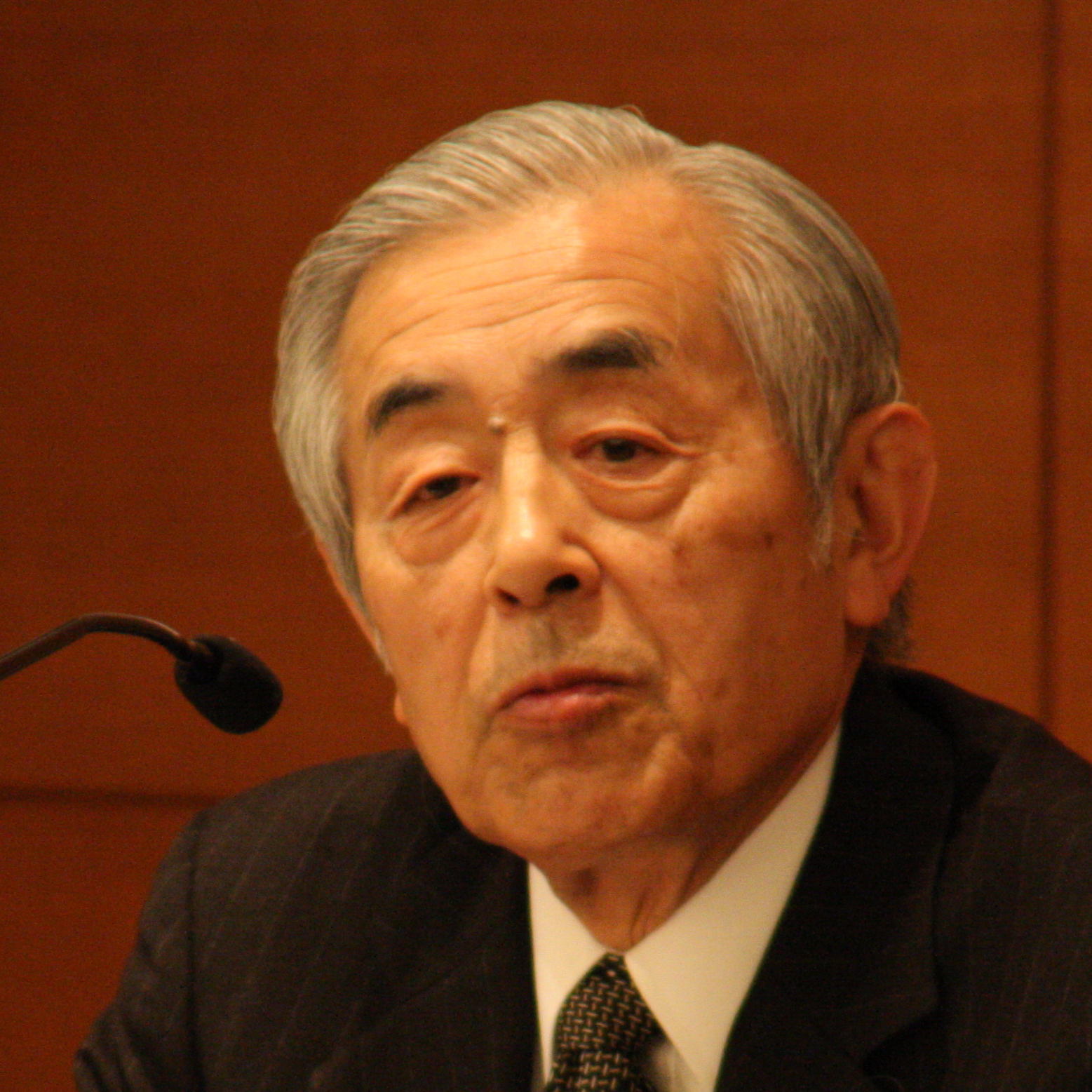 Hiroshi Kimura
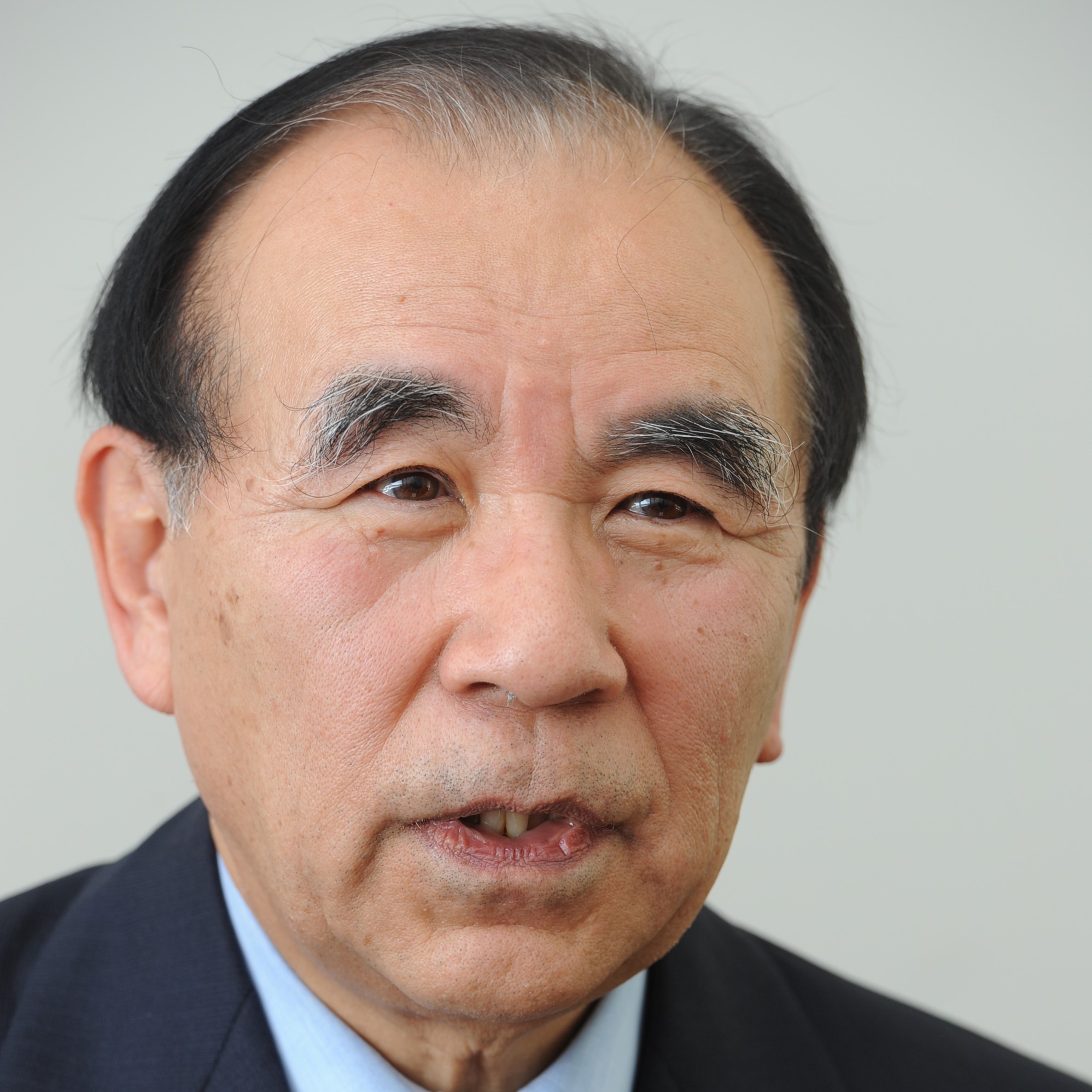 Osamu Nishi
 Koko Kato
 Tadashi Saito
 Shohei Umezawa
 Jason Morgan
 Arvind Gupta
 Kenro Nagoshi
 Takeshi Kudo
 Sukehiro Hirakawa
 Yumiko Nishimoto
 Rikiwo Shikama
 Eriko Yamatani
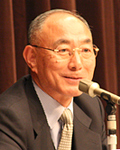 Koichi Furusho
 Tadashi Ito
 Satoshi Hirano
 Lee Woo Young
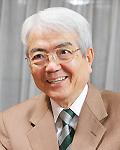 Taro Yayama
 Koh Sekai
 Koji Okamoto
 Tsutomu Toichi
 Hideaki Karaki
 Toshu Noguchi
 Kichinosuke Ihara
 Hisashi Matsumoto
 Yasuyuki Takai
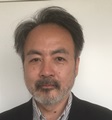 Nobuyuki Sato
 Chung Dae Kyun
 Toshio Watanabe
 Katsuya Tsukamoto
 Kazuto Suzuki
 Koichi Mera
 Akihisa Nagashima
 Miki Kase
 Eitaro Ogawa
 Hirotaka Watanabe
 Akinaka Senzaki
 Kevin Maher
 Yang Yi
 Hidetake Sawa
 Satoshi Tomisaka
 Nobukatsu Fujioka
 Masanori Kondo
 Hiroshi Ito
 Mio Sugita
 Rupakjyoti Borah
 Seiichi Okutomi
 Saburo Tsukamoto
 Yasuo Naito
 Satoshi Sakakibara
 Yen-Hung Lin
 Sanae Takaichi
 Haruhisa Nakagawa
 Norihide Miyoshi
 Syunichi Akasofu
 Ryoichi Hamamoto
 Hong Hyung
 Andrii Gurenko
 Ronald Morse
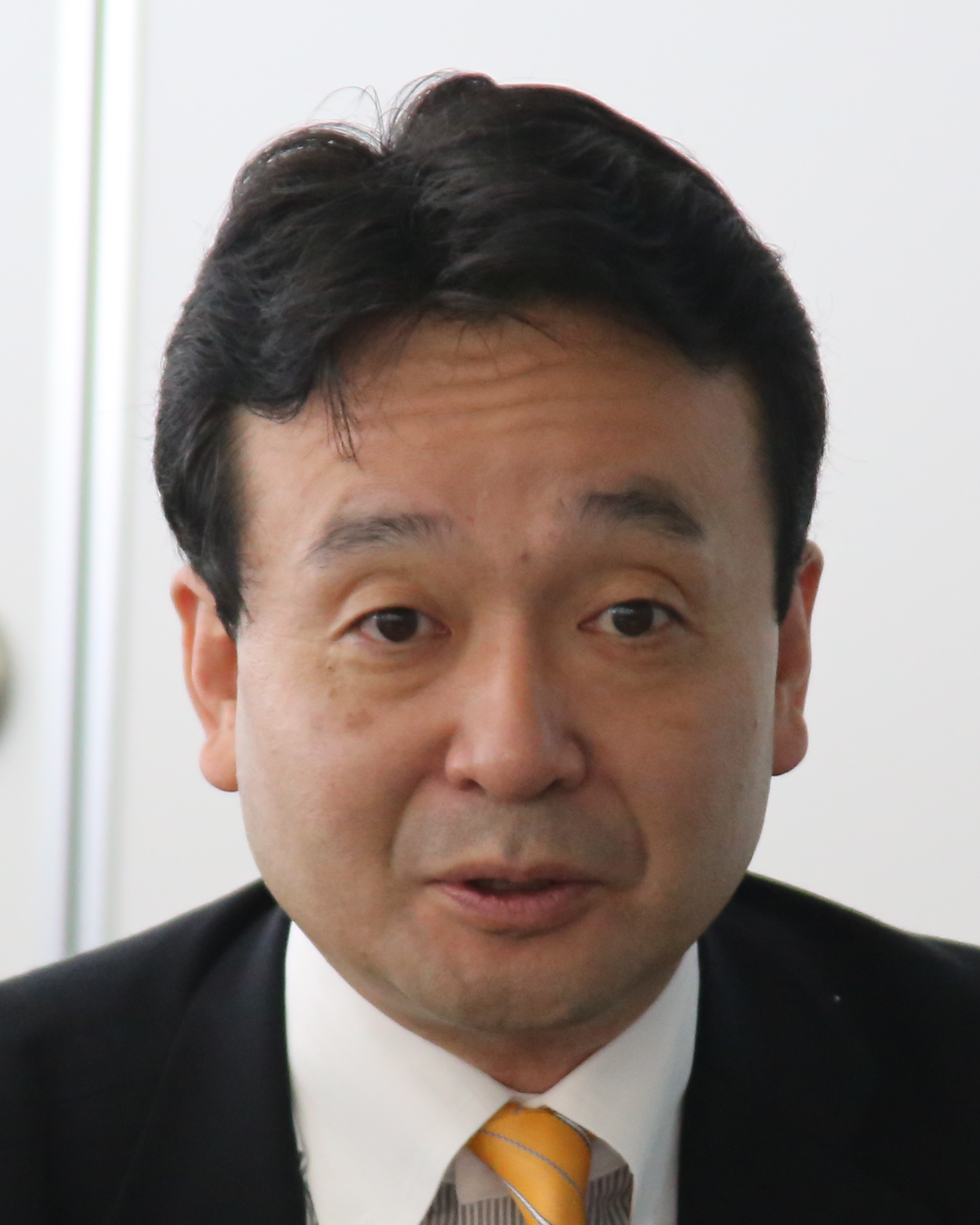 Kazuhiko Inoue
 Keiichi Nakagawa
 Masamori Sase
 Katsutoshi Kawano
 Tomohisa Takei