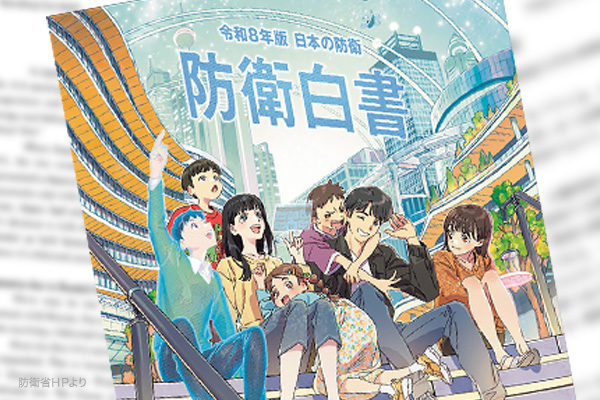
On August 4, Japan’s Defense White Paper for 2026 was released. While accurately recognizing the international community is facing its “greatest trial since World War II,” it is hard to say that the accompanying discussions commensurate with that recognition. First, although depicting Japan as surrounded by three nuclear-armed states—China, North Korea, and Russia—the paper provides no discussion on the reliability of the U.S. nuclear umbrella. Second, while emphasizing the importance of war-sustaining capabilities as a lesson learned from the war in Ukraine, it provides no self‑assessment of Japan’s ammunition stockpiles or how many days Japan could sustain combat operations. Third, discussions have stalled at the early achievement of defense‑related expenditures reaching 2% of gross domestic product (GDP), with no reference to what comes after that 2 percent in terms of defense capabilities and necessary financial resources. Most serious of all is the intellectual paralysis regarding nuclear issues.
Significant gap from Koizumi’s remark
China possesses more than 1,000 medium-range ballistic missiles capable of carrying nuclear warheads and is rapidly enhancing its nuclear force qualitatively and quantitatively. North Korea has achieved the miniaturization of nuclear weapons into warheads and openly threatened to “sink the Japanese archipelago with nuclear bombs,” as declared by its official Korean Central News Agency on September 14, 2017. Russia, for its part, has made no secret of nuclear intimidation and coercion since its aggression against Ukraine. Japan is the only country facing nuclear threats from three autocratic nations.
Japanese Defense Minister Shinjiro Koizumi has come under fire from the media and atomic bomb survivors’ groups for his remark that “Japan cannot establish security without taboo-free discussions on nuclear issues.” However, the suppression of such discussions cannot protect the lives of the people. His statement is absolutely right. Nevertheless, the white paper published by his Ministry of Defense avoids discussions on nuclear issues including the reliability of the nuclear umbrella. The paper fails to directly address the problem raised by the defense minister. Even the ruling Liberal Democratic Party’s defense proposal adopted on June 11 failed to go beyond calling for deepening the Japan-U.S. extended deterrence dialogue. The LDP thus differs with its junior coalition partner, the Japan Innovation Party, which has advocated the institutional consideration of Japanese-style nuclear sharing and specific measures for a U.S. plan to deploy submarine-launched nuclear cruise missiles (SLCM-Ns).
What should be discussed now are issues such as reexamining the “no‑introduction” principle among Japan’s Three Non‑Nuclear Principles in anticipation of port calls in Japan by U.S. submarines armed with SLCM-Ns, as well as the appropriateness of nuclear sharing. The U.S. nuclear umbrella is becoming a broken umbrella without nuclear delivery means around Japan. There is a world of difference in deterrence between not examining these matters at all and making a choice after proper examination.
Don’t avoid discussing nuclear issues
Nuclear abolition is humanity’s ultimate goal. The long-standing efforts of Nihon Hidankyo (the Japan Confederation of A- and H-Bomb Sufferers Organizations), which has won the Nobel Peace Prize, deserve heartfelt respect. Yet we must not forget that until the abolition is achieved, nuclear threats will remain a stark reality. Being the only country to have suffered atomic bombings does not grant Japan any privilege of being spared from another nuclear attack. Because Japan is a country that knows the horrors of atomic bombing, it must not avoid discussions on how to prevent its people from becoming victims of nuclear weapons again. Reassurance without discussions is not security. Now is the time for the Japanese government to engage in “taboo-free discussions.”
Kunio Orita is a member of the JINF Planning Committee and a special professor at Reitaku University. He is a retired Lieutenant General of the Japan Air Self-Defense Force.
 Tsutomu Nishioka
 Takashi Arimoto
 Tadae Takubo
 Fumio Ota
 Yoshiko Sakurai
 Yasushi Tomiyama
 Masahiko Hosokawa
 Yoichi Shimada
 Hiroshi Yuasa
 Tadashi Narabayashi
 Hideo Tamura
 Kiyofumi Iwata
 Maki Nakagawa
 Etsuro Honda
 Yujiro Oiwa
 Hironobu Ishikawa
 Shiro Takahashi
 Katsuhiko Takaike
 Michio Ezaki
 Akira Momochi
 Akio Yaita
 Yoshihiko Yamada
 Seiji Kurosawa
 Koichi Endo
 Brahma Chellaney
 Nobuko Araki
 Yang Haiying
 James Auer
 Sumihiko Kawamura
 Hiroshi Kimura
 Osamu Nishi
 Koko Kato
 Tadashi Saito
 Shohei Umezawa
 Jason Morgan
 Arvind Gupta
 Kenro Nagoshi
 Takeshi Kudo
 Sukehiro Hirakawa
 Yumiko Nishimoto
 Rikiwo Shikama
 Eriko Yamatani
 Koichi Furusho
 Tadashi Ito
 Satoshi Hirano
 Lee Woo Young
 Taro Yayama
 Koh Sekai
 Koji Okamoto
 Tsutomu Toichi
 Hideaki Karaki
 Toshu Noguchi
 Kichinosuke Ihara
 Hisashi Matsumoto
 Yasuyuki Takai
 Nobuyuki Sato
 Chung Dae Kyun
 Toshio Watanabe
 Katsuya Tsukamoto
 Kazuto Suzuki
 Koichi Mera
 Akihisa Nagashima
 Miki Kase
 Eitaro Ogawa
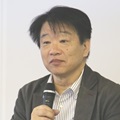 Hirotaka Watanabe
 Akinaka Senzaki
 Kevin Maher
 Yang Yi
 Hidetake Sawa
 Satoshi Tomisaka
 Nobukatsu Fujioka
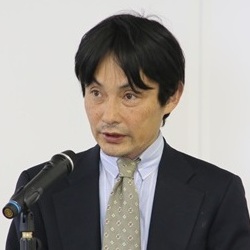 Masanori Kondo
 Hiroshi Ito
 Mio Sugita
 Rupakjyoti Borah
 Seiichi Okutomi
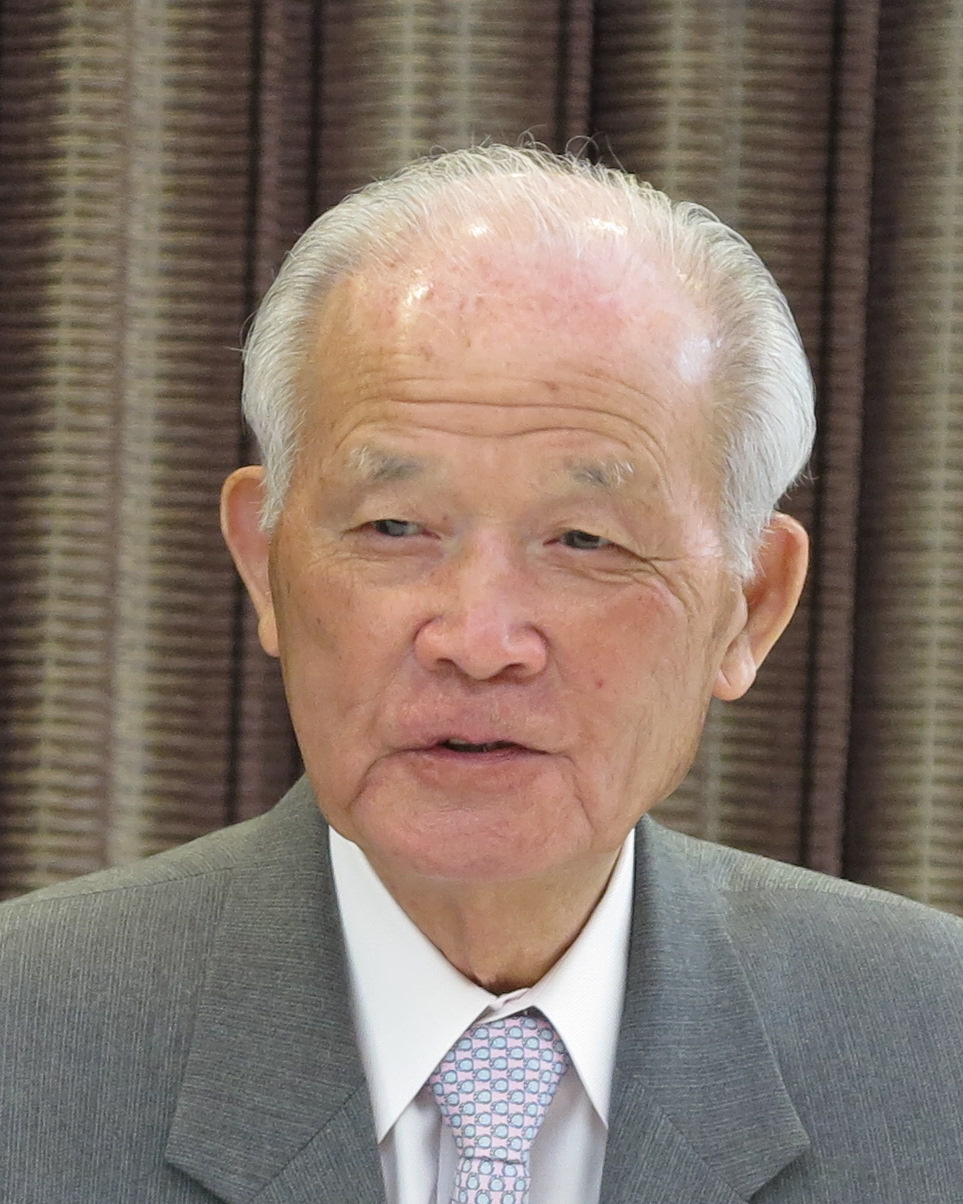 Saburo Tsukamoto
 Yasuo Naito
 Satoshi Sakakibara
 Yen-Hung Lin
 Sanae Takaichi
 Haruhisa Nakagawa
 Norihide Miyoshi
 Syunichi Akasofu
 Ryoichi Hamamoto
 Hong Hyung
 Andrii Gurenko
 Ronald Morse
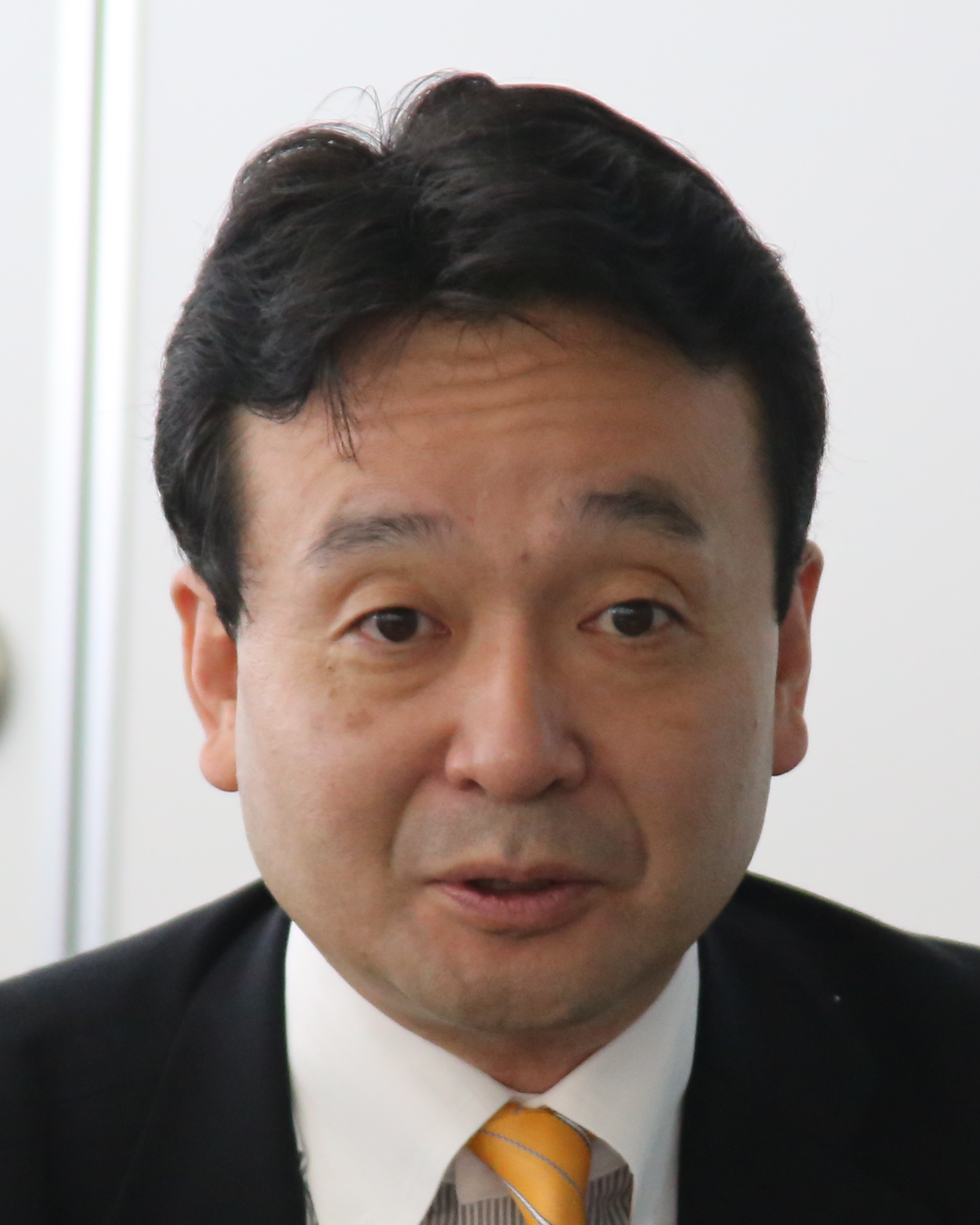 Kazuhiko Inoue
 Keiichi Nakagawa
 Masamori Sase
 Katsutoshi Kawano
 Tomohisa Takei