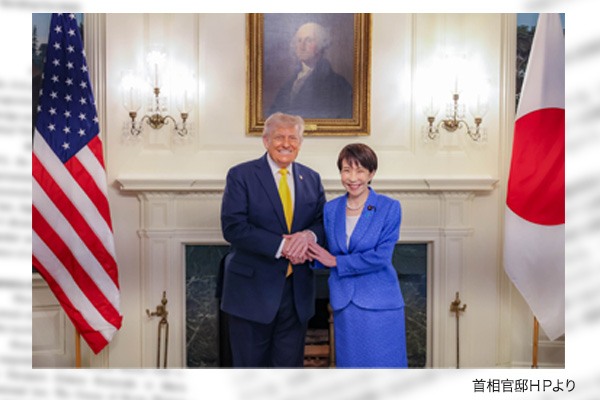
Japanese Prime Minister Sanae Takaichi avoided a crisis that could have led to a rupture with the United States. In fact, U.S. President Donald Trump praised Japan’s cooperation as something unlike that of the North Atlantic Treaty Organization. It was a meeting that can rightly be called a success.
“Unlike NATO”
Trump had called for Japan and several other countries to send warships to the Strait of Hormuz. At the meeting with Trump, Takaichi said, “There are things that can and cannot be done within the scope of Japanese law,” refraining from committing to sending Japanese Self-Defense Forces to the strait. According to officials present at the Takaichi-Trump meeting, Trump had a somewhat complicated look on his face, suggesting he was not entirely satisfied with Takaichi’s explanation. Nevertheless, Trump said that Japanese were really stepping up to the plate “unlike NATO.” Why?
Explaining the reasons, senior Japanese government officials said that (1) Takaichi is the leader who continues the line of former Prime Minister Shinzo Abe, who was close to Trump; (2) the Takaichi-led Liberal Democratic Party won a landslide victory in the House of Representatives election in February, demonstrating that Takaichi is the kind of strong leader Trump prefers; (3) Takaichi is aiming to drastically enhance Japan’s defense capabilities; and (4) she is working on a Japanese commitment to provide $550 billion in investments and loans to the U.S.
Securing U.S. commitment to Asia
The liberal Asahi Shimbun newspaper criticized Takaichi in an editorial for having repeatedly praised Trump “without complaining about the United States’ preemptive attack in defiance of the United Nations Charter and international law.” If Takaichi had criticized the attack on Iran as a violation of international law, Trump would have pushed back. It is clear which country would rejoice at a rupture of the Japan-U.S. alliance.
Regarding the Taiwan issue, the White House fact sheet summarizing the agreement reached at the meeting clearly stated, “The two leaders […] supported the peaceful resolution of cross-Strait issues through dialogue, and opposed any attempts to unilaterally change the status quo, including by force or coercion.” In a remark that appeared supportive of Japan, Trump also said he would be “singing Japan’s praises” when he meets with Chinese President Xi Jinping at a planned summit in Beijing. It can be said that Takaichi achieved her original goal of the U.S. visit: getting Trump’s commitment to continued U.S. engagement in Asian security, even though he places top priority on the Western Hemisphere.
Significant joint statement by Japan, Britain, and others
Although Takaichi tided over the meeting with Trump, there are about 50 Japanese-related ships stranded in the Persian Gulf, leaving challenges unresolved. In this sense, it is significant that Japan issued a joint statement with Britain and four other European countries before the meeting, emphasizing their “readiness to contribute to appropriate efforts to ensure safe passage through the Strait” of Hormuz.
Britain, which drafted the joint statement, reportedly placed great importance on Japan’s participation in the statement. Once the fighting subsides, Japan will naturally consider sending SDF minesweepers. We must not forget that ensuring the safety of navigation is not so much a matter of Japan’s relationship with the U.S. as it is a matter of Japan’s own energy security, given its dependence on the Middle East.
Takashi Arimoto is a Planning Committee member at the Japan Institute for National Fundamentals and a columnist at the Sankei Shimbun newspaper.
 Tsutomu Nishioka
 Tadae Takubo
 Fumio Ota
 Yoshiko Sakurai
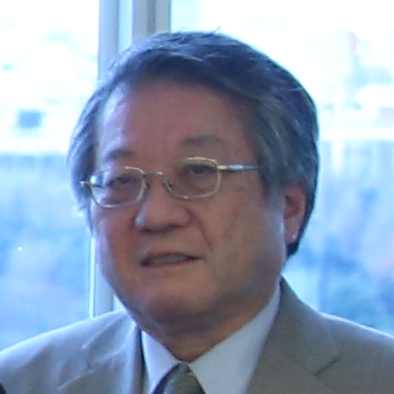 Yasushi Tomiyama
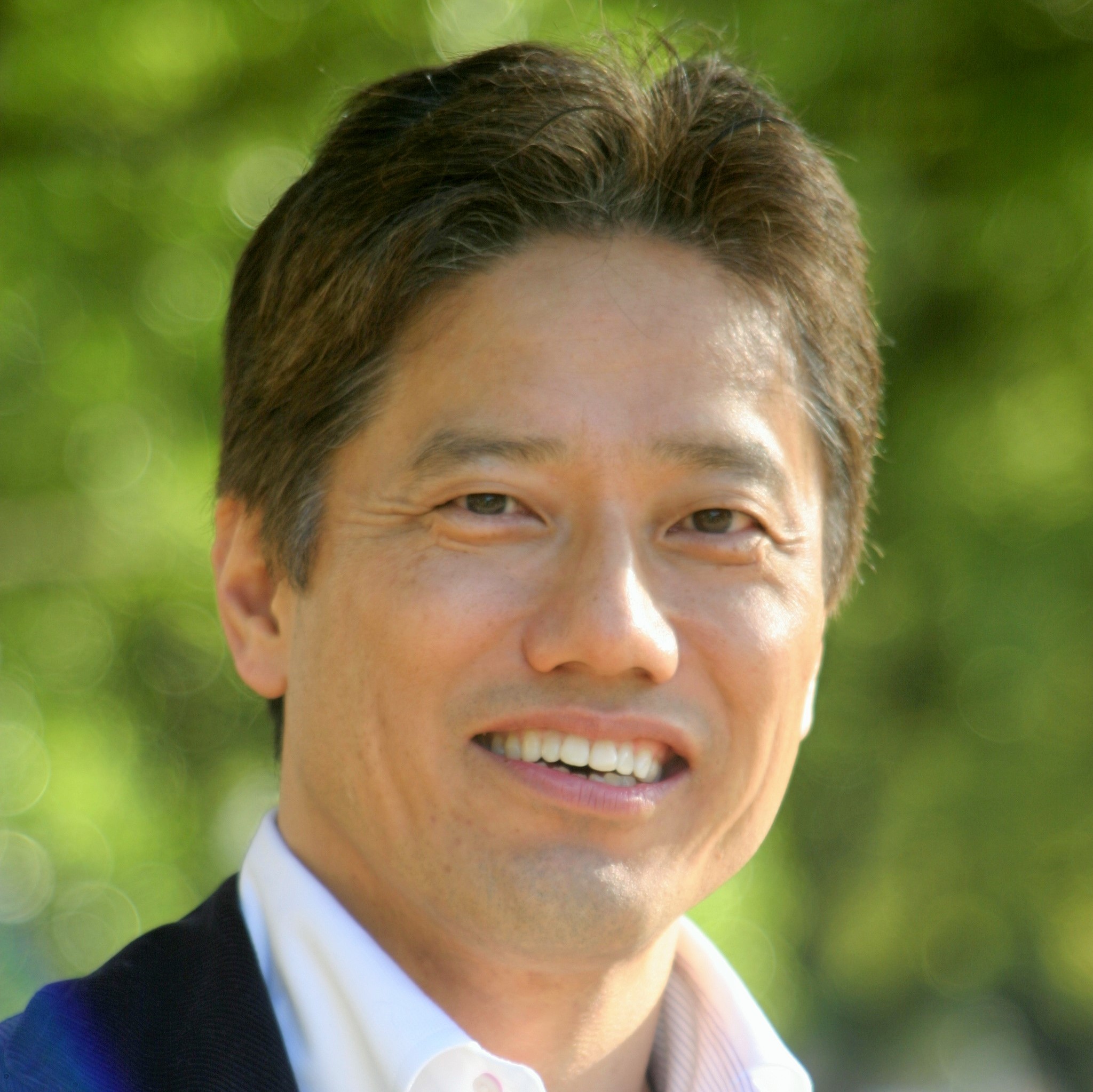 Masahiko Hosokawa
 Yoichi Shimada
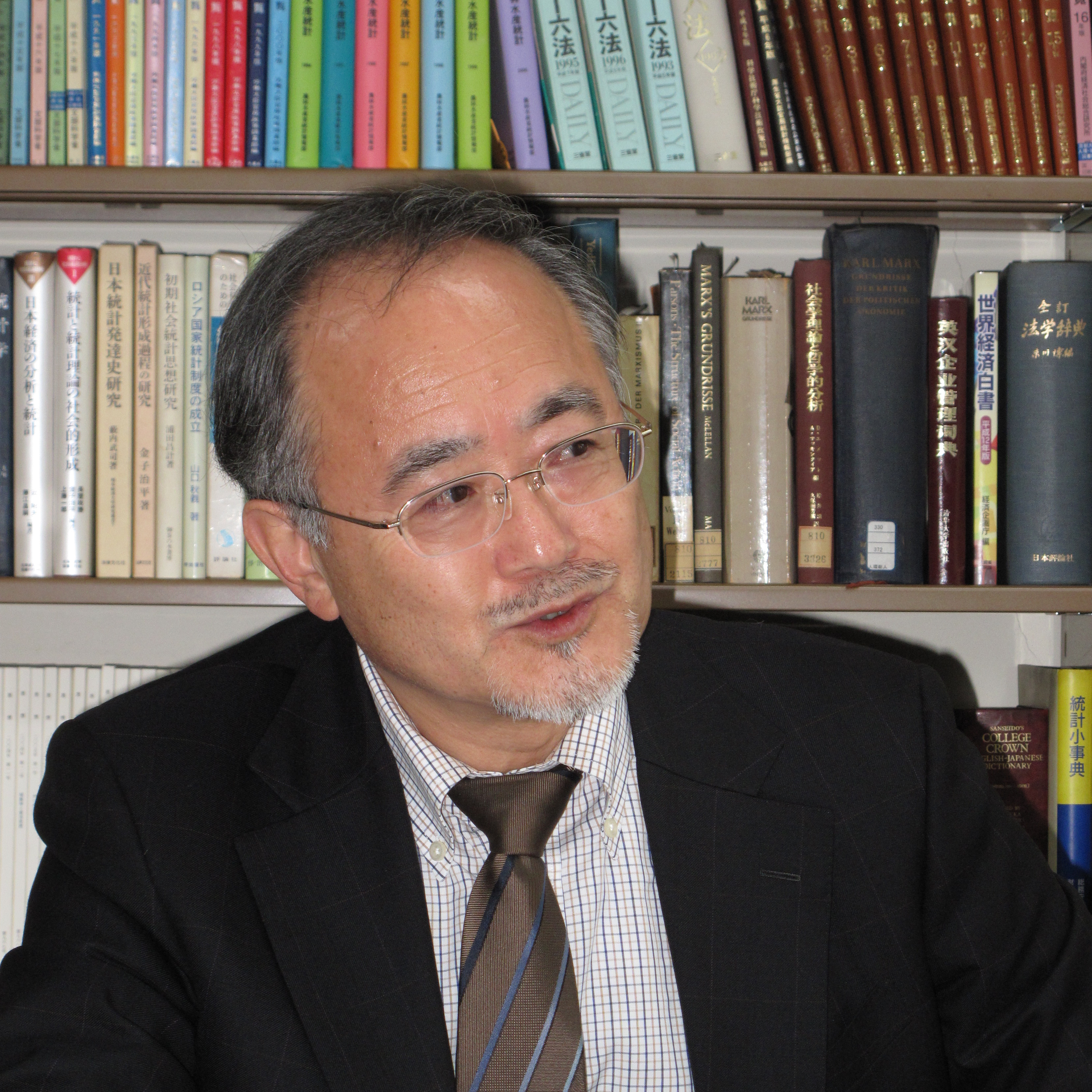 Hiroshi Yuasa
 Tadashi Narabayashi
 Hideo Tamura
 Kiyofumi Iwata
 Kunio Orita
 Maki Nakagawa
 Etsuro Honda
 Yujiro Oiwa
 Shiro Takahashi
 Hironobu Ishikawa
 Katsuhiko Takaike
 Michio Ezaki
 Akira Momochi
 Yoshihiko Yamada
 Akio Yaita
 Seiji Kurosawa
 Brahma Chellaney
 Koichi Endo
 Nobuko Araki
 James Auer
 Yang Haiying
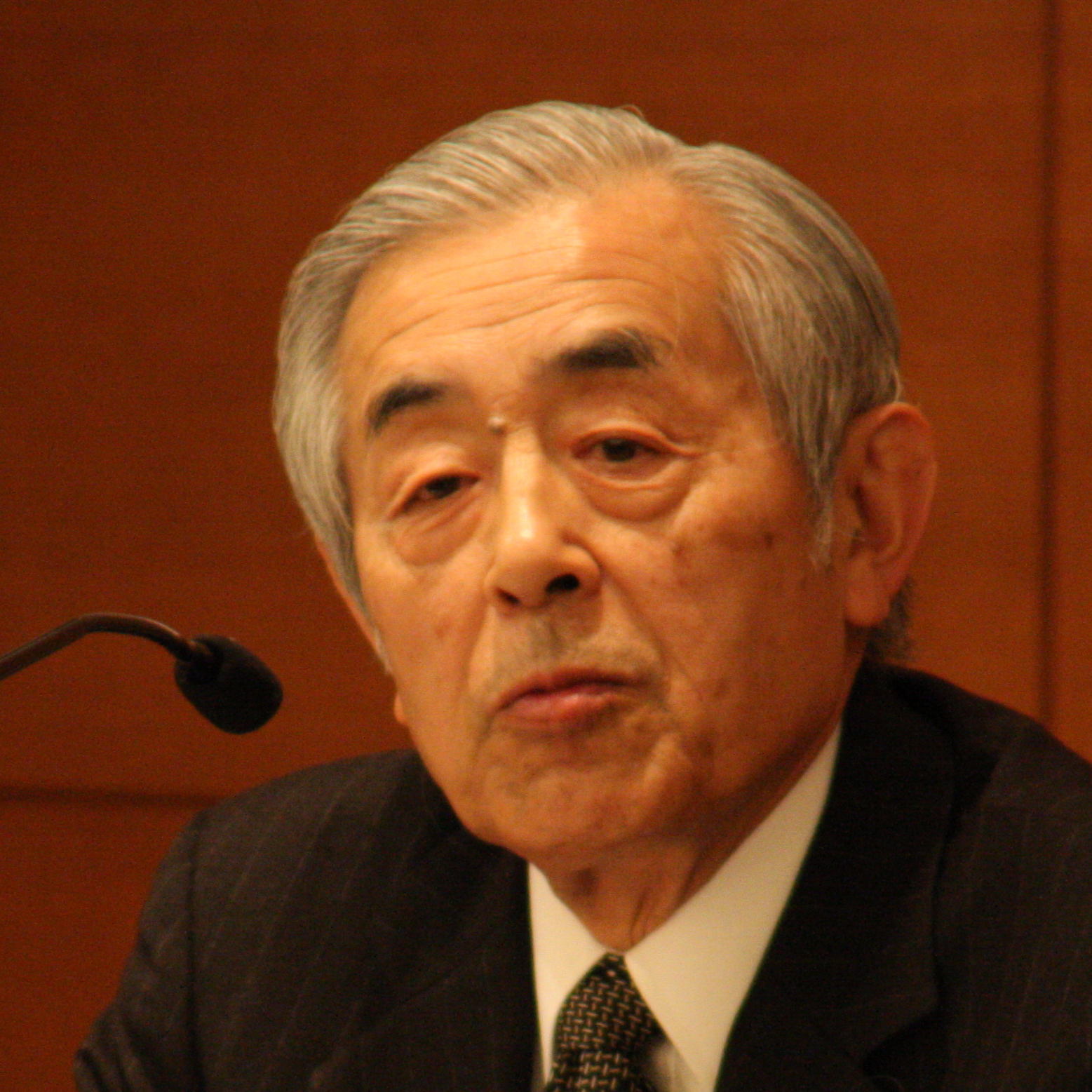 Hiroshi Kimura
 Sumihiko Kawamura
 Arvind Gupta
 Shohei Umezawa
 Koko Kato
 Takeshi Kudo
 Jason Morgan
 Kenro Nagoshi
 Tadashi Saito
 Osamu Nishi
 Hisashi Matsumoto
 Tsutomu Toichi
 Kichinosuke Ihara
 Nobuyuki Sato
 Yumiko Nishimoto
 Toshu Noguchi
 Satoshi Hirano
 Hideaki Karaki
 Koji Okamoto
 Tadashi Ito
 Eriko Yamatani
 Lee Woo Young
 Rikiwo Shikama
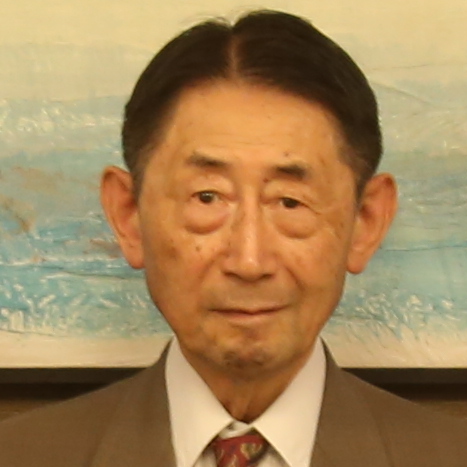 Sukehiro Hirakawa
 Taro Yayama
 Yasuyuki Takai
 Koh Sekai
 Koichi Furusho
 Sanae Takaichi
 Satoshi Tomisaka
 Yen-Hung Lin
 Ryoichi Hamamoto
 Andrii Gurenko
 Katsutoshi Kawano
 Kazuto Suzuki
 Kevin Maher
 Miki Kase
 Akihisa Nagashima
 Ronald Morse
 Hidetake Sawa
 Yang Yi
 Keiichi Nakagawa
 Seiichi Okutomi
 Haruhisa Nakagawa
 Hong Hyung
 Mio Sugita
 Tomohisa Takei
 Rupakjyoti Borah
 Masamori Sase
 Chung Dae Kyun
 Hirotaka Watanabe
 Masanori Kondo
 Koichi Mera
 Syunichi Akasofu
 Satoshi Sakakibara
 Hiroshi Ito
 Toshio Watanabe
 Nobukatsu Fujioka
 Eitaro Ogawa
 Saburo Tsukamoto
 Kazuhiko Inoue
 Norihide Miyoshi
 Yasuo Naito
 Katsuya Tsukamoto
 Akinaka Senzaki