Iran’s effective shutdown of the Strait of Hormuz is shaking the energy security of not only Japan but also all of Southeast Asia.
It was natural that the Japanese government on the domestic front decided to reduce private sector oil reserve requirements by an equivalent of 15 days’ consumption and release national oil reserves equivalent to one month’s consumption. The government also took an appropriate measure to use subsidies from its reserve fund to hold down Japan’s average gasoline price to around 170 yen per liter in order to protect people’s lives and economic activities.
However, crisis management should not be limited to the domestic front. Japan should also consider strategically using a small portion of its oil reserves to support neighboring countries while maintaining stability in its own oil supply and demand.
Emergency oil provision to the Philippines should be considered
Among Southeast Asian countries, the Philippines in particular has exposed its vulnerability to its dependence on imports from the Persian Gulf region for 98% of its oil supply, and has declared a national energy emergency. As Japanese companies’ production and logistics networks are deeply interconnected with Southeast Asian countries, fuel shortages in these neighboring states are expected to bounce back to Japan’s prices and supply chains through ports, transportation, power generation, and the broader supply network.
Moreover, according to international statistics, Japan’s oil consumption is about 3.14 million barrels per day against some 0.47 million bpd in the Philippines, meaning that Japan’s daily consumption is roughly equivalent to weekly consumption in the Philippines. Of course, Japan’s national oil reserves are the last bastion to protect Japanese people’s lives and should not be easily provided to other countries. However, an oil consumption comparison between Japan and the Philippines suggests that Japan can strategically use its very limited capacity to help neighboring countries tide over a crisis.
Japan could consider providing the Philippines with an amount equivalent to only a few days of Japan’s own consumption, while maintaining stability in its domestic oil supply and demand, on condition that the provided oil be returned at a later date. This is not a charity but a form of crisis management to reduce regional market turmoil.
Strategic thinking is required
That said, it goes without saying that Japan’s current oil reserve system is primarily designed to address domestic supply crises, and that providing oil directly to other countries would likely require legal clarification and careful operational review within the government.
However, what is needed now is strategic thinking that looks beyond Japan’s domestic situation and supports the stability of neighboring countries as well. At a time when China tries to use energy cooperation with Southeast Asia as a diplomatic card, it is crucial for Japan to demonstrate its willingness to support regional supply chains in order to maintain trust and influence in the region.
Japan’s strategic use of part of its oil reserves could also act as a deterrent in economic security. What is being called for now is not a simplistic choice between inward‑looking policies and international cooperation, but the strategic capacity of the Japanese state to design policies that safeguard its own stability while also contributing to the stability of its neighbors.
Kiyofumi Iwata is a member of the Planning Committee at the Japan Institute for National Fundamentals. Formerly, he served as Chief of Staff of the Japan Ground Self-Defense Force.
 Tsutomu Nishioka
 Takashi Arimoto
 Tadae Takubo
 Fumio Ota
 Yoshiko Sakurai
 Yasushi Tomiyama
 Masahiko Hosokawa
 Yoichi Shimada
 Hiroshi Yuasa
 Tadashi Narabayashi
 Hideo Tamura
 Kunio Orita
 Maki Nakagawa
 Etsuro Honda
 Yujiro Oiwa
 Shiro Takahashi
 Hironobu Ishikawa
 Katsuhiko Takaike
 Michio Ezaki
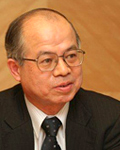 Akira Momochi
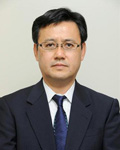 Yoshihiko Yamada
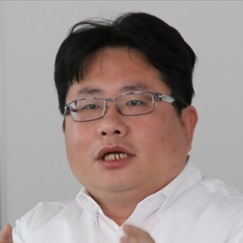 Akio Yaita
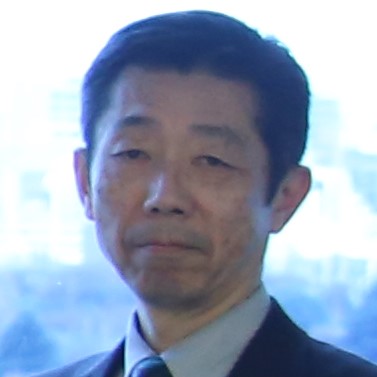 Seiji Kurosawa
 Brahma Chellaney
 Koichi Endo
 Nobuko Araki
 James Auer
 Yang Haiying
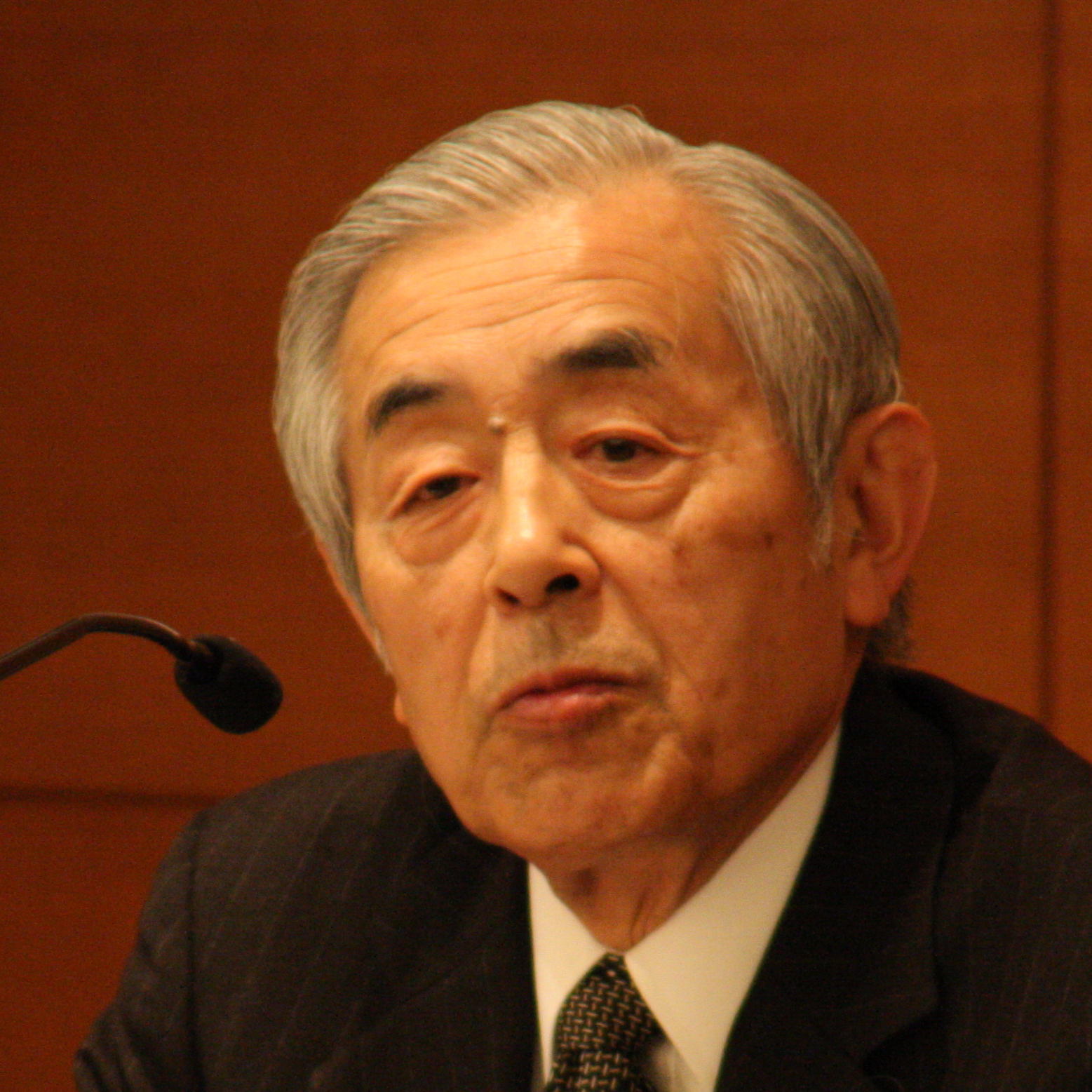 Hiroshi Kimura
 Sumihiko Kawamura
 Arvind Gupta
 Shohei Umezawa
 Koko Kato
 Takeshi Kudo
 Jason Morgan
 Kenro Nagoshi
 Tadashi Saito
 Osamu Nishi
 Hisashi Matsumoto
 Tsutomu Toichi
 Kichinosuke Ihara
 Nobuyuki Sato
 Yumiko Nishimoto
 Toshu Noguchi
 Satoshi Hirano
 Hideaki Karaki
 Koji Okamoto
 Tadashi Ito
 Eriko Yamatani
 Lee Woo Young
 Rikiwo Shikama
 Sukehiro Hirakawa
 Taro Yayama
 Yasuyuki Takai
 Koh Sekai
 Koichi Furusho
 Sanae Takaichi
 Satoshi Tomisaka
 Yen-Hung Lin
 Ryoichi Hamamoto
 Andrii Gurenko
 Katsutoshi Kawano
 Kazuto Suzuki
 Kevin Maher
 Miki Kase
 Akihisa Nagashima
 Ronald Morse
 Hidetake Sawa
 Yang Yi
 Keiichi Nakagawa
 Seiichi Okutomi
 Haruhisa Nakagawa
 Hong Hyung
 Mio Sugita
 Tomohisa Takei
 Rupakjyoti Borah
 Masamori Sase
 Chung Dae Kyun
 Hirotaka Watanabe
 Masanori Kondo
 Koichi Mera
 Syunichi Akasofu
 Satoshi Sakakibara
 Hiroshi Ito
 Toshio Watanabe
 Nobukatsu Fujioka
 Eitaro Ogawa
 Saburo Tsukamoto
 Kazuhiko Inoue
 Norihide Miyoshi
 Yasuo Naito
 Katsuya Tsukamoto
 Akinaka Senzaki