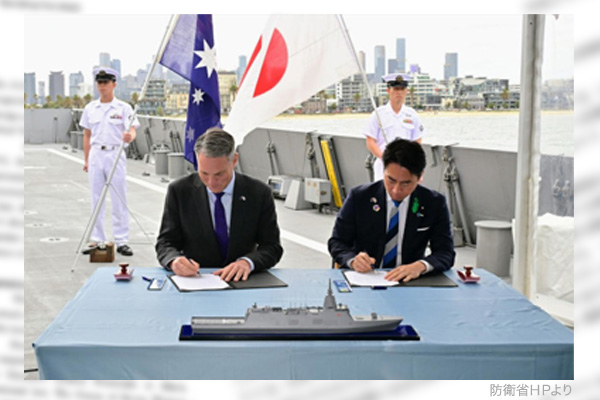
On April 21, the Japanese government revised its “three principles on transfer of defense equipment and technology” and their implementation guidelines at Cabinet and National Security Council meetings to expand defense equipment exports. The effective lifting of the ban on defense exports gives Japan the advantage of being able to provide each other with defense equipment with partner countries such as Australia. Southeast Asian countries also place great hopes on Japanese defense equipment.
Anachronistic Komeito
The export of defense equipment has been a long-standing issue in Japan. In 2014, the Shinzo Abe administration revised the “three arms export principles,” which had in principle banned arms exports, and tried to pave the way for multilateral joint arms development and security cooperation. However, out of consideration for the ruling Liberal Democratic Party’s coalition partner Komeito, the administration limited the types of defense equipment eligible for export to five categories: Rescue, Transport, Warning, Surveillance, and Minesweeping.
When the Sanae Takaichi administration took office last autumn, the Japan Innovation Party replaced the Komeito party as the LDP’s coalition partner, leading to the policy review.
Komeito leader Toshiko Takeya has questioned the abolition of the five categories, noting that about half of respondents in polls are against it. But it is Komeito that fails to face reality.
At the House of Councillors Budget Committee on March 17, Komeito Secretary General Minoru Nishida cited then Foreign Minister Kiichi Miyazawa as saying in 1976, “Our nation has not stooped so low as to make money by exporting weapons.” In response to the citation, Prime Minister Takaichi said: “We are now in an age where we must increase the number of partner countries and work together to achieve regional stability.” She is right.
In 1976, China was in turmoil caused by the Cultural Revolution and its military budget was limited. In 2026, however, China’s defense spending for the central government totals 1.9095 trillion yuan (about 43.4 trillion yen), almost five times as much as Japan’s defense-related budget of 9.0353 trillion yen. As Takaichi said, “the times have changed.”
Beijing has criticized Japan, saying, “the reckless moves of Japan’s ‘new militarism’ must be resolutely blocked" (Chinese Foreign Ministry spokeswoman Mao Ning). Beijing seems to have forgotten that China is one of the world’s biggest arms suppliers.
Expand exports through public-private cooperation
During the enactment of the law that allows Japan to participate in the United Nations peacekeeping operations and the Peace and Security Legislation permitting the limited exercise of the right of collective self‑defense, opinion polls also showed strong opposition. However, public understanding deepened as Japan accumulated a record of implementation. A similar broadening of support can be expected for the review of defense equipment transfer rules, provided that proper screening and oversight are ensured.
Japan’s defense cooperation with partner countries has been held back due to Komeito’s resistance, and as a result the Japanese defense industry has shrunk. Although abolishing the five categories lowered institutional constraints, close cooperation between the government and the private sector will be essential for the Japanese defense industry to become competitive in the export market.
Takashi Arimoto is a Planning Committee member at the Japan Institute for National Fundamentals and a columnist at the Sankei Shimbun newspaper.
 Tsutomu Nishioka
 Tadae Takubo
 Fumio Ota
 Yoshiko Sakurai
 Yasushi Tomiyama
 Masahiko Hosokawa
 Yoichi Shimada
 Hiroshi Yuasa
 Tadashi Narabayashi
 Hideo Tamura
 Kiyofumi Iwata
 Kunio Orita
 Maki Nakagawa
 Etsuro Honda
 Yujiro Oiwa
 Hironobu Ishikawa
 Shiro Takahashi
 Katsuhiko Takaike
 Michio Ezaki
 Akira Momochi
 Akio Yaita
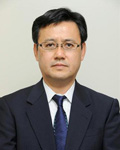 Yoshihiko Yamada
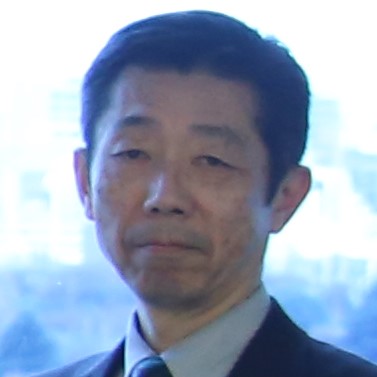 Seiji Kurosawa
 Koichi Endo
 Brahma Chellaney
 Nobuko Araki
 Yang Haiying
 James Auer
 Sumihiko Kawamura
 Hiroshi Kimura
 Osamu Nishi
 Koko Kato
 Tadashi Saito
 Shohei Umezawa
 Jason Morgan
 Arvind Gupta
 Kenro Nagoshi
 Takeshi Kudo
 Sukehiro Hirakawa
 Yumiko Nishimoto
 Rikiwo Shikama
 Eriko Yamatani
 Koichi Furusho
 Tadashi Ito
 Satoshi Hirano
 Lee Woo Young
 Taro Yayama
 Koh Sekai
 Koji Okamoto
 Tsutomu Toichi
 Hideaki Karaki
 Toshu Noguchi
 Kichinosuke Ihara
 Hisashi Matsumoto
 Yasuyuki Takai
 Nobuyuki Sato
 Chung Dae Kyun
 Toshio Watanabe
 Katsuya Tsukamoto
 Kazuto Suzuki
 Koichi Mera
 Akihisa Nagashima
 Miki Kase
 Eitaro Ogawa
 Hirotaka Watanabe
 Akinaka Senzaki
 Kevin Maher
 Yang Yi
 Hidetake Sawa
 Satoshi Tomisaka
 Nobukatsu Fujioka
 Masanori Kondo
 Hiroshi Ito
 Mio Sugita
 Rupakjyoti Borah
 Seiichi Okutomi
 Saburo Tsukamoto
 Yasuo Naito
 Satoshi Sakakibara
 Yen-Hung Lin
 Sanae Takaichi
 Haruhisa Nakagawa
 Norihide Miyoshi
 Syunichi Akasofu
 Ryoichi Hamamoto
 Hong Hyung
 Andrii Gurenko
 Ronald Morse
 Kazuhiko Inoue
 Keiichi Nakagawa
 Masamori Sase
 Katsutoshi Kawano
 Tomohisa Takei