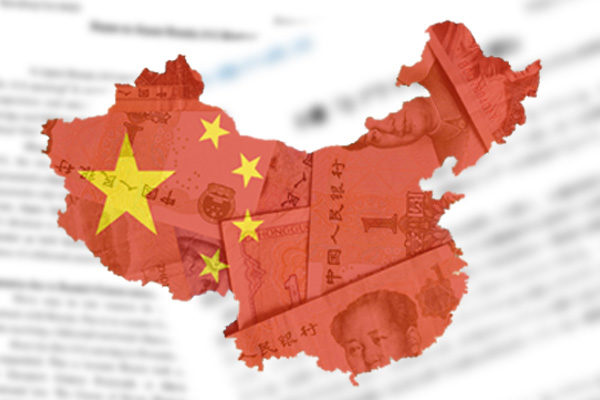
China’s National Bureau of Statistics announced last week that the country’s gross domestic product in the January-March quarter this year grew 5% year on year in real terms. It’s a sham.
Is real growth negative?
In fact, China’s method for calculating GDP is easily subject to arbitrary manipulation. The Bureau of Statistics aggregates the value-added output, or gross profit of businesses and enterprises, of the primary, secondary, and tertiary industries, as reported by local governments across the country. Each local government is overseen by the top Chinese Communist Party official, the local CCP secretary. In pursuit of promotion within the Party, these secretaries work hard to meet the GDP growth target set by the central leadership. This year’s growth target is 4.5-5.0% in real terms, and in 2025 it was around 5%. The growth rate announced by the Bureau of Statistics was 5% for both the full year of 2025 and the first quarter of 2026, matching the Party’s targets exactly.
Given that the tertiary industry (composed of distribution, food and service, transportation, and other industries), which accounts for more than 60% of GDP calculated with the Chinese method, increased value-added output by 5.6% year on year in the January-March 2026 quarter and by 5.7% in 2025, there is no discomfort in the 5% GDP growth. Since GDP is the total amount of value-added production, the Chinese method itself is right. However, the growth figure must match the GDP growth calculated from demand, including investment, consumption, and net exports. Japan, the United States, and Europe use the demand-based method to accurately measure GDP.
When I estimated the Chinese GDP growth rate based on investment, consumption, and other demand data, the growth turned out at around 0% for 2024, at 2% for 2025, and negative for the January-March 2026 quarter. I heard that the average estimate by U.S. market analysts was 0-2% for 2025.
While the recession caused by the bursting of the real estate bubble continues, real estate development investment, which is the main pillar of fixed asset investment accounting for around 50% of GDP, has shrunk since 2022, decreasing by 11.2% year on year each in the January-March 2026 quarter and in 2025. Fixed asset investment in the tertiary industry, which should be strong, declined more than 2% in the January-March 2026 quarter and by 8.4% in 2025. Fixed asset investment in all industries decreased by 0.5% in the January-March 2026 quarter and by 5.7% in 2025. Isn’t it magic that the 5% economic growth was achieved despite such investment data?
News media are deceived
GDP is a key indicator for national economic management. Some say that the CCP central leadership is circulating the true growth rate within the inner circle. Even if so, there will be no big difference as long as it is based on the discretion of local Party leaders.
The most important thing for Chinese President and CCP general secretary Xi Jinping is the propaganda effect at home and abroad. Xi has put in place strict information controls, detaining prominent Chinese economists who exposed data falsification. Xi provides massive subsidies to encourage investment in the expansion of production in new sectors even at risk of overproduction, and boasts of China’s dominance in global market share for products such as electric vehicles (EVs). He also claims China as outdoing the United States in artificial intelligence (AI) and other cutting-edge sectors and leads Japanese economic media to report such claim in a bid to attract Japanese companies’ investment in China. Don’t be deceived.
Hideo Tamura is a Planning Committee member at the Japan Institute for National Fundamentals and a columnist for the Sankei Shimbun newspaper.
 Tsutomu Nishioka
 Takashi Arimoto
 Tadae Takubo
 Fumio Ota
 Yoshiko Sakurai
 Yasushi Tomiyama
 Masahiko Hosokawa
 Yoichi Shimada
 Hiroshi Yuasa
 Tadashi Narabayashi
 Kiyofumi Iwata
 Kunio Orita
 Maki Nakagawa
 Etsuro Honda
 Yujiro Oiwa
 Hironobu Ishikawa
 Shiro Takahashi
 Katsuhiko Takaike
 Michio Ezaki
 Akira Momochi
 Akio Yaita
 Yoshihiko Yamada
 Seiji Kurosawa
 Koichi Endo
 Brahma Chellaney
 Nobuko Araki
 Yang Haiying
 James Auer
 Sumihiko Kawamura
 Hiroshi Kimura
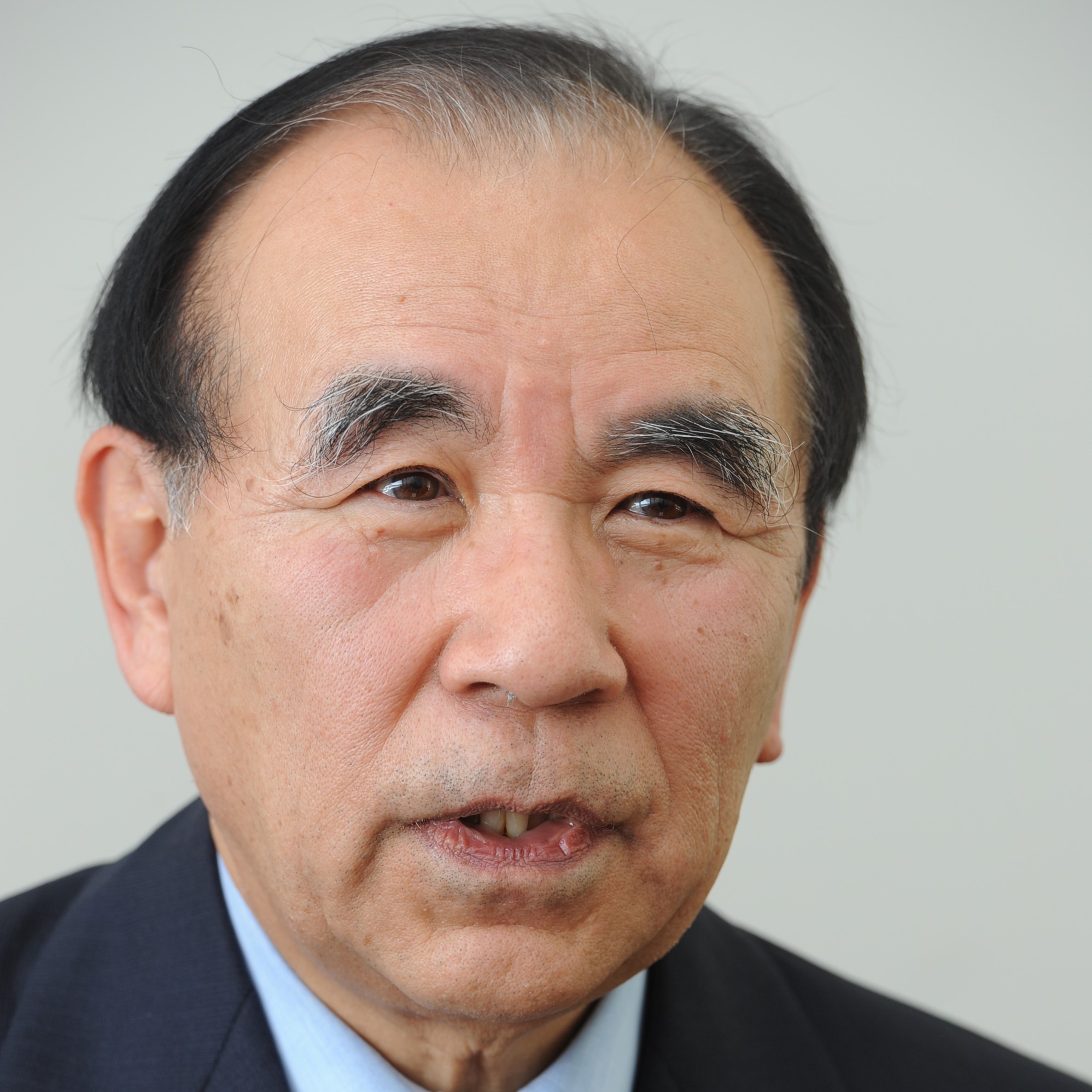 Osamu Nishi
 Koko Kato
 Tadashi Saito
 Shohei Umezawa
 Jason Morgan
 Arvind Gupta
 Kenro Nagoshi
 Takeshi Kudo
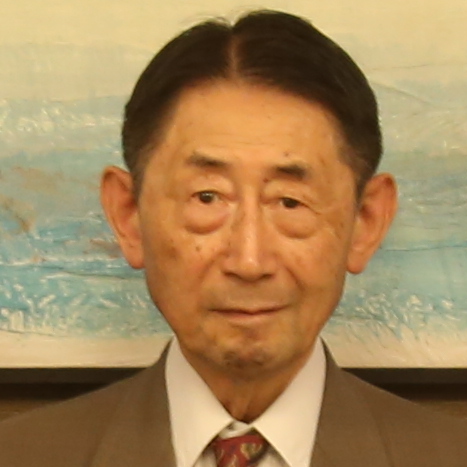 Sukehiro Hirakawa
 Yumiko Nishimoto
 Rikiwo Shikama
 Eriko Yamatani
 Koichi Furusho
 Tadashi Ito
 Satoshi Hirano
 Lee Woo Young
 Taro Yayama
 Koh Sekai
 Koji Okamoto
 Tsutomu Toichi
 Hideaki Karaki
 Toshu Noguchi
 Kichinosuke Ihara
 Hisashi Matsumoto
 Yasuyuki Takai
 Nobuyuki Sato
 Chung Dae Kyun
 Toshio Watanabe
 Katsuya Tsukamoto
 Kazuto Suzuki
 Koichi Mera
 Akihisa Nagashima
 Miki Kase
 Eitaro Ogawa
 Hirotaka Watanabe
 Akinaka Senzaki
 Kevin Maher
 Yang Yi
 Hidetake Sawa
 Satoshi Tomisaka
 Nobukatsu Fujioka
 Masanori Kondo
 Hiroshi Ito
 Mio Sugita
 Rupakjyoti Borah
 Seiichi Okutomi
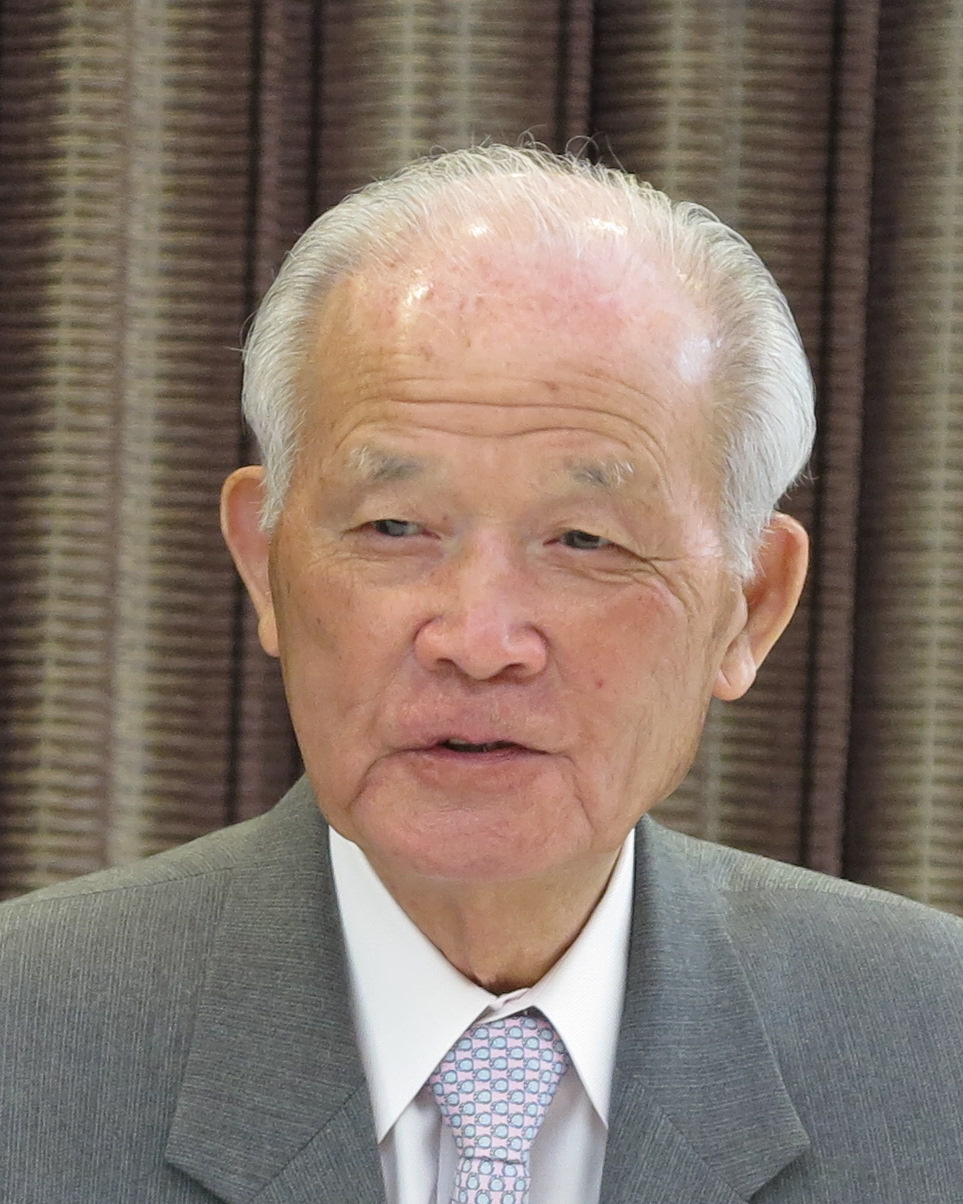 Saburo Tsukamoto
 Yasuo Naito
 Satoshi Sakakibara
 Yen-Hung Lin
 Sanae Takaichi
 Haruhisa Nakagawa
 Norihide Miyoshi
 Syunichi Akasofu
 Ryoichi Hamamoto
 Hong Hyung
 Andrii Gurenko
 Ronald Morse
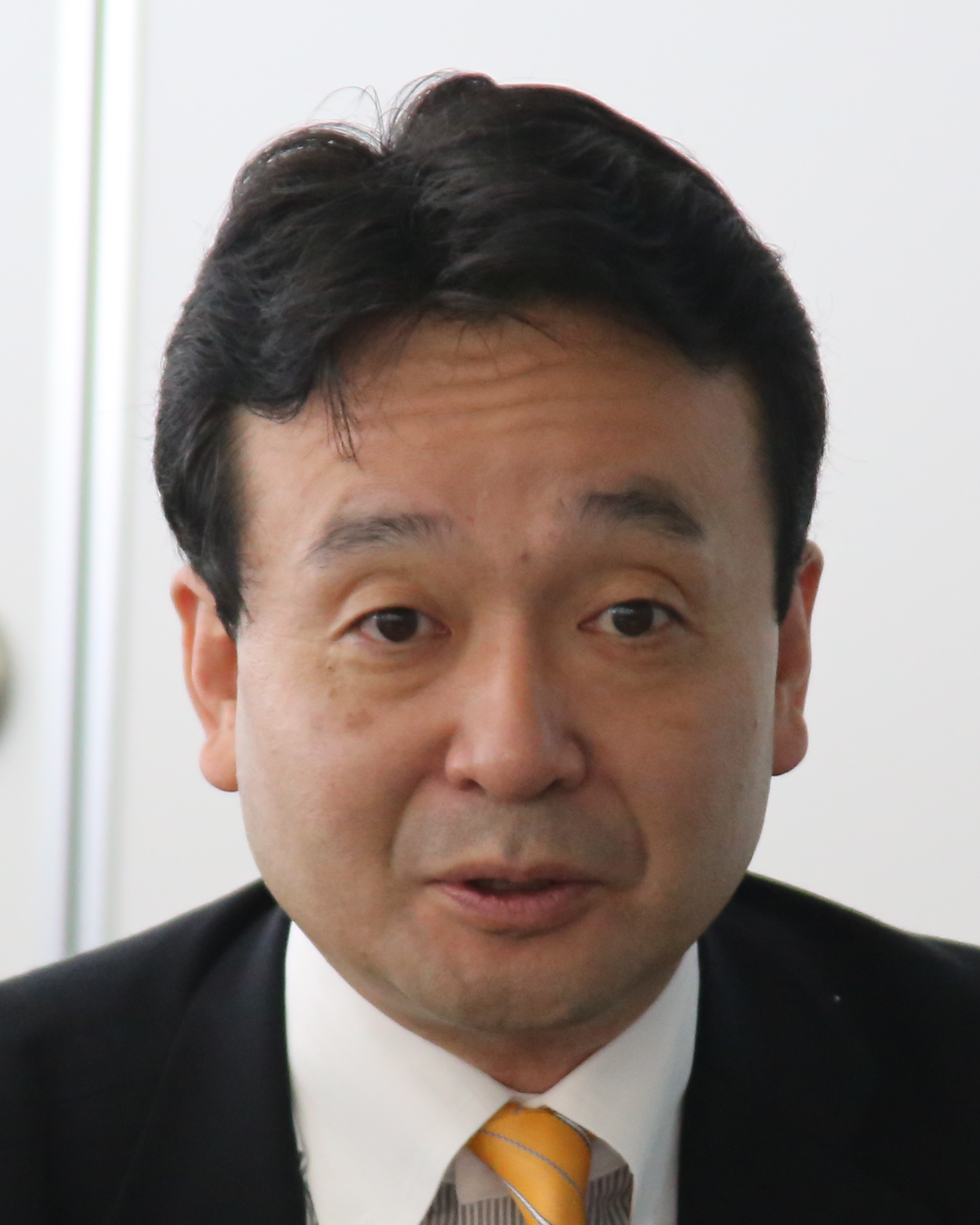 Kazuhiko Inoue
 Keiichi Nakagawa
 Masamori Sase
 Katsutoshi Kawano
 Tomohisa Takei