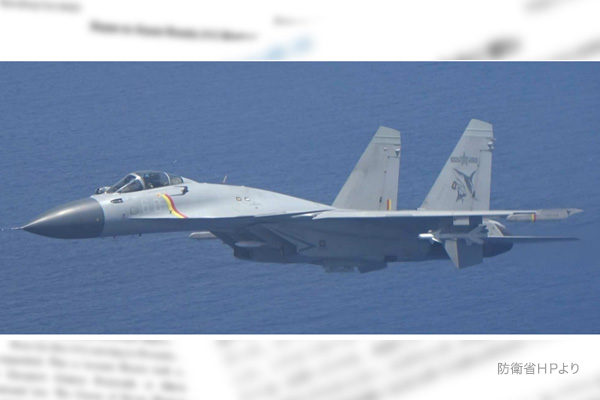
On December 6, two J-15 fighter jets from the Chinese aircraft carrier Liaoning illuminated two Japanese Air Self-Defense Force (JASDF) F-15 fighters with radar in fire-control mode. Fire-control radar illumination clearly violates the 2014 Code for Unplanned Encounters at Sea (CUES), which the Chinese Navy also endorsed, to avoid accidental military collisions at sea. In the wake of the latest incident, I would like to raise awareness that China can be expected to disseminate fake news in the future, as suggested by its past behavior.
Real example for China’s fabrication of dangerous situations:
There are precedents for the Chinese Navy’s fire-control radar illumination. In January 2013, fire-control radar was directed by the Chinese Navy frigate Lianyungang at the Japanese Maritime Self-Defense Force (JMSDF) destroyer Yudachi, and separately by the Chinese frigate Wenzhou at a patrol helicopter operating from the JMSDF destroyer Onami. Then Japanese Defense Minister Itsunori Onodera made public these acts six days after the Yudachi incident. Prime Minister Shinzo Abe criticized them as violating the rules of the international community.
Three years later, on December 10, 2016, a spokesman for the Chinese Ministry of National Defense, while holding up a photo of a JASDF F-15 fighter jet, claimed that the F-15 fired decoy flares at a Chinese Air Force aircraft and that the act was extremely dangerous for the Chinese aircraft and its crew and ran counter to professionalism. However, I heard directly from then Defense Minister Tomomi Inada that the F-15 in the photo was not on a flight mission that day. It should be noted that China may retaliate the latest radar illumination incident by spreading this kind of unfounded fake news aimed at discrediting Japan.
Disinformation spread over Okinawa
Since Prime Minister Sanae Takaichi’s parliamentary remarks regarding a Taiwan contingency, the Chinese Communist Party’s official newspaper, the People’s Daily, and its affiliate Global Times have claimed that Okinawa should be called Ryukyu as under China’s ancient tributary system and that Okinawa’s sovereignty and ownership have been under dispute. It is hardly new that China has demonstrated territorial ambitions to Okinawa.
As far as I know, the demonstration began with a Global Times report on September 17, 2012. The report claimed that in a referendum held in Ryukyu on March 4, 2006, 75% demanded independence from Japan and 25% demanded autonomy while favoring its belonging to Japan. However, any referendum was held in Okinawa on March 4, 2006. The Global Times report was completely fake.
On December 4, the Trump administration released its National Security Strategy. In contrast to the Biden administration that identified China as “the only competitor” and clearly recognized and responded to it as a threat, the new strategy toned down the rhetoric on the China threat.
However, China has already won over Hong Kong and is trying to annex Taiwan while demonstrating territorial ambitions to Okinawa. If Okinawa falls into China’s hands, the United States will lose the only U.S. overseas Marine Expeditionary Force and Kadena Air Base, the largest U.S. Air Force base in the Far East. When President Donald Trump visits China in April next year, he should recognize national security issues instead of being preoccupied with economic deals.
Fumio Ota is a senior fellow and a Planning Committee member at the Japan Institute for National Fundamentals. He is a retired Vice Admiral of the Japan Maritime Self-Defense Force.
 Tsutomu Nishioka
 Takashi Arimoto
 Tadae Takubo
 Yoshiko Sakurai
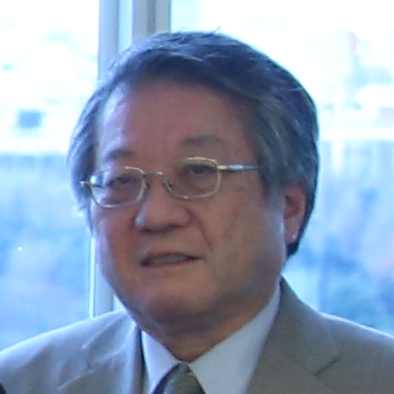 Yasushi Tomiyama
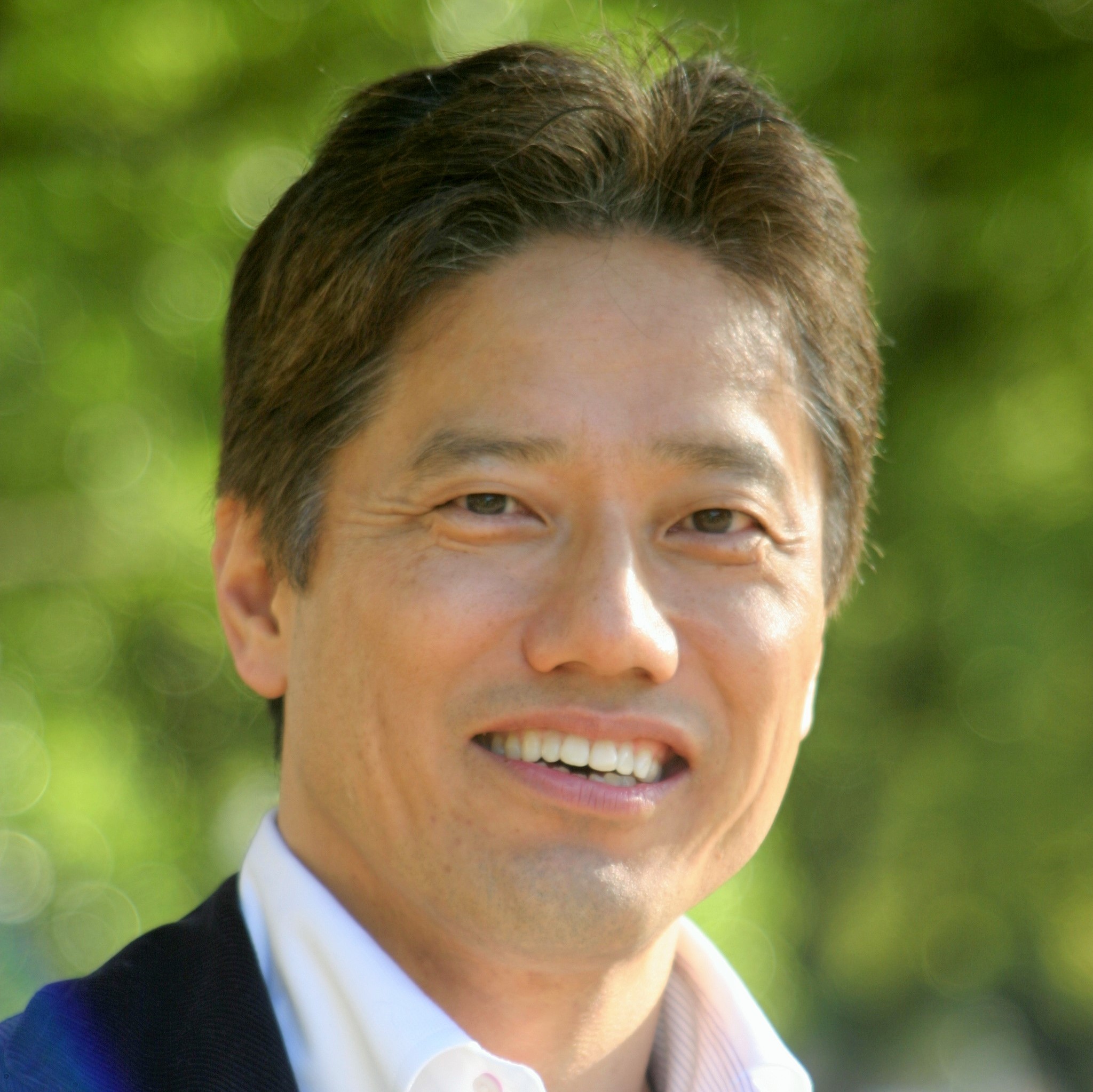 Masahiko Hosokawa
 Yoichi Shimada
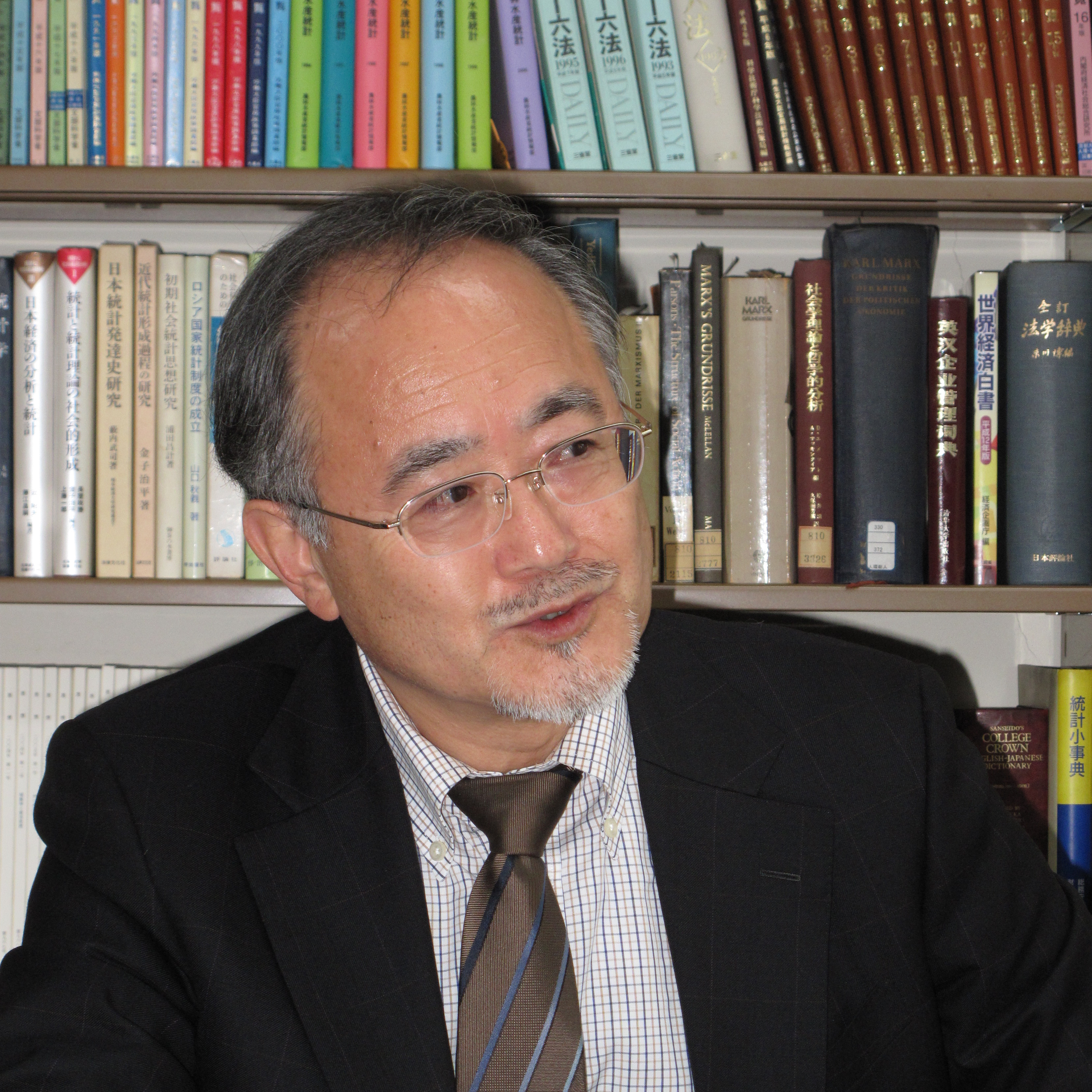 Hiroshi Yuasa
 Tadashi Narabayashi
 Hideo Tamura
 Kiyofumi Iwata
 Kunio Orita
 Maki Nakagawa
 Etsuro Honda
 Yujiro Oiwa
 Shiro Takahashi
 Hironobu Ishikawa
 Katsuhiko Takaike
 Michio Ezaki
 Akira Momochi
 Yoshihiko Yamada
 Akio Yaita
 Seiji Kurosawa
 Brahma Chellaney
 Koichi Endo
 Nobuko Araki
 James Auer
 Yang Haiying
 Hiroshi Kimura
 Sumihiko Kawamura
 Arvind Gupta
 Shohei Umezawa
 Koko Kato
 Takeshi Kudo
 Jason Morgan
 Kenro Nagoshi
 Tadashi Saito
 Osamu Nishi
 Hisashi Matsumoto
 Tsutomu Toichi
 Kichinosuke Ihara
 Nobuyuki Sato
 Yumiko Nishimoto
 Toshu Noguchi
 Satoshi Hirano
 Hideaki Karaki
 Koji Okamoto
 Tadashi Ito
 Eriko Yamatani
 Lee Woo Young
 Rikiwo Shikama
 Sukehiro Hirakawa
 Taro Yayama
 Yasuyuki Takai
 Koh Sekai
 Koichi Furusho
 Sanae Takaichi
 Satoshi Tomisaka
 Yen-Hung Lin
 Ryoichi Hamamoto
 Andrii Gurenko
 Katsutoshi Kawano
 Kazuto Suzuki
 Kevin Maher
 Miki Kase
 Akihisa Nagashima
 Ronald Morse
 Hidetake Sawa
 Yang Yi
 Keiichi Nakagawa
 Seiichi Okutomi
 Haruhisa Nakagawa
 Hong Hyung
 Mio Sugita
 Tomohisa Takei
 Rupakjyoti Borah
 Masamori Sase
 Chung Dae Kyun
 Hirotaka Watanabe
 Masanori Kondo
 Koichi Mera
 Syunichi Akasofu
 Satoshi Sakakibara
 Hiroshi Ito
 Toshio Watanabe
 Nobukatsu Fujioka
 Eitaro Ogawa
 Saburo Tsukamoto
 Kazuhiko Inoue
 Norihide Miyoshi
 Yasuo Naito
 Katsuya Tsukamoto
 Akinaka Senzaki