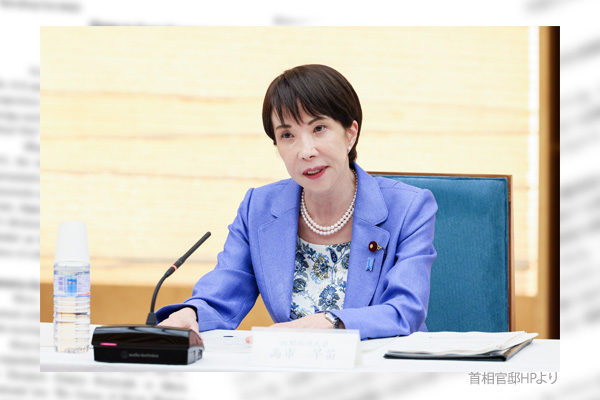
Prime Minister Sanae Takaichi, who took office while vowing to inherit and develop former Prime Minister Shinzo Abe’s political vision, has a historic mission. It is to make Japan an ordinary nation with national military forces by amending Article 9 of the constitution that critic Tsuneari Fukuda described as “having been forced by the Allied occupation authorities to make Japan apologetic and timid.”
After the movement for constitutional amendment somewhat stagnated in the wake of Abe’s death, the lower and upper house Commissions on the Constitution resumed activities under the Takaichi Cabinet and discussions on specific amendments are now underway. However, the ongoing discussions are far from achieving the historic mission.
Major constitutional amendment proposals currently under discussions call for establishing state-of-emergency provisions and eliminating House of Councillors electoral districts that span multiple prefectures. These proposals, though not unnecessary, have little to do with the historic mission. At a time when wars have broken out in various parts of the world, with Japan growing likelier to be drawn into them, Japan is required to break away from a fantasy—far removed from global common sense—that Article 9 of the Japanese constitution contributes to world peace.
Proposal merely adding SDF to constitution will be voted down
There is an argument that if Article 9 is to be revised, it would be acceptable merely to add the existence of the Self‑Defense Forces, which under existing law is treated as a police organization rather than a military force, to the constitution. The proposal, originally put forward by the late Abe, cannot make Japan an ordinary nation. This is because the proposed provision, though eliminating any opinion claiming the SDF as unconstitutional, may fail to dispel a view that national security operations required of ordinary military forces are unconstitutional.
The dominant national security arguments in Japan are based on a dogma. For example, arguments regarding the purchase or development of a weapon are based on whether the weapon runs counter to the principle of exclusively defensive posture, rather than whether the weapon is required in the current international situation or too expensive to purchase or develop. The dogma mostly originates from Article 9 of the constitution. A departure from the dogma is a way to become an ordinary nation.
Some say that any proposal to change the SDF into military forces would face public backlash and fail to win majority support in a national referendum. However, the procedures for amending the Japanese constitution are among the most difficult in the world. Even an additional constitutional provision for the simple endorsement of the existing SDF may not be approved easily in a national referendum. Tremendous energy must be used to persuade voters to accept the amendment.
It will be difficult for the additional provision to win majority support in a national referendum over opinions that would view such provision as deceptive or unnecessary. Unless the Takaichi Cabinet boldly makes the case to voters that Japan should become an ordinary nation, that miliary forces are necessary, and that this does not constitute a revival of militarism, any meaningful constitutional amendment may fail to be achieved.
Pursue “ideal vision of the nation”
“The constitution should express the ideal vision of the nation we aspire to create,” Takaichi said in a speech at the ruling Liberal Democratic Party’s convention on April 12. The proposed additional constitutional provision for the simple endorsement of the existing SDF does not express the ideal vision of the nation. In order to achieve the constitutional amendment, the Takaichi Cabinet should take the lead in strongly advocating for the significance of amending Article 9 to have national military forces.
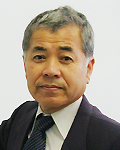
Katsuhiko Takaike is an attorney-at-law and Vice President of the Japan Institute for National Fundamentals.
 Tsutomu Nishioka
 Tadae Takubo
 Takashi Arimoto
 Fumio Ota
 Yoshiko Sakurai
 Yasushi Tomiyama
 Masahiko Hosokawa
 Yoichi Shimada
 Hiroshi Yuasa
 Tadashi Narabayashi
 Hideo Tamura
 Kiyofumi Iwata
 Kunio Orita
 Maki Nakagawa
 Etsuro Honda
 Yujiro Oiwa
 Hironobu Ishikawa
 Shiro Takahashi
 Michio Ezaki
 Akira Momochi
 Akio Yaita
 Yoshihiko Yamada
 Seiji Kurosawa
 Koichi Endo
 Brahma Chellaney
 Nobuko Araki
 Yang Haiying
 James Auer
 Sumihiko Kawamura
 Hiroshi Kimura
 Osamu Nishi
 Koko Kato
 Tadashi Saito
 Shohei Umezawa
 Jason Morgan
 Arvind Gupta
 Kenro Nagoshi
 Takeshi Kudo
 Sukehiro Hirakawa
 Yumiko Nishimoto
 Rikiwo Shikama
 Eriko Yamatani
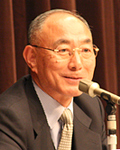 Koichi Furusho
 Tadashi Ito
 Satoshi Hirano
 Lee Woo Young
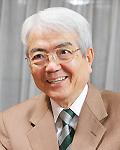 Taro Yayama
 Koh Sekai
 Koji Okamoto
 Tsutomu Toichi
 Hideaki Karaki
 Toshu Noguchi
 Kichinosuke Ihara
 Hisashi Matsumoto
 Yasuyuki Takai
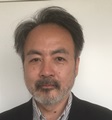 Nobuyuki Sato
 Chung Dae Kyun
 Toshio Watanabe
 Katsuya Tsukamoto
 Kazuto Suzuki
 Koichi Mera
 Akihisa Nagashima
 Miki Kase
 Eitaro Ogawa
 Hirotaka Watanabe
 Akinaka Senzaki
 Kevin Maher
 Yang Yi
 Hidetake Sawa
 Satoshi Tomisaka
 Nobukatsu Fujioka
 Masanori Kondo
 Hiroshi Ito
 Mio Sugita
 Rupakjyoti Borah
 Seiichi Okutomi
 Saburo Tsukamoto
 Yasuo Naito
 Satoshi Sakakibara
 Yen-Hung Lin
 Sanae Takaichi
 Haruhisa Nakagawa
 Norihide Miyoshi
 Syunichi Akasofu
 Ryoichi Hamamoto
 Hong Hyung
 Andrii Gurenko
 Ronald Morse
 Kazuhiko Inoue
 Keiichi Nakagawa
 Masamori Sase
 Katsutoshi Kawano
 Tomohisa Takei